 By kevin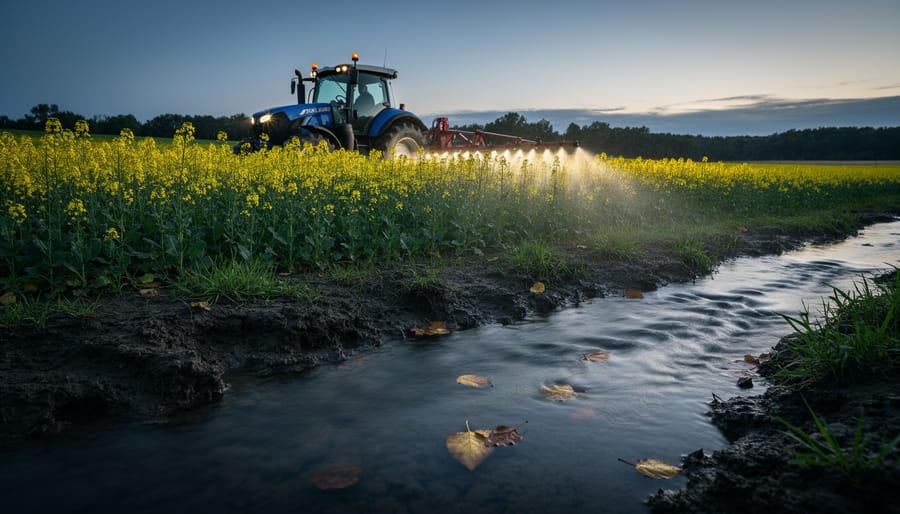
Every spring, millions of kilograms of chemical pesticides saturate Canadian farmland, gardens, and urban spaces. These substances don’t simply disappear after application. They migrate through soil, contaminate waterways, accumulate in wildlife, and persist in ecosystems for decades, fundamentally altering the environmental systems that sustain all life.
The environmental impact of pesticides extends far beyond their intended targets. When farmers spray neonicotinoids on canola fields in Saskatchewan or homeowners apply glyphosate to suburban lawns in Ontario, these chemicals initiate a cascade of ecological consequences. They kill beneficial insects that pollinate crops, poison aquatic organisms in nearby streams, degrade soil health that farmers depend on, and disrupt the delicate balance of predator-prey relationships that naturally control pest populations.
Understanding how pesticides affect the environment requires examining their journey through interconnected ecological systems. A single application can contaminate groundwater supplies that communities rely on for drinking water, eliminate populations of native pollinators essential for food production, and bioaccumulate in fish and wildlife that Indigenous communities harvest for sustenance. The impacts multiply across generations, with some pesticides persisting in soil for over 20 years.
In 2026, Canadians face urgent questions about pesticide use as climate change intensifies agricultural pressures and biodiversity loss accelerates. This guide explores the scientific evidence behind pesticide impacts on water quality, soil ecosystems, wildlife populations, and climate stability. It examines the legal frameworks governing pesticide regulation in Canada, highlights Indigenous knowledge about ecological relationships that pesticide use disrupts, and presents proven alternatives that protect both agricultural productivity and environmental health.
The stakes are clear. The choices we make about pesticide use today will determine the resilience of Canadian ecosystems for generations to come.
Understanding Pesticides in the Canadian Context
When you buy produce at a Canadian grocery store or drive past farmland stretching across the Prairies, pesticides are almost certainly part of the story. These chemical substances, designed to kill or control unwanted organisms, have become embedded in our agricultural system. Understanding what pesticides actually are and how they’re regulated is the first step toward grasping their environmental consequences.
Canada relies heavily on a class of insecticides called neonicotinoids, which have sparked intense scientific and legal scrutiny. There are three main approved neonicotinoids in Canada: imidacloprid, clothianidin, and thiamethoxam. Farmers apply these chemicals to protect crops from aphids, beetles, and other insects that damage yields. They’re absorbed by plants and remain active in tissues for weeks or months, which makes them effective but also raises concerns about unintended impacts on beneficial insects and ecosystems beyond the target pests.
- Neonicotinoids
- Systemic insecticides absorbed by plants that protect crops from insects but persist in soil and water. Currently the most widely used insecticide class in Canadian agriculture.
- Herbicides
- Chemicals that kill or suppress unwanted plants and weeds competing with crops. Glyphosate is the most common example in Canada.
- Fungicides
- Products applied to prevent or treat fungal diseases that damage crops, ornamental plants, and stored grain.
- Organophosphates
- Older-generation insecticides that disrupt nervous systems in insects and other organisms. Many have been phased out due to toxicity concerns but some remain in use.
Health Canada’s Pest Management Regulatory Agency oversees pesticide approval and monitoring across the country. Scientists there complete what they describe as a thorough, science-based risk assessment to determine whether pesticides can be used safely. The process examines potential risks to human health, non-target species, and environmental systems. According to the agency’s 2023-2024 performance data, this regulatory framework aims to balance agricultural productivity with safety.
Yet the system has faced criticism from environmental lawyers, Indigenous communities, and scientists who argue that approved pesticides continue causing measurable harm. The gap between regulatory approval and real-world environmental damage forms the core of ongoing legal challenges and the broader question of how effectively Canada protects its ecosystems while feeding its population.
The Water Crisis: How Pesticides Contaminate Aquatic Ecosystems
Neonicotinoids and Aquatic Insect Decline
Neonicotinoids were supposed to revolutionize pest control with targeted action and lower application rates. Instead, environmental assessments revealed a darker reality: these water-soluble chemicals were showing up at harmful levels in waterways across Canada, threatening the aquatic insects that form the foundation of freshwater ecosystems.
The science behind their danger is alarmingly simple. Neonicotinoids bind to insect nerve receptors, causing paralysis and death at concentrations measured in parts per billion. Aquatic insects like mayflies, caddisflies, and midges are especially vulnerable because they live their entire larval stages in water where neonicotinoids accumulate. Even Canada’s science-based environmental risk assessment process confirmed that imidacloprid poses significant risks in aquatic environments.
When these insects disappear, the consequences ripple outward. Fish lose their primary food source. Birds that depend on emerging insects for protein during breeding season face reproductive failure. Water quality deteriorates as invertebrates that filter sediment and decompose organic matter vanish from stream beds.
The persistence compounds the problem. Neonicotinoids can remain in water systems for weeks to months, creating chronic exposure scenarios where even sublethal doses impair insect navigation, feeding, and reproduction. This isn’t theoretical harm playing out in laboratory studies. It’s measurable ecosystem collapse happening in Canadian rivers, lakes, and wetlands right now.
Groundwater and Drinking Water Concerns
Pesticide molecules that bind poorly to soil particles don’t stay put. Rain and irrigation push them deeper into the ground, where they slip through layers of sand and gravel into the aquifers that supply drinking water to millions of Canadians. Once there, they can persist for years, moving invisibly through underground networks far from the fields where they were first applied.
The challenge isn’t just contamination, it’s that we often don’t know it’s happening. While Health Canada’s Pest Management Regulatory Agency conducts science-based risk assessments before approving pesticides, the monitoring systems checking what actually ends up in groundwater vary dramatically across provinces. Some regions test regularly for a broad range of compounds; others focus on a narrow list or test infrequently. Rural communities relying on private wells face even greater vulnerability, as these water sources typically aren’t subject to the same testing standards as municipal supplies.
When pesticides reach drinking water, the environmental problem becomes a public health crisis. Low-level chronic exposure through contaminated water has been linked to serious health outcomes including cancer and reproductive harm, with children facing particular risks during critical developmental windows. Farmworkers and rural residents drawing water from shallow wells near agricultural lands bear disproportionate exposure, an environmental justice concern that intersects with the chemical contamination of surrounding ecosystems.
The regulatory gap is stark: we approve pesticides based on predicted behavior, yet comprehensive monitoring of what they actually do once they enter groundwater systems remains inconsistent across Canada.
Soil Degradation and Long-Term Contamination
Beneath every field and forest floor, an invisible crisis unfolds. Pesticides don’t vanish after application, they seep into the soil, binding to particles, altering chemistry, and disrupting the underground networks that sustain all terrestrial life. This contamination represents one of the most enduring ways pesticides affect the environment, with consequences stretching decades beyond initial use.
Soil acts as a repository for pesticide residues, many of which resist breakdown. Organochlorine compounds can persist for years, while even newer chemicals linger long enough to accumulate with repeated applications. As these substances saturate agricultural soils, they fundamentally change the ground’s composition and function. The microbial communities living within healthy soil, bacteria, fungi, and countless microorganisms that decompose organic matter, cycle nutrients, and suppress plant diseases, face direct toxic exposure. When pesticides kill or inhibit these organisms, the soil loses its ability to build organic matter, retain moisture, and provide plants with accessible nutrients.
The result isn’t just contaminated dirt. It’s a collapse in soil fertility that forces farmers into a destructive cycle: degraded soil produces weaker crops, prompting heavier pesticide and fertilizer applications, which further damage the soil’s living ecosystem. Canadian agricultural lands experiencing this decline show reduced yields over time, increased erosion vulnerability, and diminished resilience against drought or flooding. The very foundation of food security crumbles beneath our feet.
Indigenous communities across Canada have witnessed this degradation with particular clarity. Traditional ecological knowledge, built over generations of observation and relationship with the land, recognizes soil as a living entity requiring reciprocal care. Many Indigenous land stewardship practices, controlled burns, companion planting, seasonal rotation, maintain soil health by working with natural processes rather than against them. These approaches stand in stark contrast to chemical-intensive agriculture, offering proven alternatives that build rather than deplete soil vitality.
When pesticides contaminate soil on treaty lands or traditional territories, they don’t just damage ecosystems. They sever Indigenous peoples’ ability to harvest traditional foods, practice ceremonies tied to the land, and pass ecological knowledge to future generations. This represents a profound environmental injustice that legal advocacy is working to address.
Biodiversity Loss: The Ripple Effect Through Ecosystems
Pollinator Populations in Crisis
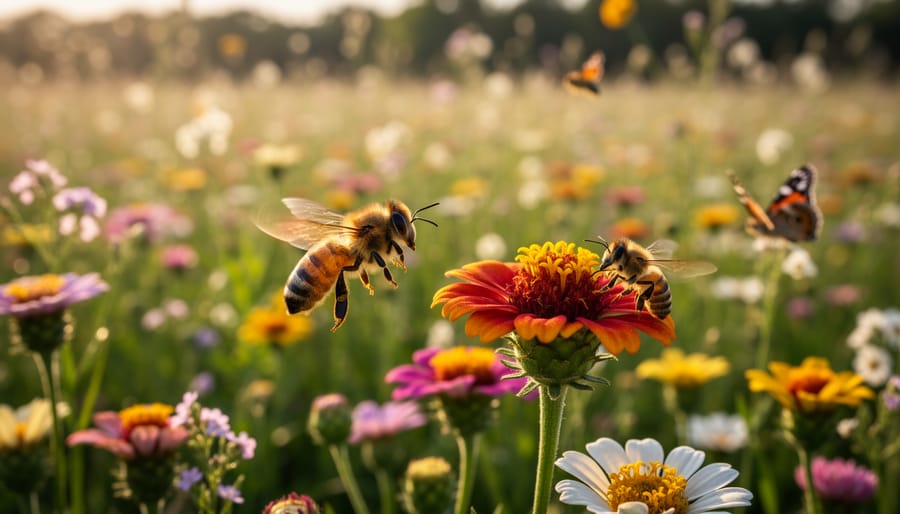
Canada’s pollinator populations face an existential threat from pesticide exposure, with implications that extend far beyond individual species survival. Bees, butterflies, and native pollinators essential to both agricultural systems and wild plant reproduction are experiencing unprecedented declines linked directly to chemical use.
Neonicotinoids pose particular danger to pollinator health. These systemic insecticides spread throughout plant tissues, including pollen and nectar that bees and butterflies consume. Even sublethal exposure impairs navigation, foraging ability, reproduction, and immune function in pollinators. A single contaminated flower can deliver enough chemical load to disorient a bee on its return flight to the hive.
The agricultural stakes are immense. One-third of the food Canadians eat depends on pollinator services, representing billions of dollars in crop value annually. Apples, berries, canola, and countless other crops require pollination. As wild and managed bee populations decline, farmers face reduced yields and increased production costs from diminished natural pollination.
Wild plant communities suffer equally. Native wildflowers, shrubs, and trees evolved over millennia in partnership with specific pollinators. When pesticides eliminate these insects, plant reproduction falters, seed production drops, and entire forest ecosystems lose regeneration capacity. Indigenous communities watching traditional food and medicine plants disappear from their territories witness firsthand how pesticide damage to pollinators disrupts cultural and ecological continuity.
The crisis demands immediate regulatory action and a fundamental shift toward pollinator-safe agricultural practices before irreversible damage occurs.
Beyond the Target: Non-Target Species Impact
Pesticides sold as targeted solutions rarely stay targeted. Insecticides meant for crop pests kill ladybugs, ground beetles, and parasitic wasps that naturally control pest populations. When these beneficial insects disappear, farmers face greater pest pressure, creating a destructive cycle that demands even more chemical applications.
Amphibians suffer disproportionately because their permeable skin absorbs chemicals directly from contaminated water and soil. Frogs and salamanders across Canadian wetlands experience deformities, immune suppression, and reproductive failures at pesticide concentrations well below levels deemed safe for fish or mammals. These amphibians control mosquito populations and serve as crucial food sources for birds and snakes, so their decline destabilizes entire wetland ecosystems.
Birds face exposure through multiple pathways. They ingest pesticide-coated seeds, consume contaminated insects, and drink from treated water sources. Research documents eggshell thinning, reduced reproductive success, and direct mortality in species ranging from songbirds to raptors. Grassland birds nesting in agricultural areas show particularly steep population declines correlated with neonicotinoid use.
Small mammals like shrews, voles, and bats accumulate pesticides through their insect-heavy diets. A single bat can consume thousands of insects nightly. When those insects carry pesticide residues, bioaccumulation occurs rapidly. The loss of these mammals disrupts seed dispersal, soil aeration, and natural pest control that farmers depend on.
Every non-target death reverses millions of years of ecological relationships that keep agricultural lands and wild spaces productive without human intervention.
Climate Connection: Pesticides and Greenhouse Gas Emissions
The connection between pesticide use and climate change runs deeper than most Canadians realize. While we often focus on emissions from vehicles and industry, agriculture’s chemical dependency fuels the climate crisis in three distinct ways: production, soil disruption, and ecosystem collapse.
Manufacturing synthetic pesticides demands enormous energy inputs. The industrial processes required to produce neonicotinoids like imidacloprid, clothianidin, and thiamethoxam release significant greenhouse gases before these chemicals ever reach a field. Each kilogram of synthetic pesticide carries a carbon footprint that compounds with every application across Canada’s vast agricultural landscape.
The damage accelerates once pesticides enter the soil. Healthy soil acts as a massive carbon sink, storing more carbon than Earth’s atmosphere and vegetation combined. But pesticides disrupt the microbial communities that build and maintain this storage capacity. When beneficial soil bacteria and fungi die off from chemical exposure, the soil’s ability to sequester carbon plummets. This degradation transforms agricultural land from a climate solution into a carbon source, releasing stored greenhouse gases back into the atmosphere.
The third pathway connects to broader ecosystem destruction. Pesticide contamination drives biodiversity loss across terrestrial and aquatic environments, as verified research confirms. When forests, wetlands, and grasslands lose the insects, pollinators, and soil organisms that maintain ecosystem health, these natural systems become less effective at absorbing carbon dioxide. The cascade effect means pesticide-damaged ecosystems contribute less to mitigating global warming impacts precisely when we need every natural carbon sink functioning at full capacity.
This climate-pesticide connection raises environmental justice concerns. Canada has committed to aggressive emissions reductions, yet our regulatory framework under the Pest Management Regulatory Agency doesn’t fully account for agriculture’s chemical contribution to climate change. Communities already facing disproportionate climate impacts, particularly Indigenous peoples and rural populations, bear the heaviest burden from both pesticide exposure and climate disruption.
Human Health Intersections: When Environmental Damage Becomes Personal
When pesticides seep into water, settle into soil, and drift through air, they don’t stay confined to agricultural fields. They enter our bodies through drinking water, food, and even the air we breathe, creating health risks that hit some communities much harder than others.
The health evidence is stark. Exposure to pesticides has been linked to cancer, reproductive harm, and impacts to child development, according to environmental health research. Farmworkers face the most direct exposure, handling treated crops and breathing in agricultural dust day after day. Rural communities living near treated fields experience pesticide drift during application, while their wells draw from groundwater contaminated by years of chemical use.
Indigenous communities bear a disproportionate burden. Many First Nations rely on traditional foods, fish from rivers, berries from the land, game from forests, that bioaccumulate pesticides as chemicals move up the food chain. The same contamination patterns that threaten species protected under the Species at Risk Act also compromise the food sovereignty and cultural practices of Indigenous peoples who’ve stewarded these lands for millennia.
This isn’t just an environmental issue. It’s an environmental justice crisis where the distance between your home and a treated field can determine your family’s cancer risk, where your job determines your chemical exposure, and where your cultural connection to the land becomes a pathway for contamination. Children in agricultural regions show higher pesticide residues in their bodies than urban children, setting up health impacts that can last a lifetime.
The regulatory framework treats environmental and human health as separate concerns, but contaminated ecosystems don’t respect those boundaries. What harms aquatic insects in Canadian waterways eventually reaches the people who depend on those waters.
Legal Victories and the Fight for Stronger Regulations
The legal battle over pesticide regulation in Canada has seen significant victories, though the fight for comprehensive reform continues. Environmental law organizations have successfully challenged regulatory decisions that prioritized industry interests over ecological protection, demonstrating that science-based advocacy can shift policy even when facing powerful opposition.
One landmark achievement came through sustained pressure on Health Canada’s Pest Management Regulatory Agency to re-evaluate neonicotinoid approvals. After environmental groups documented that imidacloprid was appearing in Canadian waterways at levels harmful to aquatic insects, legal challenges and public advocacy forced deeper environmental assessments. These efforts revealed what earlier reviews had missed: neonicotinoids posed significant environmental risks, particularly to aquatic ecosystems. While imidacloprid, clothianidin, and thiamethoxam remain approved for agricultural use as of 2024, restrictions have tightened in response to this pressure.
Collaborative work between environmental law organizations and Indigenous communities has proven particularly effective. Traditional ecological knowledge has strengthened legal arguments by documenting ecosystem changes that conventional monitoring missed. Indigenous nations have asserted jurisdiction over pesticide use on their territories, creating pesticide-free zones that serve as both refuges for biodiversity and models for alternative approaches.
Citizen groups have won important transparency battles, forcing disclosure of pesticide application data and health assessments that regulators initially kept confidential. These victories matter because regulatory processes often suffer from false balance treating industry assurances and independent science as equally credible when evidence quality differs dramatically.
Despite progress, regulatory gaps remain troubling in 2026. Canada still lacks mandatory monitoring of pesticide levels in groundwater, placing drinking water sources at risk. Environmental assessments continue to evaluate chemicals individually rather than considering cumulative exposure effects. Ongoing legal battles target these gaps, pushing for precautionary approaches that protect ecosystems before damage becomes irreversible rather than waiting for conclusive proof of harm.
The path forward requires sustained legal pressure combined with community-led advocacy, transforming isolated victories into systemic change.
Moving Forward: Sustainable Alternatives and Solutions
Canada stands at a crossroads between industrial agriculture and ecological wisdom. The evidence is clear: pesticides damage water, soil, biodiversity, and human health. Yet proven alternatives exist that restore ecosystem balance while maintaining agricultural productivity.
Integrated Pest Management (IPM) offers a science-based framework that prioritizes prevention over chemical intervention. IPM uses crop rotation, biological controls like beneficial insects, and targeted monitoring to manage pests with minimal environmental harm. Canadian farmers practicing IPM report comparable yields to conventional methods while dramatically reducing chemical inputs. This approach recognizes that healthy ecosystems naturally resist pest outbreaks through balanced predator-prey relationships.
Organic farming demonstrates that large-scale agriculture can thrive without synthetic pesticides. Certified organic operations across Canada use composting, cover cropping, and natural pest deterrents to build soil health and ecosystem resilience. These farms support richer biodiversity, cleaner waterways, and healthier rural communities. The growing market for organic products proves consumer demand aligns with environmental protection.
Traditional Indigenous land management offers time-tested wisdom. For thousands of years, Indigenous peoples cultivated productive landscapes through controlled burns, companion planting, and deep ecological knowledge. These nature-based solutions work with natural processes rather than against them. Collaborative partnerships between Indigenous communities and agricultural sectors can revitalize practices that sustained abundant ecosystems long before industrial chemicals arrived.
Legal advocacy accelerates the transition to sustainable agriculture. Environmental law organizations challenge inadequate pesticide regulations, demand transparent risk assessments, and push for policies supporting alternative farming methods. Court victories force regulatory agencies to prioritize ecosystem health over industry convenience. When citizens support these legal efforts through donations, testimony, and public pressure, they strengthen the case for protective policies.
Individual action multiplies into collective change. Homeowners can go natural with their lawns, eliminating pesticide use in gardens and yards. Communities can advocate for municipal pesticide bans and support local organic farmers through purchasing decisions. Specific steps create measurable impact:
- Transition your property to pesticide-free landscaping using native plants that resist pests naturally
- Buy certified organic produce and products to shift market demand toward sustainable agriculture
- Contact municipal representatives to support pesticide restriction bylaws in your community
- Donate to environmental law organizations challenging inadequate pesticide regulations
- Participate in public consultations when Health Canada reviews pesticide approvals
- Share knowledge about pesticide impacts and alternatives with neighbors and local groups
The path forward combines Indigenous wisdom, ecological science, and legal accountability. Sustainable alternatives exist now, proven effective across Canadian landscapes. What remains is political will, and that emerges when informed citizens demand environmental justice over chemical dependence.
The evidence is clear: pesticides contaminate our water, degrade our soil, accelerate biodiversity loss, and pose serious risks to human health. We’ve seen imidacloprid measured at harmful levels in Canadian aquatic environments, watched pollinator populations decline, and documented the cascade of damage through ecosystems from coast to coast. Yet within this troubling reality lies powerful potential for change.
Legal advocacy has proven its worth. Strategic litigation, regulatory challenges, and community-driven campaigns have forced reassessments of dangerous pesticides and strengthened protective measures. When environmental law organizations collaborate with Indigenous communities, who bring generations of ecological knowledge and legal standing to protect their territories, the impact multiplies. These partnerships have already shifted policy frameworks and established precedents that ripple across jurisdictions.
You have a role in this transformation. Support environmental law initiatives that challenge unsafe pesticide approvals and demand stronger regulatory oversight. Advocate for agricultural policies that prioritize integrated pest management and organic practices over chemical dependence. Amplify Indigenous voices in land management decisions, recognizing that traditional stewardship offers time-tested alternatives to industrial pesticide use.
The fight for environmental justice extends from courtrooms to farmlands, from legislative chambers to your own community. Every choice to support sustainable agriculture, every signature on a petition demanding regulatory reform, every dollar directed toward environmental legal defense builds momentum toward safer ecosystems.
The question isn’t whether pesticides affect the environment. The evidence has answered that definitively. The real question is what we do with that knowledge. Together, through legal action, Indigenous partnership, and collective commitment to change, we can protect the ecosystems that sustain us all.