 By kevin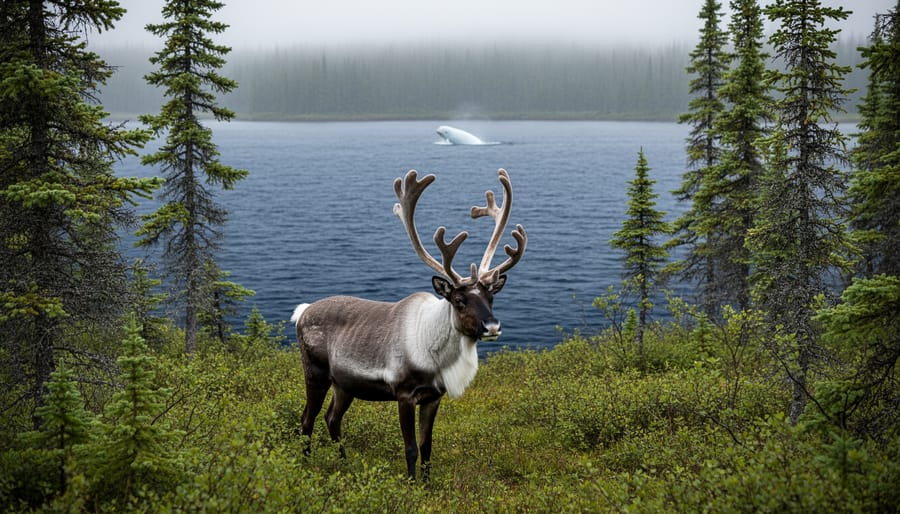
Quebec’s wilderness shelters some of Canada’s most iconic wildlife, from caribou herds that have roamed the boreal forest for millennia to beluga whales navigating the St. Lawrence River. Yet these animals face mounting pressures from habitat loss, climate change, and industrial development, protected by a complex web of federal and provincial laws that don’t always work in harmony.
Understanding Quebec’s wildlife means grasping both the ecological richness of the province and the legal mechanisms designed to safeguard it. Species at Risk Act protections apply to federally listed animals, while Quebec’s own Act Respecting Threatened or Vulnerable Species adds provincial layers of conservation. Where these frameworks overlap or conflict, animals often pay the price.
The stakes are particularly high for species found nowhere else. Quebec’s woodland caribou populations continue to decline despite decades of legal protections, caught between logging operations and the slow pace of critical habitat designation. Meanwhile, the St. Lawrence Estuary’s beluga population, once numbering in the thousands, struggles to recover under the weight of shipping traffic and chemical contaminants.
Indigenous communities hold crucial knowledge about these animals and their habitats, built through generations of careful observation. First Nations across Quebec have increasingly stepped into leadership roles in wildlife conservation, combining traditional ecological knowledge with modern science to protect species like the polar bear in Nunavik and Atlantic salmon in ancestral rivers.
This article examines Quebec’s distinctive wildlife, the legal protections meant to preserve them, and the ongoing battles to ensure those laws actually deliver results. Real cases demonstrate both victories and gaps in the current system, while pointing toward what effective protection requires.
Quebec’s Distinctive Wildlife: Species That Define the Province
Quebec stretches across nearly two million square kilometers, encompassing an extraordinary range of habitats that harbour approximately 650 vertebrate species. This vast territory spans from the St. Lawrence River valley through temperate forests into the boreal zone, and extends north to tundra landscapes where treeline gives way to Arctic conditions. The province’s position as a bridge between southern and northern ecosystems creates a biodiversity hotspot that demands careful legal protection.
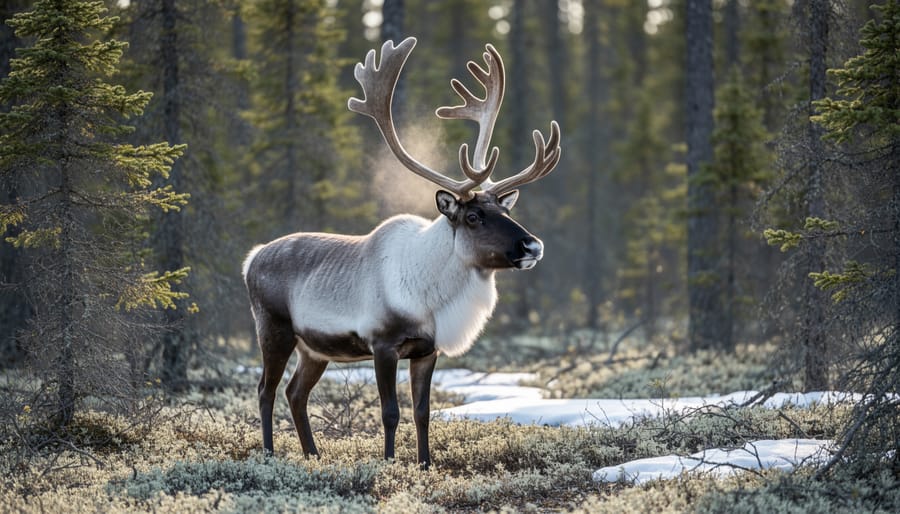
The boreal forest, covering roughly half of Quebec’s landmass, forms the backbone of the province’s wildlife habitat. Here, woodland caribou navigate ancient migration routes through dense coniferous stands, their populations reflecting the health of vast intact forest systems. These caribou require undisturbed old-growth forests and peatlands for survival, making them particularly vulnerable to industrial fragmentation. Canada lynx prowl these same forests, their populations closely tied to snowshoe hare cycles in a predator-prey relationship that has shaped northern ecosystems for millennia.
Black bears roam throughout Quebec’s forested regions, from the Laurentian Mountains to remote northern territories. As omnivores occupying diverse habitats from hardwood forests to berry-rich wetlands, they serve as indicators of ecosystem connectivity. Quebec’s black bear population remains relatively healthy compared to many jurisdictions, though human-wildlife conflict increases as development pushes into traditional bear territory.
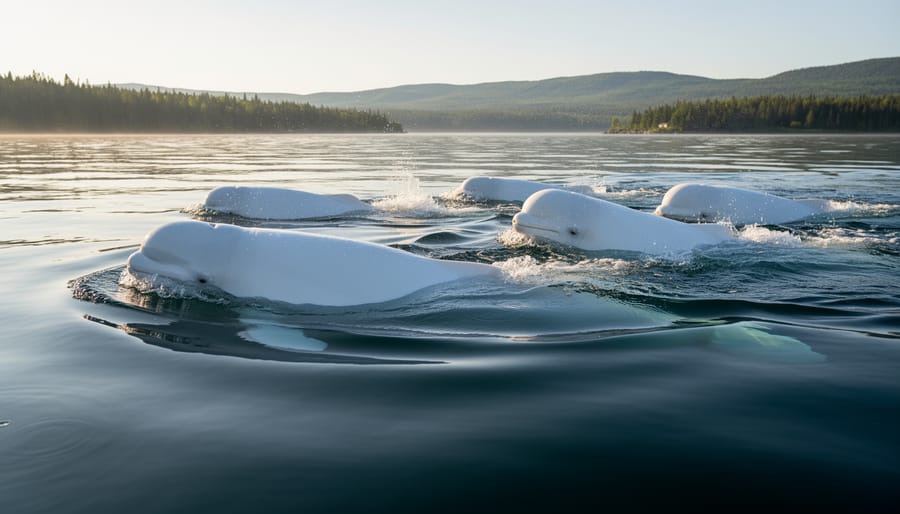
The St. Lawrence River and Estuary create an entirely different ecological realm. Beluga whales, a genetically distinct population numbering around 900 individuals, inhabit these waters year-round. Unlike most whales that migrate seasonally, St. Lawrence belugas remain in a relatively confined area where they face cumulative pressures from shipping, pollution, and noise. Their presence transforms the St. Lawrence into one of few places worldwide where resident whale populations inhabit waters adjacent to major urban centres.
Quebec’s geographic position along the Atlantic Flyway makes it critical habitat for millions of migratory birds. Snow geese stage dramatic migrations through the St. Lawrence valley each spring and fall, their massive flocks darkening skies. Waterfowl breeding grounds in northern wetlands, combined with stopover sites in agricultural lands and coastal marshes, support species that travel between Arctic breeding grounds and southern wintering areas. The province hosts significant populations of common loons, great blue herons, and numerous waterfowl species whose protection requires coordination across international boundaries.
This biodiversity concentration exists nowhere else in Canada with quite the same mix of marine, boreal, and transitional species occupying interconnected ecosystems that demand integrated legal protection strategies.
The Legal Framework: How Quebec’s Animals Are Protected
Federal Protections and Quebec Application
Canada’s federal government holds constitutional jurisdiction over specific categories of wildlife, creating a baseline of protection that applies throughout Quebec regardless of provincial boundaries. Under the Species at Risk Act (SARA), the Committee on the Status of Endangered Wildlife in Canada (COSEWIC) assesses species and recommends protection levels, endangered, threatened, or special concern. Once a species receives federal listing, SARA prohibits killing, harming, or harassing individuals and mandates protection of critical habitat necessary for survival and recovery.
This federal authority becomes particularly vital for migratory birds crossing provincial and international borders. The Migratory Birds Convention Act protects over 450 bird species that move through Quebec seasonally, prohibiting nest destruction and establishing hunting regulations. Federal oversight ensures consistent protection whether birds nest in Quebec’s boreal forest or winter in South America.
Marine species in the St. Lawrence fall squarely under federal jurisdiction through the Fisheries Act, which prohibits harmful alteration of fish habitat and protects marine mammals like beluga whales. Ottawa enforces these protections through fisheries officers who monitor shipping lanes, investigate pollution incidents, and prosecute violations.
The federal framework doesn’t work alone, it creates mandatory minimums that Quebec’s provincial laws can strengthen but not weaken. When provincial and federal protections overlap, the stricter standard prevails, ensuring Quebec’s wildlife benefits from layered legal safeguards rather than jurisdictional gaps.
Provincial Wildlife Legislation
Quebec’s primary provincial wildlife law, the Loi sur la conservation et la mise en valeur de la faune (Act Respecting the Conservation and Development of Wildlife), sets the foundation for how the province manages and protects its animals. Enacted in 1983, this legislation gives Quebec’s Minister of Forests, Wildlife and Parks authority to regulate hunting, fishing, and trapping while designating protected areas where wildlife takes priority over development.
The law divides Quebec into distinct wildlife management zones, each with tailored regulations reflecting local ecosystems and species populations. For example, harvest limits for moose differ dramatically between southern agricultural regions and northern boreal forests. These zones allow wildlife managers to respond to population fluctuations and habitat conditions with precision rather than applying blanket provincial rules.
Quebec’s civil law tradition shapes how wildlife legislation functions differently than in common-law provinces. Property rights, land use, and resource management follow Quebec’s Civil Code, creating a legal framework where wildlife protection intersects with distinct concepts of land tenure and public trust. This approach recognizes wildlife as part of Quebec’s collective heritage while balancing private land rights.
The province designates several types of protected areas under this legislation: wildlife habitats (habitats fauniques), wildlife sanctuaries (refuges fauniques), and controlled harvesting zones (zones d’exploitation contrôlée, or ZECs). ZECs represent a uniquely Quebec innovation, public lands where local non-profit organizations manage fishing and hunting access, ensuring sustainable use while generating community revenue.
Enforcement falls to wildlife protection officers who hold significant investigative powers, including warrantless entry onto private land when protecting threatened species or investigating violations. Penalties range from fines starting at $500 to potential prison terms for serious offenses like poaching endangered caribou.
Critical Threats Facing Quebec’s Wildlife in 2026
Industrial Development and Habitat Loss
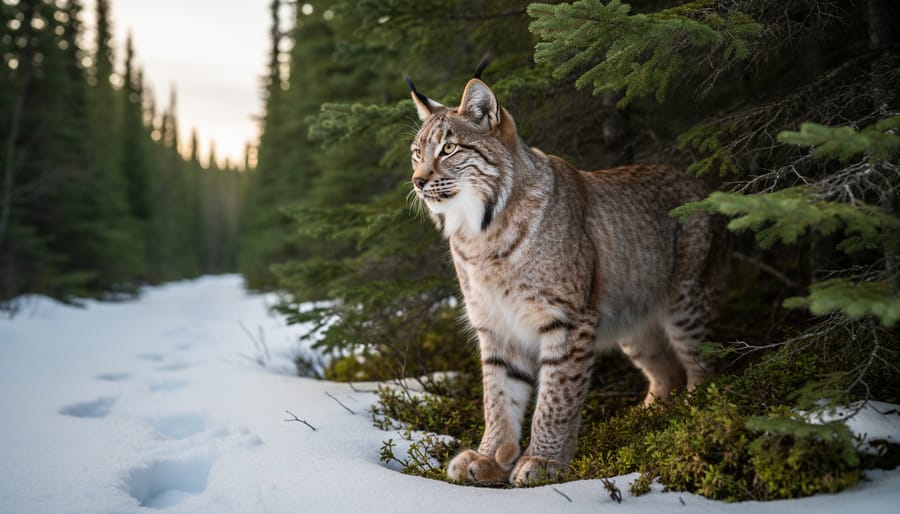
Quebec’s forests, waterways, and mineral-rich territories face relentless pressure from industrial activity that carves up the interconnected landscapes wildlife depends on. Commercial forestry operations clear vast tracts of boreal forest, home to woodland caribou, Canada lynx, and countless migratory birds, fragmenting ancient habitat corridors into isolated patches too small to sustain healthy populations. Mining projects punch roads and infrastructure deep into previously remote areas, disrupting breeding grounds and migration routes while introducing noise, light, and chemical contamination that drive sensitive species away from critical habitat.
Hydroelectric megaprojects, a cornerstone of Quebec’s energy economy, flood thousands of hectares and alter river flows that fish, waterfowl, and aquatic mammals have relied on for millennia. The James Bay development stands as a stark example: while it powers millions of homes, it permanently transformed wetlands and river systems that supported Indigenous harvesting and wildlife reproduction. New infrastructure, highways, transmission corridors, pipeline proposals, slices through remaining intact ecosystems, creating barriers that prevent gene flow between populations and expose animals to vehicle strikes and human encroachment.
The effects of fossil fuels extend beyond direct extraction sites, as transportation networks and processing facilities add cumulative stress to already-pressured ecosystems. Legal frameworks struggle to balance Quebec’s economic interests with binding obligations under SARA and provincial wildlife laws. Environmental assessments often approve projects with mitigation measures that sound robust on paper but fail in practice, leaving advocacy groups to challenge approvals through judicial review, a slow, expensive process that rarely halts development once momentum builds.
Climate Change and Northern Ecosystems
Quebec’s northern ecosystems face unprecedented pressure as climate change in Canada accelerates at twice the global rate. The province’s boreal forest and tundra regions, which stretch across nearly two-thirds of Quebec’s landmass, are warming faster than southern areas, with devastating consequences for adapted wildlife.
Woodland caribou populations have declined by over 60% in recent decades as warming temperatures fragment their habitat. Earlier spring thaws reduce access to traditional lichen food sources, while increased forest fires driven by hotter, drier conditions destroy critical calving grounds. The animals face a cruel paradox: retreating northward into increasingly unsuitable terrain or competing for shrinking habitat with expanding moose and deer populations that thrive in warmer conditions.
Arctic species like the Arctic fox and ptarmigan confront similar pressures. Warmer winters bring freezing rain that encases vegetation in ice, starving herbivores and disrupting food chains. Meanwhile, migratory bird species that rely on Quebec’s northern wetlands arrive to find timing mismatches, insects they depend on now emerge weeks earlier than expected, before chicks hatch.
These cascading disruptions demand urgent legal and conservation responses to protect species running out of time and space.
St. Lawrence River Ecosystem Under Pressure
The St. Lawrence River faces mounting pressures that threaten its rich biodiversity. Shipping traffic in the river and gulf poses severe risks to the endangered St. Lawrence beluga whale population, now numbering fewer than 900 individuals. Vessel strikes, underwater noise that disrupts echolocation and communication, and disturbance of critical feeding areas create cumulative stress on these marine mammals.
Industrial and agricultural runoff introduces toxic contaminants into the ecosystem. Pollutants accumulate in the food chain, affecting species from invertebrates to top predators. Belugas, feeding at high trophic levels, carry concerning loads of heavy metals and persistent organic pollutants that compromise their immune systems and reproductive success.
Coastal development and dredging operations degrade essential habitats. Wetlands that serve as nurseries for fish species disappear under urbanization pressure. Sedimentation from construction smothers spawning grounds. These habitat losses ripple through the ecosystem, reducing populations of fish, birds, and mammals that depend on St. Lawrence waters.
Water quality degradation from sewage discharge, particularly during overflow events, introduces pathogens and nutrients that trigger harmful algal blooms, creating dead zones where oxygen levels cannot support aquatic life.
Indigenous Leadership in Quebec Wildlife Protection
First Nations and Inuit communities in Quebec have protected the province’s wildlife for thousands of years, long before European legal frameworks existed. Today, their leadership remains essential to effective conservation, combining generations of ecological knowledge with modern science and legal advocacy to safeguard species and habitats across the province.
Traditional ecological knowledge, the deep understanding of animal behaviour, migration patterns, and ecosystem relationships passed down through generations, provides insights that scientific studies alone cannot capture. Cree hunters in James Bay, for instance, track caribou populations using indicators invisible to conventional monitoring: changes in lichen coverage, subtle shifts in migration timing, and behaviours that signal stress from industrial disturbance. Inuit communities in Nunavik have documented climate impacts on Arctic species decades before southern researchers recognized the patterns, observing altered ice conditions affecting seal populations and predator-prey dynamics shifting as temperatures rise.
This knowledge isn’t abstract cultural heritage. It’s active, practical stewardship that directly protects wildlife. The Eeyou Marine Region, established in 2012 through Cree-Quebec-Canada negotiations, created a co-management framework where Cree knowledge guides decisions about marine species protection in James Bay and Hudson Bay waters. Hunters and trappers serve as the eyes on the land, reporting population changes and habitat threats in real time across territories too vast for government agencies to monitor effectively.
Legal recognition of Indigenous rights has strengthened wildlife protection substantially. The James Bay and Northern Quebec Agreement, signed in 1975, established exclusive hunting and fishing rights for Cree and Inuit communities across specific territories, creating de facto protected zones where commercial exploitation is limited. More recent agreements acknowledge Indigenous jurisdiction over land management decisions that affect wildlife, requiring meaningful consultation before industrial projects proceed.
Several communities have gone further, establishing Indigenous Protected and Conserved Areas that prohibit resource extraction entirely. The Broadback River watershed, protected through Cree leadership, safeguards critical habitat for woodland caribou, black bears, and countless other species across 2,600 square kilometres of intact boreal forest. These conservation areas often exceed government-designated protected zones in both size and enforcement effectiveness.
Collaborative management agreements between Indigenous nations and government agencies are reshaping Quebec’s approach to wildlife protection. The Cree Nation Government co-manages wildlife throughout Eeyou Istchee, combining scientific research with traditional knowledge to set harvest levels, identify critical habitats, and respond to emerging threats. Similar partnerships with Innu, Atikamekw, and other nations are expanding, though much work remains to fully integrate Indigenous authority into provincial decision-making.
Legal frameworks continue evolving to recognize these rights. Courts increasingly affirm that meaningful consultation means Indigenous communities must have real influence over projects affecting their territories, not merely token participation. This legal shift strengthens wildlife protection by ensuring communities whose livelihoods depend on healthy ecosystems have voice in industrial approvals.
Legal Victories and Ongoing Battles: Case Studies from Quebec

Quebec’s wildlife has benefited from strategic legal interventions that have reshaped how development projects account for animal protection. These cases demonstrate how environmental law translates into tangible habitat preservation and species recovery.
In 2019, environmental groups successfully challenged the federal government’s approval of the Energy East pipeline project, which would have crossed sensitive caribou habitat in northern Quebec. The legal challenge focused on inadequate assessment of cumulative impacts on woodland caribou populations already listed as threatened under SARA. The project was ultimately abandoned, preserving critical migration corridors for herds that had declined by over 60% in recent decades.
The protection of the Anticosti Island caribou population showcases how legal pressure can force government action. After years of advocacy and threatened litigation, Quebec designated new protected areas in 2023 covering 4,300 square kilometers of caribou habitat on the island. Legal advocates had documented population declines and prepared evidence showing the province’s failure to meet recovery planning obligations under provincial and federal law. The designation came just as formal legal proceedings were about to be filed.
St. Lawrence beluga whales gained significant protection through a 2020 court victory that strengthened shipping regulations in critical habitat zones. Environmental lawyers argued that vessel traffic caused acoustic disturbance violating federal Fisheries Act protections. The ruling established mandatory slow-down zones and seasonal restrictions in key feeding and calving areas, directly addressing one of the most significant threats to the population of approximately 900 remaining belugas.
Current battles focus on hydroelectric expansion in northern rivers that support brook trout populations and provide essential habitat for river otters and American mink. Legal challenges are underway questioning whether environmental assessments properly considered downstream effects on aquatic ecosystems and whether Indigenous consultation met constitutional standards.
Mining exploration in caribou calving grounds remains another active legal front. Advocates have filed challenges to exploration permits issued in 2025, arguing they violate critical habitat protections established under recovery strategies. The outcome will set precedents for balancing resource extraction with endangered species protection across Quebec’s north.
These cases share common elements: rigorous scientific evidence, persistent advocacy, and willingness to use legal tools when voluntary measures fail. They prove that legal action remains essential for holding governments and industries accountable to wildlife protection standards.
How Legal Action Protects Wildlife: The Process Explained
Environmental law organizations protect Quebec’s wildlife through a structured process that transforms evidence into enforceable legal action. Here’s how it works in practice.
The Legal Process Step-by-Step
- Threat Identification and Assessment: Lawyers and scientists identify risks to wildlife through field monitoring, community reports, and reviews of proposed industrial projects. This might involve examining a new mining permit near caribou calving grounds or analyzing pollution data from the St. Lawrence.
- Evidence Gathering: Teams compile scientific research, government documents, environmental impact assessments, and photographic evidence. They often work with biologists to document how a specific development threatens critical habitat or violates species protection orders.
- Legal Analysis: Attorneys review whether federal or provincial laws have been violated, identifying grounds for legal action under SARA, the Fisheries Act, or Quebec’s wildlife conservation legislation.
- Negotiation and Advocacy: Before filing court challenges, organizations often engage directly with government agencies and companies, seeking voluntary compliance or permit modifications that reduce harm.
- Formal Legal Action: When negotiation fails, lawyers file judicial reviews, injunctions, or enforcement complaints to compel government action or stop harmful activities.
- Court Proceedings and Resolution: Cases move through hearings where expert testimony, scientific data, and legal arguments establish whether wildlife protections have been breached and what remedies are necessary.
This framework allows environmental policy and law organizations to hold governments and industries accountable. The process requires patience, cases can take years, but creates binding precedents that protect entire ecosystems. For Quebec’s beluga whales, woodland caribou, and countless other species, this legal scaffolding provides the strongest defense against threats that voluntary measures alone can’t address. Each successful case strengthens the broader framework, making future protections more robust and enforcement more predictable.
What You Can Do: Taking Action for Quebec’s Wildlife
Protecting Quebec’s wildlife isn’t reserved for lawyers and scientists. Every resident can contribute meaningfully to conservation efforts, and your actions matter more than you might think.
Start by becoming the eyes and ears of enforcement. When you witness wildlife harassment, illegal hunting, habitat destruction, or injured animals, report it immediately to Quebec’s SOS Poaching hotline at 1-800-463-2191 or through the provincial wildlife emergency number. Document what you see with photos, GPS coordinates, and detailed notes. These reports trigger investigations and have led to prosecution of poaching operations and illegal habitat clearing.
Join citizen science projects that monitor Quebec’s species. Programs like eBird Canada track bird populations, while the Quebec Amphibian and Reptile Atlas documents these vulnerable species across the province. Your observations from weekend hikes or backyard watching feed into databases that inform conservation decisions and legal protections. These contributions aren’t busywork, they’ve identified previously unknown breeding sites and detected population declines that prompted protective action.
Transform your property into habitat. Converting even part of your lawn to a natural yard with native Quebec plants creates corridors for pollinators, songbirds, and small mammals. Reduce pesticide use, install bird-safe window treatments, and keep cats indoors.
Support legal advocacy financially or through volunteer work. Organizations fighting for wildlife protection need resources to challenge harmful projects, intervene in environmental assessments, and hold government accountable. Many welcome volunteers to help with research, public outreach, and administrative support.
Participate in public consultations when government proposes changes to wildlife regulations or reviews development projects. Your submission carries weight, especially when you reference specific species, habitats, or legal protections at stake.
Build relationships with Indigenous-led conservation initiatives. Many First Nations and Inuit communities welcome respectful collaboration on land stewardship projects. Follow their leadership, honour their knowledge systems, and support their advocacy for expanded Indigenous Protected and Conserved Areas in Quebec.
Quebec’s wildlife, from the beluga whales navigating the St. Lawrence to the caribou traversing northern forests, represents an irreplaceable natural heritage. These animals face mounting pressures, but they also benefit from increasingly sophisticated legal protections and a growing coalition of defenders.
The legal framework protecting Quebec’s biodiversity is strongest when all its components work together. Federal and provincial laws establish essential safeguards, but their effectiveness depends on active enforcement and citizen engagement. Indigenous communities bring generations of ecological knowledge and stewardship that strengthens conservation efforts. Environmental law organizations provide the legal expertise to hold governments and industries accountable. Citizens contribute through reporting violations, participating in consultations, and supporting advocacy work.
This collaborative approach has already secured meaningful victories for Quebec’s animals. Each successful legal challenge, each new protected habitat, and each strengthened regulation builds momentum toward more comprehensive wildlife protection.
The work continues. As threats evolve, so must our responses. Whether you monitor local ecosystems, support legal action, or amplify conservation voices, your role matters. Quebec’s animals depend on this collective vigilance and the willingness to use every available tool, legal, scientific, and traditional, to ensure their survival for generations to come.
Frequently Asked Questions
Which Quebec animals are most at risk?
Woodland caribou populations face critical threats from habitat fragmentation, while St. Lawrence beluga whales remain endangered due to pollution and shipping traffic. The copper redhorse fish, found only in Quebec’s waters, is also at severe risk.
How do I report wildlife violations in Quebec?
Contact the Quebec Wildlife Protection Service (SOS Braconnage) at 1-800-463-2191 to report poaching, harassment of wildlife, or illegal habitat destruction. You can also reach the federal wildlife enforcement line at 1-877-997-9845 for violations involving migratory birds or federally-protected species.
What’s the difference between federal and provincial wildlife laws?
Federal laws protect migratory birds, marine species, and animals listed under the Species at Risk Act, while provincial legislation manages terrestrial wildlife, hunting regulations, and most habitat protections. Both levels work together, and violations can trigger enforcement from either jurisdiction.
How are Indigenous communities involved in wildlife management?
First Nations and Inuit communities hold treaty rights and traditional knowledge that inform co-management agreements across Quebec. Many conservation areas are now managed collaboratively, integrating Indigenous ecological practices with contemporary legal frameworks to strengthen wildlife protection.
Beyond these common questions, readers often wonder about their own role in legal challenges. While environmental law organizations typically lead court cases, citizens strengthen these efforts by providing documentation of violations, participating in consultations on proposed developments, and supporting legal advocacy through donations or volunteer time. Your observations matter: photos of habitat destruction, records of wildlife disturbances, and testimony about ecosystem changes become evidence in legal proceedings.
If you encounter injured wildlife, contact a local rehabilitation center rather than attempting rescue yourself. The Quebec Ministry of Forests, Wildlife and Parks maintains a network of authorized facilities. For urgent situations involving large animals or public safety concerns, reach local wildlife officers directly through their regional offices.
Getting involved starts simply. Join citizen science projects monitoring species like monarch butterflies or amphibians, attend public hearings on resource extraction proposals, or connect with Indigenous-led conservation initiatives in your region. Legal protection works best when backed by informed, engaged communities who understand both the threats facing Quebec’s animals and the tools available to defend them.