 By kevin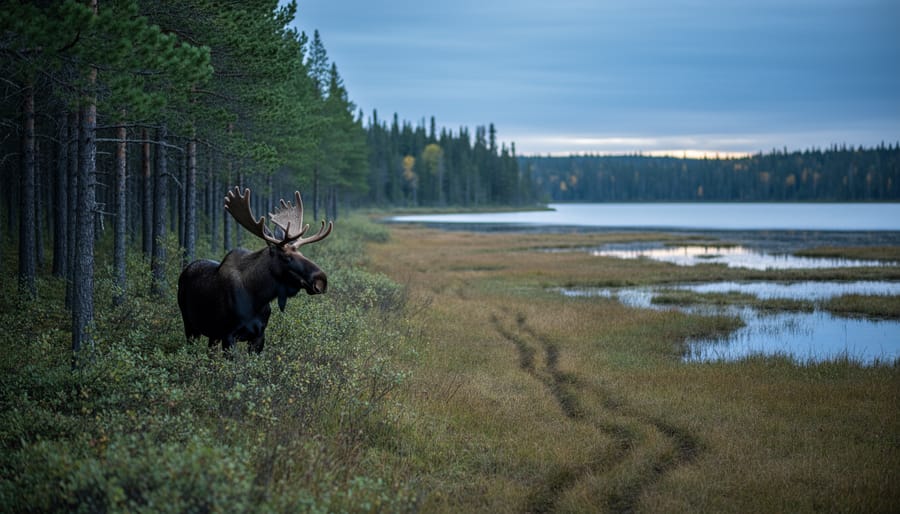
Ontario harbors more than 85,000 species of plants, animals, and other organisms across ecosystems stretching from the Great Lakes to the Hudson Bay Lowlands, yet fewer than half enjoy any meaningful legal protection despite mounting threats from habitat loss, climate change, and industrial development. The province’s wildlife faces a patchwork of federal and provincial laws that leave critical gaps, allowing species to decline even as legal frameworks exist on paper.
Understanding what protects Ontario’s wildlife matters now more than ever. The federal Species at Risk Act covers only species designated as at-risk nationally, while Ontario’s Endangered Species Act has been weakened through exemptions that permit harmful activities to continue even in protected habitat. Moose populations have plummeted in some regions. Woodland caribou continue their retreat northward. Grassland birds have lost 70% of their numbers since 1970. Meanwhile, thousands of common species receive no proactive protection until they’re already in crisis.
But the story isn’t one of inevitable decline. Legal action has achieved tangible wins for Ontario wildlife. Court challenges have forced government accountability on caribou habitat. Indigenous-led conservation initiatives are restoring ecosystems using traditional knowledge alongside Western science. Citizen-driven campaigns have stopped destructive projects and strengthened enforcement.
This article maps Ontario’s wildlife landscape and the laws meant to safeguard it. You’ll learn which species call this province home, what threatens their survival, where legal protections succeed and where they fail, and how strategic legal action has changed outcomes on the ground. Whether you’re advocating for stronger laws, defending habitat in your community, or simply want to understand the legal tools available, you’ll find concrete pathways to support wildlife protection across Ontario’s diverse regions.
Ontario’s Wildlife Diversity: An Ecological Treasure at Risk

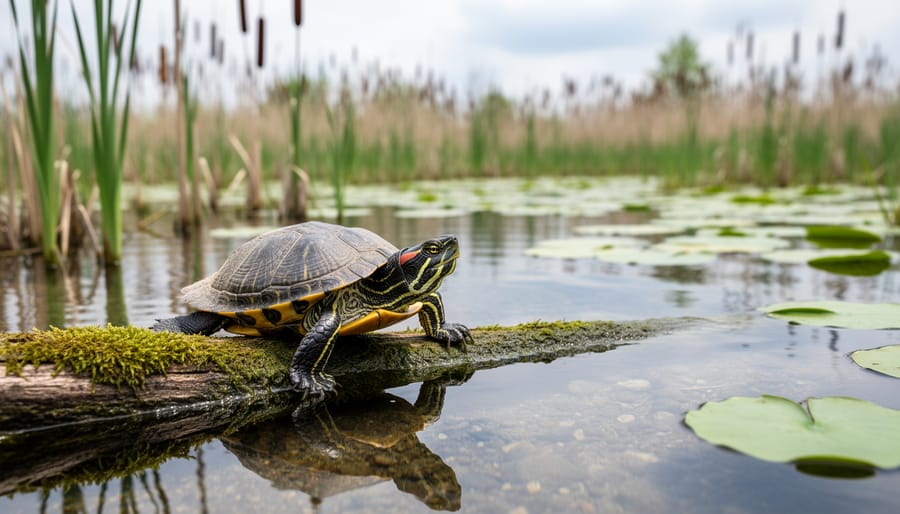
Ontario spans over one million square kilometers, encompassing a remarkable range of ecosystems that support thousands of plant and animal species. The province’s geography stretches from the Hudson Bay Lowlands in the far north through the vast boreal forests of the Canadian Shield to the deciduous woodlands and wetlands of the south. This diversity creates habitat for woodland caribou in northern peatlands, threatened Blanding’s turtles in southern wetlands, millions of migratory birds along the Great Lakes flyway, and over 150 species of freshwater fish in rivers and lakes that hold nearly one-fifth of the world’s surface freshwater.
The Great Lakes basin alone functions as a continental biodiversity hotspot, where wetlands, coastal marshes and nearshore waters provide critical breeding, feeding and migration stopover sites. These aquatic ecosystems support species found nowhere else, including the endangered lake sturgeon and populations of Atlantic salmon being restored after decades of absence. Meanwhile, Ontario’s Carolinian zone in the southwest represents the northern limit for species like the monarch butterfly, whose dramatic population decline reflects broader pollinator crises affecting agricultural and natural landscapes.
Yet this ecological wealth faces mounting pressure. Southern Ontario has lost over 70 percent of its original wetlands to agriculture and development, fragmenting habitat for species like the eastern massasauga rattlesnake and Jefferson salamander. Urban sprawl continues to consume farmland and natural areas at alarming rates, particularly around the Greater Toronto Area, where expanding suburbs push into remaining green corridors. In the north, resource extraction including mining, forestry and hydroelectric development disrupts caribou calving grounds and fragments old-growth forest that cannot regenerate quickly in subarctic conditions.
Climate change compounds these threats by shifting suitable habitat ranges northward faster than many species can migrate, altering water levels in wetlands, and creating conditions for invasive species that outcompete native wildlife. This convergence of pressures makes Ontario a testing ground for whether legal protections can keep pace with ecological reality.
The Legal Framework Protecting Ontario Wildlife
Federal Protections: Species at Risk Act (SARA) and Migratory Birds Convention Act
Canada’s federal government holds jurisdiction over migratory birds, aquatic species, and wildlife on federal lands through two primary statutes: the Species at Risk Act (SARA) and the Migratory Birds Convention Act (MBCA). Understanding these laws reveals both the framework protecting Ontario’s wildlife and the limitations that leave many species vulnerable.
SARA, enacted in 2002, provides legal protection for species assessed as at risk by the Committee on the Status of Endangered Wildlife in Canada (COSEWIC). Once a species lands on the federal list as endangered, threatened, or of special concern, SARA prohibits killing, harming, or disturbing the animal and its residence. For aquatic species and migratory birds, this protection applies across Canada. For terrestrial species, federal protection kicks in only on federal lands, national parks, military bases, Indigenous reserves, leaving most of Ontario’s landscape to provincial jurisdiction.
The Act requires the government to identify and legally protect critical habitat necessary for a species’ survival or recovery. Here’s where enforcement struggles emerge. Critical habitat designation often takes years, sometimes over a decade after listing. Political and economic pressures can delay or weaken habitat protections, and ministerial discretion allows exemptions that undermine the law’s intent.
The Migratory Birds Convention Act, dating to 1917 and modernized in 1994, protects over 400 bird species that migrate between Canada and the United States. The MBCA makes it illegal to harm migratory birds, their nests, or eggs without a permit. This coverage extends across Ontario regardless of land ownership, offering broader geographic protection than SARA for species like Canada warblers and bobolinks.
Both laws carry penalties for violations, but enforcement remains inconsistent. Prosecutions are rare, and industries often face minimal consequences for incidental harm to protected species.
Provincial Authority: Endangered Species Act (ESA) and Fish and Wildlife Conservation Act
Ontario’s Endangered Species Act (2007) stands as the province’s primary tool for protecting at-risk wildlife and habitat, with automatic protections triggered once a species is listed. Unlike Quebec wildlife laws that require additional regulatory steps, Ontario’s ESA originally provided immediate habitat and species protections upon listing, a framework environmental lawyers considered among the strongest in Canada.
When the Committee on the Status of Species at Risk in Ontario (COSSARO) lists a species as endangered or threatened, the ESA prohibits killing, harming, or harassing individuals and destroying their habitat. The law requires the government to develop recovery strategies and government response statements outlining how Ontario will support species recovery. For years, this automatic protection model served as a crucial safety net, particularly for species whose habitat faced development pressure.
- Critical habitat
- The specific areas essential for a species’ survival and recovery, legally protected once identified in a recovery strategy.
- Species at Risk registry
- Ontario’s public database listing all endangered, threatened, and special concern species, triggering different levels of legal protection for each category.
- Ministerial exemption
- A discretionary power allowing the Minister to authorize activities that would otherwise violate species or habitat protections, often granted for development projects.
- Habitat regulation
- A legal instrument defining precisely which areas count as protected habitat for a listed species, determining where development restrictions apply.
- Recovery strategy
- A science-based plan outlining the steps needed to halt or reverse a species’ decline, required within specific timelines after listing.
However, 2019 amendments fundamentally altered this protection landscape. The changes introduced decoupling protections from listing allowing the government to delay or deny habitat protections even after COSSARO confirms a species requires them. The Minister gained expanded discretion to issue temporary exemptions and permits, creating pathways for industrial activities in critical habitat that previously would have faced prohibition. Environmental law organizations challenged these changes as undermining the ESA’s core purpose.
The Fish and Wildlife Conservation Act (1997) complements the ESA by regulating hunting, trapping, and fishing of non-listed species. While it provides seasonal protections and harvest limits, it operates as a resource management tool rather than a conservation law, focusing on sustainable use rather than habitat preservation for species in decline.
Where Indigenous Law and Knowledge Intersect
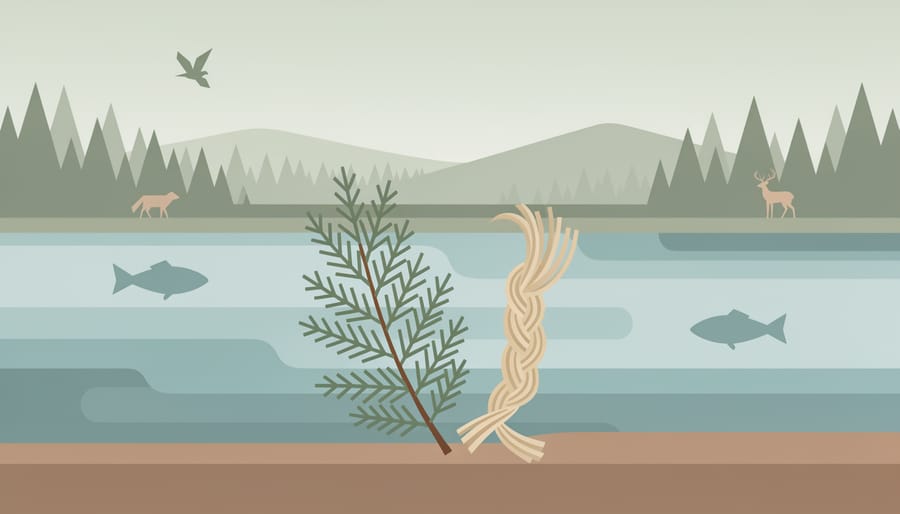
Long before Canadian wildlife law existed, Indigenous nations across Ontario developed sophisticated legal systems governing relationships with animals, plants, and ecosystems. These frameworks, grounded in centuries of observation and reciprocal stewardship, remain living legal traditions today, not historical artifacts, but active governance systems that inform contemporary conservation.
Ontario is home to diverse Indigenous nations including Anishinaabe, Haudenosaunee, Cree, and Métis communities, each with distinct legal protocols regarding wildlife. Many recognize animals as non-human persons with inherent rights, a concept fundamentally different from Canadian law’s treatment of wildlife as Crown property. These legal orders emphasize intergenerational responsibility: decisions must consider impacts seven generations forward.
Canadian courts increasingly recognize Indigenous legal traditions as valid sources of law. The Constitution Act affirms Aboriginal and treaty rights, and the Supreme Court has established a duty to consult Indigenous communities on projects affecting their territories and resources, including wildlife habitat. Yet consultation often falls short of meaningful consent or co-governance.
Collaborative management agreements represent a promising intersection. Ontario has established co-management boards with several First Nations, sharing decision-making authority over wildlife and habitat in specific regions. These partnerships blend Western scientific monitoring with Indigenous knowledge systems, creating more resilient conservation strategies. When Indigenous guardianship programs monitor caribou movements or treaty rights inform fisheries management, wildlife protection becomes both legally stronger and ecologically smarter.
Major Threats to Ontario Wildlife and Their Legal Implications
Development and Urban Sprawl
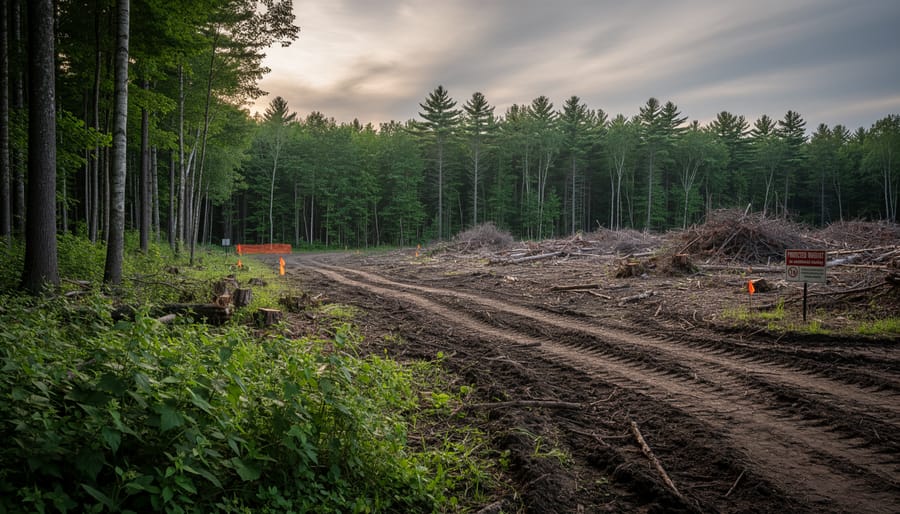
Ontario loses approximately 319 acres of farmland and natural areas daily to sprawl, a pattern that fragments wildlife habitat across critical corridors. The provincial Planning Act governs land use, but its focus on accommodating growth often supersedes ecological considerations. Municipalities approve subdivisions and commercial developments in areas that bisect animal migration routes, isolate breeding populations, and eliminate the contiguous forest blocks many species require.
Urban sprawl continues to consume farmland and natural areas at alarming rates, particularly around the Greater Toronto Area, where expanding suburbs push into remaining green corridors. In the north, resource extraction including mining, forestry and hydroelectric development disrupts caribou calving grounds and fragments old-growth forest that cannot regenerate quickly in subarctic conditions.
Environmental Assessment Act reviews theoretically evaluate development impacts, yet projects below designated thresholds bypass comprehensive scrutiny entirely. A subdivision splitting wetland habitat might proceed without triggering provincial assessment if it falls under local authority alone. Even when assessments occur, cumulative effects analysis remains weak, each individual project may seem manageable, but collectively they erode landscape connectivity that wildlife depends upon.
Legal loopholes compound the problem. Ministerial Zoning Orders allow the province to fast-track development while exempting projects from normal planning processes, including public input and environmental oversight. Recent MZOs have approved warehouse complexes and highways through ecologically sensitive areas, overriding municipal objections and conservation authority recommendations. Once habitat converts to pavement, legal protections for the species that lived there become moot, you cannot protect what no longer exists.
Resource Extraction and Industrial Activity
Ontario’s vast natural resources have long fueled its economy, but mining, forestry, and energy development increasingly collide with critical wildlife habitat. The Ring of Fire mining region in the Far North, for instance, threatens intact boreal forest and peatlands that woodland caribou and dozens of migratory bird species rely upon. Industrial forestry operations fragment habitat corridors essential for species movement, while wind energy projects, though beneficial for climate, can create mortality risks for bats and raptors when sited without adequate environmental review.
What makes these threats particularly insidious is the legal mechanism that enables them: ministerial exemptions under the Endangered Species Act. Section 17 permits the Minister of Environment to authorize activities that would otherwise violate species protections, ostensibly with conditions attached. In practice, these exemptions have proliferated. Between 2013 and 2019, the province issued permits allowing harm to endangered species habitat in over 1,800 instances, many tied to resource extraction projects.
Recent amendments expanded this discretion further, allowing industry to delay habitat protection for up to three years while developing mitigation plans. Environmental law organizations have challenged several high-profile exemptions through judicial review, arguing they undermine the ESA’s core purpose. A 2022 case forced the government to reconsider a permit that would have destroyed turtle nesting habitat for a highway expansion, demonstrating that legal scrutiny can impose meaningful limits on regulatory overreach.
Climate Change as a Threat Multiplier
Climate impacts hit Ontario’s wildlife through cascading mechanisms that current laws rarely anticipate. Climate change forces species northward, boreal caribou lose southern habitat to warming forests, while cold-water fish abandon warming lakes, but fragmented landscapes leave nowhere to migrate. Phenological mismatches disrupt timing: emerging insects no longer coincide with nesting birds, and unseasonable warm spells trigger early amphibian breeding followed by lethal frost.
Extreme weather intensifies every other threat. Flooding drowns turtle nests already diminished by road mortality. Droughts shrink wetlands faster than development approvals, leaving waterfowl with vanishing staging areas. Yet Ontario’s Endangered Species Act treats these as isolated incidents rather than systemic shifts, offering no mechanism to mandate climate-adaptive habitat corridors or require proponents to account for compounded vulnerability.
The legal framework assumes static ecosystems. Critical habitat designations don’t move as species ranges shift, and recovery strategies ignore climate projections. Without embedding nature-based solutions like protecting large intact forests that buffer temperature extremes, into enforceable law, Ontario’s wildlife protections will remain perpetually outdated against an accelerating threat.
Legal Victories and Case Studies: When the Law Works for Wildlife
Litigation can change the trajectory of a species. In 2019, environmental groups challenged Ontario’s decision to delay protection for nine threatened and endangered species, arguing the government violated its own Endangered Species Act. The Ontario Superior Court agreed, ordering immediate restoration of protections for species including the Blanding’s turtle and eastern whip-poor-will. This ruling reinforced that ministerial discretion has limits, legal commitments to at-risk species cannot be indefinitely postponed for political convenience.
The Algonquin wolf provides another compelling example. After the province downgraded its status from threatened to special concern in 2016, removing automatic habitat protections, conservation organizations mounted a legal challenge. While the case highlighted procedural flaws in the delisting process, it also catalyzed public pressure that led to enhanced protections for wolves in Ontario’s provincial parks. The wolf population has since stabilized in core habitat areas, demonstrating how legal action can create breathing room for recovery even when courtroom victories are partial.
Wetland protection victories often fly under the radar but deliver outsized conservation impact. In 2017, judicial review blocked a proposed development in critical turtle nesting habitat near Peterborough after the environmental assessment failed to adequately address cumulative impacts on seven species at risk. The ruling established precedent requiring more rigorous impact analysis when multiple listed species share habitat, effectively raising the bar for development approvals in biodiverse areas.
Indigenous-led legal advocacy has protected vast wildlife corridors. The Grassy Narrows First Nation’s decades-long fight against clearcut logging in their traditional territory culminated in a 2021 agreement securing over 3,400 square kilometres of boreal forest as protected area. This landscape supports caribou, moose, and wolverine populations that depend on intact old-growth forest, species that would have faced local extirpation under the original forestry plans.
Strategic litigation around the Ring of Fire mineral development in the Far North has delayed projects that threatened caribou calving grounds and migratory bird staging areas. While these cases are ongoing, the legal challenges have forced more comprehensive consultation with Indigenous communities and better consideration of cumulative effects, fundamentally reshaping how mining projects must address wildlife impacts.
These cases share common threads: they leveraged existing laws to demand government accountability, they combined legal expertise with scientific evidence, and they mobilized public concern into policy outcomes. They prove that wildlife protection laws have teeth when rigorously enforced and that courts can serve as crucial backstops against regulatory capture.
Gaps in Protection: What Current Laws Miss
Despite Ontario’s relatively robust legal framework on paper, significant gaps undermine the protection of wildlife in practice. Enforcement capacity remains chronically underfunded, conservation officers are stretched thin across vast territories, making monitoring and prosecution of violations sporadic at best. Without adequate boots on the ground, even strong legal protections become aspirational rather than effective.
Ministerial override authority represents another fundamental flaw. Recent amendments to the Endangered Species Act grant cabinet ministers broad power to issue exemptions and permits that allow harmful activities in protected habitat, often with minimal public transparency. This discretionary power has been exercised to fast-track development projects through sensitive areas, effectively creating legal workarounds that gut the law’s protective intent. When political convenience can trump scientific necessity, wildlife loses.
The framework’s species-by-species approach creates blind spots for ecosystem-level threats. A listed species may receive habitat protection within a defined area, yet the broader landscape connectivity essential for genetic diversity and climate adaptation goes unaddressed. Wetlands exemplify this gap, unless they contain listed species, many face no meaningful legal protection from drainage or infilling, despite their critical role supporting countless species and filtering water.
Connectivity corridors between protected areas lack formal recognition in Ontario law, leaving migration routes and dispersal pathways vulnerable to fragmentation. As climate shifts force species to move northward or seek new suitable conditions, the absence of legally protected corridors creates barriers that no amount of species-specific designation can overcome. The law protects trees but ignores the forest, and wildlife pays the price for that myopia.
How Legal Action Strengthens Wildlife Protection
Environmental law functions as a critical accountability tool, leveraging the courts and administrative processes to ensure governments and industry follow their legal obligations to wildlife. When species protections are undermined or habitats are threatened despite existing laws, strategic legal action can halt harmful projects, force compliance, and set precedents that strengthen conservation across Ontario.
Judicial reviews allow organizations to challenge government decisions that violate species protection statutes. If Ontario’s Ministry of Natural Resources issues a permit that contravenes the Endangered Species Act, such as authorizing development in critical habitat without adequate justification, legal groups can ask a court to review whether the decision was lawful. These challenges often result in permits being quashed, requiring stronger mitigation measures, or clarifying how ministers must exercise discretion within the law’s boundaries.
Legal interventions in environmental assessments represent another powerful mechanism. When major projects undergo federal or provincial assessment, environmental law organizations can submit evidence, participate in hearings, and if necessary, challenge inadequate assessments in court. This scrutiny has repeatedly forced proponents to conduct more thorough impact studies, implement better habitat offsets, or abandon projects entirely when ecological costs prove unjustifiable.
Challenges to ministerial exemptions, the regulatory loopholes that allow activities to proceed despite species protections, have become increasingly important. By questioning whether exemptions meet legal tests for necessity and proportionality, legal advocates can reduce the routine bypassing of safeguards that erodes the ESA’s effectiveness.
Beyond litigation, environmental policy advocacy pushes for legislative reform, stronger regulations, and improved enforcement capacity. This work involves technical submissions, coalition-building, and public mobilization to demonstrate broad support for wildlife protection.
Crucially, collaboration with Indigenous nations amplifies legal impact. Indigenous communities possess inherent rights to their territories and hold deep ecological knowledge that courts increasingly recognize. Co-litigation with First Nations brings constitutional arguments, traditional evidence, and treaty obligations into play, creating more robust legal cases. Local conservation groups provide on-the-ground monitoring and community engagement that strengthens evidence and builds political will for enforcement. Together, these partnerships transform wildlife law from words on paper into tangible protection for Ontario’s ecosystems.
Common Questions About Wildlife Protection in Ontario
Ontarians concerned about wildlife and habitat often wonder how laws protect species, what they can do when they witness threats, and where they stand in decisions that affect local ecosystems. Understanding these rights and processes empowers citizens to participate meaningfully in conservation efforts.
How are species added to the at-risk list in Ontario?
Ontario’s Committee on the Status of Species at Risk (COSSARO) assesses wildlife using scientific criteria, including population trends and habitat availability. When COSSARO classifies a species as endangered or threatened, it receives automatic legal protection under the ESA, though recent amendments allow ministerial delay or exemption.
Can I challenge a development permit that threatens wildlife habitat?
Yes. Citizens can request judicial review of permits issued without proper environmental assessment or that violate species protection requirements. Environmental advocates often support these challenges by providing legal expertise and coordinating with affected communities.
What should I do if I find injured or threatened wildlife?
Contact a licensed wildlife rehabilitator immediately, the Ontario Wildlife Rescue directory lists providers by region. For species-at-risk sightings or threats to habitat, report to the Natural Heritage Information Centre; documentation with photos and location details strengthens enforcement potential.
How does the duty to consult Indigenous communities work in wildlife decisions?
Canadian law requires government to consult and, where appropriate, accommodate Indigenous nations when decisions may affect treaty rights or traditional territories. This applies to development approvals, resource permits, and species management plans, ensuring Indigenous knowledge informs wildlife protection.
Beyond formal legal channels, public participation shapes environmental decisions. Ontario’s Environmental Bill of Rights grants residents the ability to request policy reviews, comment on proposed regulations, and appeal certain ministry decisions. Environmental assessments for major projects include public comment periods where citizens can raise concerns about wildlife impacts, request additional studies, or propose mitigation measures. These submissions become part of the official record and can influence approval conditions or trigger deeper scrutiny.
Supporting wildlife protection doesn’t require legal training. Joining conservation organizations strengthens their capacity to monitor threats and fund litigation when necessary. Attending municipal planning meetings lets you voice opposition to habitat-destroying zoning changes before approvals solidify. Sharing credible information about local wildlife and legal protections helps build the public pressure that often precedes stronger regulations. Every informed voice adds weight to the case for rigorous enforcement and meaningful reform.
Ontario’s wildlife stands at a critical juncture. The caribou populations dwindling in the boreal north, the turtles crushed on expanding roadways, and the wetlands paved over for development tell a clear story: our current legal framework, despite its strengths on paper, isn’t keeping pace with the speed and scale of habitat loss.
We’ve seen that laws like the Endangered Species Act can work when properly funded and enforced. Legal challenges have saved critical habitat. Indigenous-led conservation has protected entire ecosystems. But these victories remain exceptions in a system riddled with exemptions, weakened by amendments, and hamstrung by insufficient enforcement capacity.
The path forward requires more than acknowledging problems. It demands strengthened legal protections that close loopholes, restore automatic habitat safeguards, and treat climate impacts as the systemic threat they are. It requires governments to honour their duty to consult Indigenous nations and embrace traditional ecological knowledge as essential, not optional. Most critically, it needs robust enforcement backed by adequate funding and political will.
Wildlife protection isn’t just an environmental issue, it’s a legal obligation rooted in our responsibility to future generations. Whether you support environmental law organizations, participate in consultations, or advocate for policy reform, your engagement matters. Ontario’s wildlife can’t wait for perfect conditions. They need action now, grounded in law and driven by collective commitment to a province where biodiversity thrives alongside development.