
 By kevin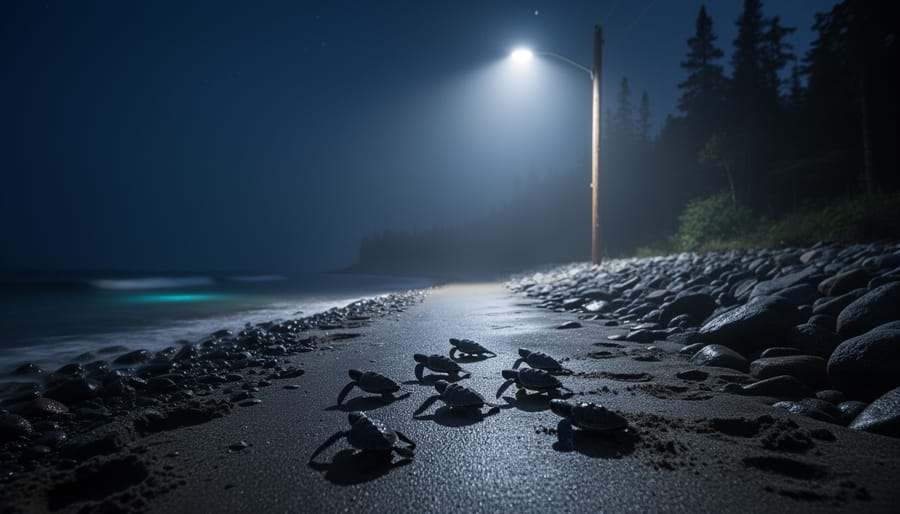
Every night, billions of artificial lights blaze across Canada, casting a glow so intense that nearly 80% of North Americans can no longer see the Milky Way from their homes. But the loss of our night sky represents just the visible edge of a far more damaging environmental crisis.
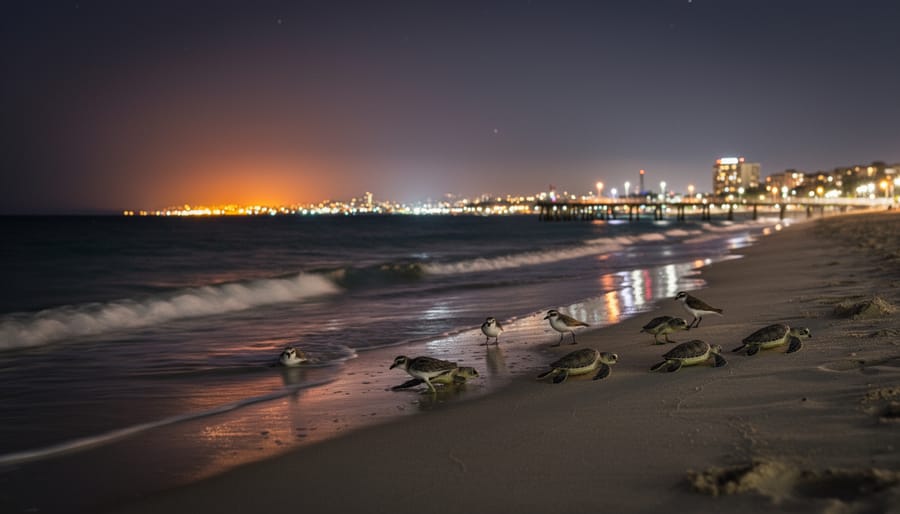
Light pollution disrupts the fundamental rhythms that have governed life on Earth for millions of years. Migratory birds collide with illuminated buildings by the hundreds of millions annually. Sea turtle hatchlings crawl toward streetlights instead of the ocean, never reaching the water. Nocturnal pollinators abandon their work, threatening plant reproduction and food security. These aren’t isolated incidents. They’re symptoms of an environment thrown dangerously out of balance.
The environmental consequences extend beyond individual species. Artificial light at night alters predator-prey relationships, changes competitive dynamics between species, and fragments habitats as effectively as physical barriers. Research from 2024 and 2025 has revealed that light pollution suppresses melatonin production in plants and animals alike, weakening immune systems and disrupting reproductive cycles across entire ecosystems. Even humans experience increased cancer risk, sleep disorders, and metabolic dysfunction when exposed to excessive nighttime light.
For Indigenous communities across Canada, the loss of dark skies carries cultural and spiritual weight. Traditional navigation, ceremony, and connection to the land depend on unobstructed views of celestial patterns that artificial light erases.
Yet this form of pollution differs from most environmental threats in one critical way: it’s completely reversible. Turn off a light, and the damage stops immediately. No cleanup required, no waiting for ecosystems to slowly recover. This article examines how light pollution affects wildlife, ecosystems, and human health while exploring the legal tools and collaborative solutions that communities are using right now to reclaim the night sky and protect the species that depend on darkness to survive.
Understanding Light Pollution: More Than Just Bright Skies
Light pollution is artificial light that escapes into areas where it serves no purpose, a seemingly minor nuisance that has emerged as a serious environmental crisis affecting wildlife, ecosystems, and human communities across Canada and beyond. Unlike air or water pollution, light pollution is often invisible to those causing it, yet its impacts ripple through natural systems in ways we’re only beginning to understand.
The problem takes several distinct forms, each with unique environmental consequences:
- Sky Glow
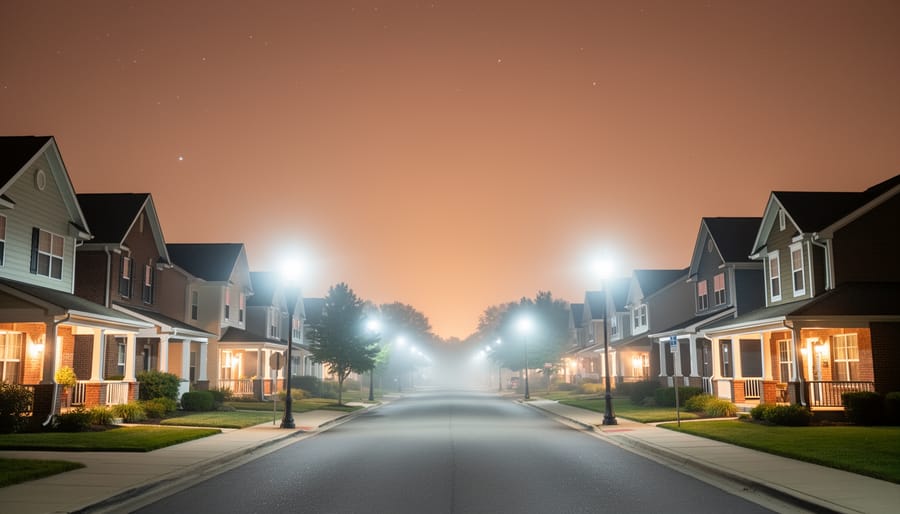
- The orange or greyish haze that blankets urban areas at night, created when artificial light scatters in the atmosphere and obscures stars. This affects both wildlife navigation and astronomical research.
- Glare
- Excessively bright light that causes visual discomfort and reduces visibility. Beyond human safety concerns, glare disorients nocturnal animals and disrupts hunting behaviours.
- Light Trespass
- Unwanted light that spills beyond its intended area, such as a streetlight illuminating a bedroom window or natural habitat. This intrusion alters the conditions wildlife depends on for survival.
- Light Clutter
- Excessive groupings of bright, confusing light sources commonly found in urban areas. The visual chaos can trap migrating birds and insects in deadly cycles.
The scale of this crisis has expanded dramatically. As of 2026, approximately 80 percent of the global population lives under light-polluted skies, with that figure reaching 99 percent in Europe and North America. In Canada, major metropolitan areas like Toronto, Vancouver, and Montreal generate sky glow visible from hundreds of kilometres away, affecting vast stretches of wilderness and migratory corridors.
Recent studies confirm what environmental advocates have warned: artificial light at night has negative and deadly effects on amphibians, birds, mammals, and insects, while also interfering with the natural rhythms of plants. The Royal Astronomical Society of Canada’s report on environmental impacts of light pollution underscores that this isn’t just about stargazing anymore. Light pollution causes habitat fragmentation and impairs both physiology and behaviour in wildlife, creating cascading effects throughout ecosystems.
This pollution carries real risks to human health and safety as well, but the environmental toll demands urgent legal and policy intervention to protect species that evolved over millennia to depend on darkness.
How Light Pollution Disrupts Wildlife Populations
Birds: Navigation Chaos and Fatal Collisions
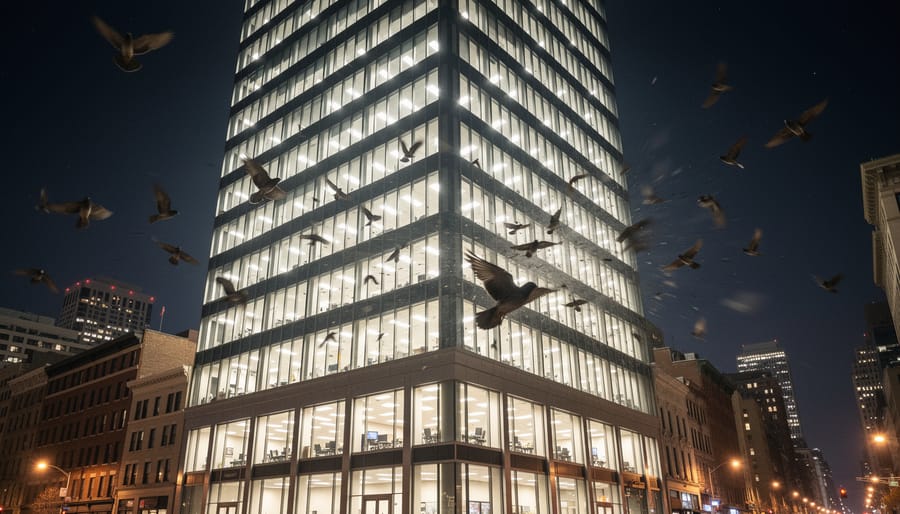
Birds rely on celestial navigation and natural darkness to guide their seasonal migrations, but artificial light throws their internal compasses into disarray. Bright city lights attract and disorient migrating birds, particularly during spring and fall when billions of birds travel under cover of darkness. Disoriented birds circle illuminated buildings, exhausting themselves and increasing collision risk with glass windows and structures. In Canada’s urban centres, these fatal collisions kill millions of birds annually.
Nocturnal hunters face different challenges. Owls and nightjars depend on darkness for hunting advantage, but excessive illumination reduces their effectiveness while exposing prey species to increased predation pressure during artificially extended “daylight” hours. This disrupts the delicate balance between predator and prey.
Even stationary lights prove deadly. Communication towers, offshore platforms, and tall buildings with constant illumination become death traps during migration. Birds attracted to these lights often collide with guy-wires, other birds, or the structures themselves. The cumulative effect across North America represents a conservation crisis, with light pollution identified as a significant driver of bird population declines alongside habitat loss and climate change.
Insects: The Foundation of Food Webs Under Threat
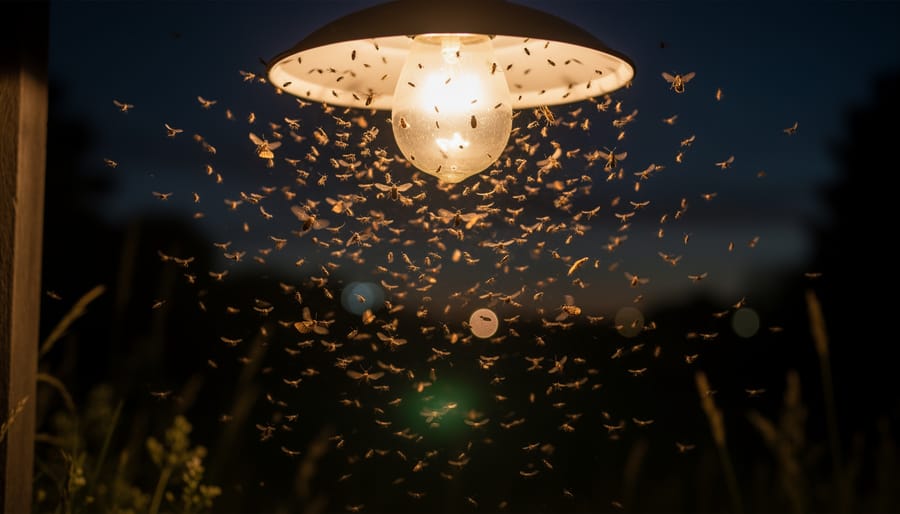
Insects, which form the foundation of countless food webs, face devastating consequences from artificial nighttime illumination. The phenomenon where artificial light attracts insects causes millions to exhaust themselves circling lamps, become easy prey, or die from heat exposure. Moths, beetles, mayflies, and other nocturnal species abandon essential activities like feeding, mating, and pollination to spiral around bright surfaces. This disruption contributes to documented population crashes across multiple insect groups.
The ripple effects extend throughout entire ecosystems. When insect populations decline, birds that rely on them for protein during breeding season struggle to raise healthy young. Bats, frogs, and other insectivores face food scarcity. Plant species dependent on nocturnal pollinators experience reduced reproduction rates. Even decomposition slows when insects that break down organic matter spend energy on futile light-circling instead of fulfilling their ecological roles. These cascading consequences demonstrate how a seemingly simple problem, too much artificial light, can destabilize complex natural systems that evolved over millions of years in predictable darkness.
Marine and Freshwater Species: Disrupted Life Cycles
Coastal and aquatic ecosystems face severe disruption from artificial lighting. Sea turtle hatchlings, which naturally navigate toward the moon’s reflection on ocean waves, instead crawl toward beachfront lights and perish from exhaustion, predation, or vehicle strikes. This misdirection affects multiple Canadian coastal regions where sea turtles occasionally nest during warming trends.
Fish spawning cycles depend on moonlight cues to trigger reproduction. Artificial illumination confuses these biological clocks, reducing spawning success in freshwater species like walleye and northern pike. In the Great Lakes and coastal waters, constant nighttime brightness from harbours and marinas interferes with the feeding patterns of juvenile fish, weakening entire year classes.
Amphibians suffer particularly acute impacts. Frogs and salamanders rely on darkness for breeding migrations and predator avoidance. Artificial light disrupts natural rhythms that govern their emergence from winter dormancy and movement to breeding ponds. Research shows that wetlands near lit areas experience delayed breeding seasons and reduced amphibian diversity, with some populations abandoning traditional breeding sites entirely when lighting installations appear nearby.
Ecosystem-Wide Impacts: Habitat Fragmentation and Food Web Disruption
Light pollution fragments habitats in ways that rival physical barriers like roads and development. Nocturnal species depend on darkness as a critical habitat feature, and artificial light creates zones that many animals simply cannot or will not cross. A bat that evolved to hunt in complete darkness may avoid lit areas entirely, effectively cutting its territory in half. Migratory corridors become obstacle courses as animals navigate around illuminated zones, forcing longer, more dangerous routes that drain energy reserves and reduce survival rates.
The cascading effects through food webs reveal how deeply artificial light disrupts ecological balance. When insect populations plummet around streetlights and commercial districts, the repercussions ripple upward. Birds that rely on night-flying insects lose vital food sources during migration and breeding seasons. Bats face similar challenges, with some species showing documented foraging declines in lit areas. Meanwhile, the insects that do survive often congregate unnaturally around light sources, creating localized abundance that attracts predators and further distorts natural distribution patterns.
Predator-prey relationships shift in unexpected ways under artificial illumination. Nocturnal hunters like owls gain extended hunting opportunities in lit areas, but their prey species often change behaviour entirely, hiding longer or shifting activity periods. Some prey animals become more vulnerable, frozen in headlights or exposed on illuminated paths. Others abandon previously suitable habitat altogether. These adjustments create winners and losers, fundamentally altering community structure and competitive dynamics that evolved over millennia.
Pollination networks suffer particularly severe disruption. Many plants depend on nocturnal pollinators, including moths, beetles and bats, whose activity patterns change dramatically under artificial light. Moths drawn to streetlights waste energy and reproductive potential circling bulbs instead of visiting flowers. Studies show reduced pollination success in plants near lit areas, which then affects seed production, plant reproduction and the animals that depend on those seeds and fruits. The timing of flowering itself can shift when plants receive constant light signals, throwing delicate synchronization between plants and pollinators further out of alignment. These interconnected disruptions compound across seasons, weakening ecosystem resilience and reducing biodiversity in ways that may take years to fully manifest.
Beyond Wildlife: Human Health and Cultural Connections
Light pollution’s reach extends far beyond wildlife, posing significant health risks from light exposure to human populations across Canada. Excessive artificial light at night disrupts our circadian rhythms, the biological clock that regulates sleep-wake cycles, hormone production, and cellular repair. This disruption links directly to sleep disorders, increased cancer risk (particularly breast and prostate cancers), cardiovascular disease, diabetes, and mental health challenges.
Shift workers exposed to constant nighttime light face heightened health consequences, but even residential light trespass from streetlights and neighboring properties can suppress melatonin production in bedrooms. Children and adolescents prove especially vulnerable, as their developing bodies require darkness for proper growth hormone release and cognitive development.
Beyond physical health, light pollution severs cultural and spiritual connections to the night sky that Indigenous peoples across Canada have maintained for thousands of years. For many First Nations, Métis, and Inuit communities, celestial navigation, seasonal markers, and creation stories embed themselves in starlight. Elders pass down traditional knowledge tied to constellations, lunar cycles, and the behaviour of nocturnal animals, all of which artificial light obscures or disrupts.
These cultural losses represent more than nostalgia. They constitute the erasure of living knowledge systems that have guided sustainable relationships with the land since time immemorial. When urban glow drowns out the Milky Way, it disconnects young people from teachings about their place in the cosmos and responsibilities to future generations.
Addressing light pollution requires recognizing these intertwined human dimensions. Environmental protection cannot separate ecosystem health from human wellbeing or ignore the rights of Indigenous communities to maintain their relationship with darkness. Solutions must honour both scientific evidence about health impacts and the traditional ecological knowledge that has long recognized night’s essential role in maintaining balance.
Legal and Policy Frameworks in Canada
Canada’s legal framework for addressing light pollution remains fragmented, with no single federal statute directly regulating artificial light’s environmental impacts. While the Species at Risk Act protects threatened species, its application to light pollution depends on proving direct harm to listed species and their critical habitats. The Migratory Birds Convention Act prohibits activities that harm migratory birds, yet enforcement against building owners whose lighting causes bird collisions remains inconsistent. These federal laws create potential openings for legal action, but they require robust evidence linking specific lighting practices to measurable wildlife harm.
Provincial regulations vary considerably. Some provinces include outdoor lighting standards in environmental assessment processes for large developments, yet few establish binding limits on light emissions or ecological impacts. British Columbia’s Wildlife Act and Ontario’s Endangered Species Act theoretically allow prosecution when artificial lighting harms protected species, though actual enforcement cases remain rare.
Municipal bylaws represent the most common regulatory approach in 2026. Cities including Jasper, Lake Louise, and parts of the Okanagan have adopted dark-sky bylaws limiting exterior lighting intensity, requiring downward-facing fixtures, and restricting hours of decorative lighting. These bylaws typically focus on preserving astronomical viewing rather than comprehensive ecosystem protection. Toronto and Vancouver have implemented bird-friendly building standards that address lighting, yet compliance monitoring often lacks resources.
The gaps are substantial. No Canadian jurisdiction comprehensively regulates light pollution’s impacts on insects, amphibians, or marine species. Existing bylaws rarely extend beyond urban cores, leaving suburban and rural ecosystems vulnerable. Enforcement mechanisms remain weak, with municipalities relying on complaints rather than proactive monitoring. This patchwork creates opportunities for strategic legal advocacy: environmental groups can push for stronger provincial regulations, challenge inadequate environmental assessments, and use existing wildlife laws to hold major light polluters accountable for documented ecological harm.
Solutions: How Legal Action and Community Efforts Can Reduce Light Pollution
Reducing light pollution requires a multi-pronged approach combining legislative action, community engagement, and corporate responsibility. Legal frameworks provide the foundation for meaningful change, while grassroots efforts demonstrate that solutions work best when communities and Indigenous nations collaborate.
Dark-sky legislation has proven effective where implemented. Municipalities across Canada can adopt bylaws requiring shielded fixtures, limiting commercial lighting hours, and mandating warmer color temperatures that minimize ecological disruption. These regulations work alongside nature-based solutions that protect wildlife corridors and restore natural darkness to critical habitats. Some jurisdictions tie lighting permits to environmental impact assessments, ensuring new developments account for effects on nocturnal species before construction begins.
Responsible lighting design eliminates waste while maintaining safety. Simple changes, motion sensors, timers, fully-shielded downward-facing fixtures, and lower-intensity bulbs, cut light trespass and sky glow dramatically. Commercial properties bear particular responsibility, as storefronts, parking lots, and industrial sites generate disproportionate pollution. Legal advocacy can compel corporations to adopt better practices through litigation or regulatory pressure when voluntary compliance fails.
Indigenous communities bring invaluable traditional knowledge to these efforts. Many nations have maintained connections to the night sky for millennia, and their land stewardship practices naturally limit artificial light. Collaborative approaches that respect Indigenous jurisdiction over traditional territories create stronger, more culturally-grounded solutions. When communities go natural with landscaping and reduce unnecessary outdoor lighting, they reinforce broader conservation goals.
Citizen science initiatives empower residents to document light pollution levels, identify problem areas, and advocate for change. Local dark-sky groups partner with municipalities to retrofit streetlights, while environmental organizations pursue legal challenges against excessive commercial lighting. These combined efforts demonstrate that light pollution, unlike many environmental crises, offers relatively straightforward solutions, we simply need the political will and legal mechanisms to implement them broadly across Canada.
Light pollution represents a complex environmental crisis that reaches far beyond obscured starlight. From migratory birds crashing into illuminated buildings to sea turtles wandering inland, from disrupted insect populations to fragmented wildlife habitats, artificial light at night fundamentally alters natural systems across Canada and worldwide. These impacts cascade through ecosystems, affecting predator-prey relationships, pollination networks, and the intricate rhythms that have shaped life for millennia. Human communities suffer too, through health consequences and severed cultural connections to the night sky that hold deep significance for Indigenous peoples.
The scale of this problem demands urgent action, yet solutions exist. Dark-sky legislation, responsible lighting design, and corporate accountability measures are already proving effective in communities that prioritize them. Legal frameworks can protect both wildlife and human wellbeing while preserving energy. Just as we address global warming effects through coordinated policy and community engagement, we can tackle light pollution through similar collaborative approaches.
Nature’s Resilience Canada continues working with Indigenous communities, legal professionals, and concerned citizens to advance environmental protection. You can contribute by supporting dark-sky bylaws in your municipality, choosing responsible outdoor lighting, and advocating for stronger regulations. The night sky belongs to all species, and reclaiming it starts with recognizing that darkness itself is a threatened natural resource worth defending.