 By kevin
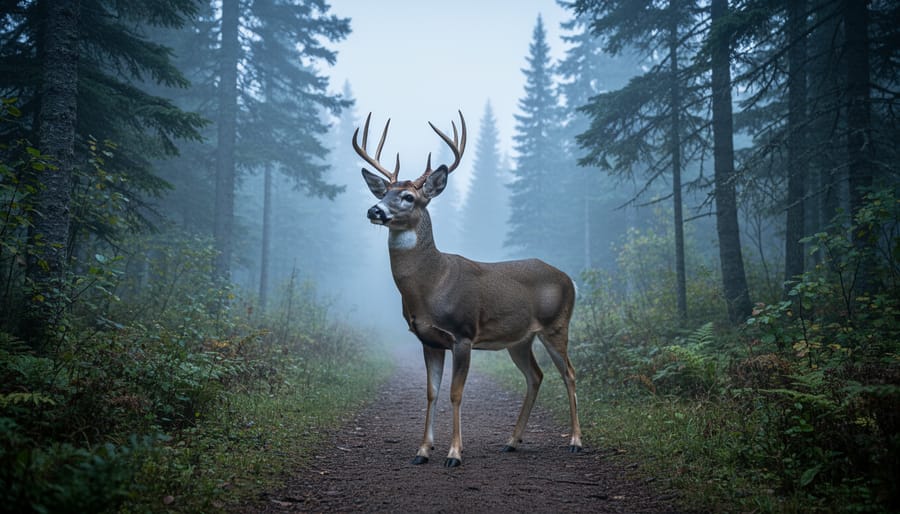
Wildlife diseases are illnesses that spread among wild animals, and sometimes between wildlife, livestock, and people. In Canada, responsibility for managing them is shared. Federal agencies, provincial and territorial governments, and Indigenous nations each hold part of the job, and the response usually moves through four steps: detecting a case, confirming it in a laboratory, containing its spread, and monitoring the population afterward.
Chronic wasting disease in deer and elk, avian influenza in wild birds, and white-nose syndrome in bats are among the best-known examples. Each is a reminder that disease rarely arises in isolation. Fragmented habitat, crowded animals, and a changing climate all raise the odds of an outbreak, which is why wildlife health sits so close to conservation law. Protecting habitat and species at risk often protects against disease too.
Indigenous communities are frequently the first to notice something wrong. Hunters, trappers, and land guardians watch the same territories season after season, and their knowledge has shaped some of the most effective surveillance work in the country. Ignoring that expertise leaves real gaps in any response.
This article explains what wildlife diseases are, who is legally accountable for them, how an outbreak response unfolds, and what you can do to help.
What Counts as a Wildlife Disease and Why It Matters for Conservation

A wildlife disease is any condition that harms the health of free-living animals. That covers a lot of ground, so it helps to sort the causes into two groups. Infectious diseases come from living agents that can spread from one animal to another, such as viruses, bacteria, fungi, parasites, and prions (misfolded proteins that damage the brain). Non-infectious diseases don’t spread this way. They come from things like poisoning, starvation, injury, or exposure to contaminants, though they often weaken animals enough to make infection more likely.
Some infectious diseases cross species lines. A zoonosis is a disease that can pass between animals and people. Rabies is the classic example. Not every wildlife disease is a zoonosis, but the ones that are draw attention from public health agencies as well as wildlife managers.
Disease is also a conservation issue. A healthy, abundant population can usually absorb an outbreak, which is simply a sudden rise in cases above what is normally expected. A species already squeezed by habitat loss, climate change, or pollution has far less cushion. Small, fragmented populations can lose a large share of their members quickly, and recovery may take decades, if it happens at all. That is why disease can tip a vulnerable species toward the brink.
Two more terms are worth knowing. Surveillance means the ongoing collection and review of health information, such as lab results, reports of sick animals, and samples from harvested animals, so that problems are spotted early. A reservoir host is an animal that carries a pathogen, often without becoming very sick, and can keep passing it to other species. Raccoons and bats play this role for certain diseases.
Understanding these basics matters because managing disease means protecting more than individual animals. It means protecting the populations, the habitat, and the relationships between species that keep ecosystems functioning.
Wildlife Diseases Affecting Canadian Species Today
Chronic Wasting Disease in Deer, Elk, and Moose
Chronic wasting disease (CWD) is a fatal illness of deer, elk, moose, and caribou caused by prions, which are misfolded proteins that damage the brain and leave animals thin, listless, and unafraid of people. There is no cure and no vaccine.
First detected in Canada on a Saskatchewan game farm in the 1990s, the disease has since reached wild herds across the Prairies and continues to be tracked in other regions. For a clear overview, see this summary of chronic wasting disease in Canada. Prions persist in soil and plants for years, so contaminated land can keep infecting animals long after a sick one has died.
For harvesters, this raises hard questions about food safety, testing, and carcass disposal. Many First Nations rely on cervids for nourishment and for cultural and spiritual practices, so rules that limit hunting or require testing touch rights and identity, not only wildlife health. That is why consultation and shared monitoring matter.
White-Nose Syndrome in Bats and Avian Influenza in Birds
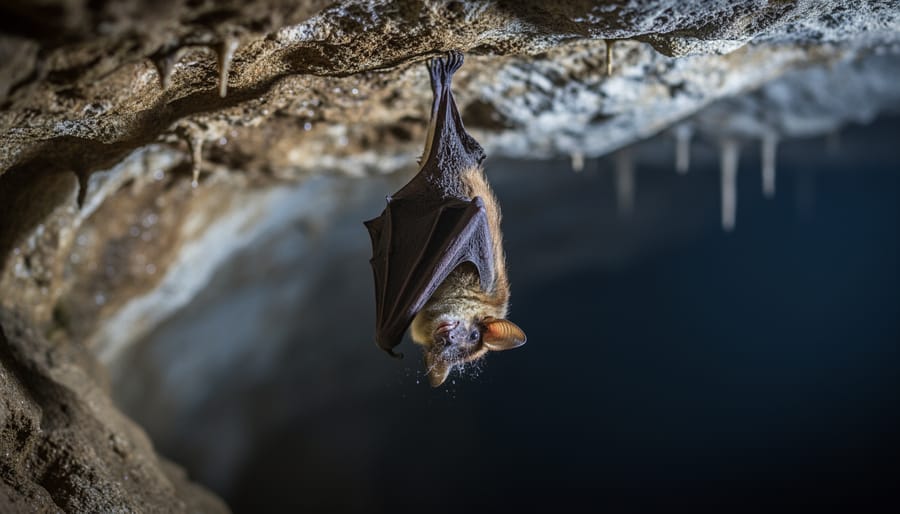
White-nose syndrome shows how a single pathogen can reshape a species’ fate. It is caused by a cold-loving fungus that grows on hibernating bats, wakes them repeatedly, and burns through the fat reserves they need to survive winter. Because the bats gather in caves and abandoned mines, the fungus spreads quickly through whole colonies. Several affected species, including the little brown myotis and the northern myotis, have been listed as endangered under the Species at Risk Act. That means recovery planning and habitat protections now apply to the very hibernation sites where the disease takes hold.
Avian influenza tests the system in a different way. It is a virus carried by wild waterfowl and shorebirds that can also reach poultry flocks, so agriculture, public health, and wildlife agencies must all respond at once. Where white-nose syndrome is a slow conservation crisis, avian influenza demands fast coordination across jurisdictions.
Rabies, Brucellosis, and Other Diseases at the Wildlife-Livestock Interface
Some wildlife diseases don’t stay in the bush. At the wildlife-livestock interface, where free-living animals share pastures, water and feed with farm animals, pathogens can cross between species and sometimes reach people.
Rabies is the best-known example. This viral disease, carried by animals such as bats, foxes, raccoons and skunks, attacks the nervous system and is almost always fatal once symptoms appear. Brucellosis is a bacterial infection that can cause abortions in livestock and illness in people. It has been a long-standing concern in parts of North America where wild bison and elk overlap with cattle ranges.
Diseases like these draw attention far beyond conservation agencies. Agriculture authorities worry about herd health, trade and economic losses, while public health officials focus on the risk to people. Because several governments and agencies all have a stake, coordination matters. So does protecting habitat, since it can reduce the close contact that helps pathogens move between wild and domestic animals.
Who Is Responsible? The Legal and Policy Framework for Wildlife Disease
Federal Roles Under the Health of Animals Act and Species at Risk Act
At the federal level, two laws do most of the work on wildlife disease. The Health of Animals Act gives the Canadian Food Inspection Agency (CFIA) authority over “reportable diseases,” a legal category of serious animal diseases that must be reported to the CFIA when suspected or confirmed. Once a case is confirmed, the agency can order quarantines, movement controls, or other measures. Chronic wasting disease and avian influenza are handled this way. The Act is aimed mainly at protecting livestock, trade, and public health, so its tools fit wildlife imperfectly.
The Species at Risk Act (SARA) approaches disease from the conservation side. When a pathogen threatens a listed species, as white-nose syndrome does for several bat species, it becomes part of the case for protection. Recovery strategies and action plans, the documents that set out how a species can be brought back, can name disease as a threat and identify steps to reduce it. Environment and Climate Change Canada works with other agencies and with Indigenous partners to carry out that planning.
Provincial and Territorial Wildlife Management
In Canada, provinces and territories handle the day-to-day work of wildlife management. They run the wildlife health programs, set hunting seasons and bag limits, and decide how to respond when a disease turns up in animals within their borders. That includes surveillance (the ongoing monitoring of animals for signs of illness), often built on samples from hunter-harvested deer, elk, and moose, plus reports of sick or dead animals from the public.
Approaches differ because landscapes, species, and risks differ. A province with a large cervid population may require mandatory testing, while another may rely on voluntary sampling. Rules such as bans on feeding wildlife, movement restrictions, or targeted harvests also vary. Each government works within its own legislation, and you can see how this plays out in wildlife protection in Quebec where provincial law shapes how animals are safeguarded. That patchwork means local knowledge matters, and so does coordination across borders.
Indigenous Governance, Treaty Rights, and Traditional Knowledge
Indigenous communities are not simply stakeholders in wildlife disease management. They are rights-holders and long-standing stewards of the lands and animals involved. Many First Nations, Inuit, and Métis people rely on deer, elk, moose, caribou, and waterfowl for food, culture, and ceremony, and their harvesting rights are protected by treaties and by section 35 of the Constitution Act, 1982.
That means disease controls such as harvest restrictions, carcass movement rules, or targeted culls can directly affect constitutionally protected rights. Governments have a duty to consult, and where decisions touch those rights, consultation needs to begin early, before a plan is already set.
Indigenous knowledge also strengthens disease monitoring. Hunters, trappers, and guardians often notice changes in animal behaviour, body condition, or population patterns long before formal surveillance catches them. When communities help design monitoring programs and share in decisions, the results tend to be more accurate, more trusted, and more effective.
How Habitat Loss and Pollution Make Disease Worse
When habitat shrinks or breaks into pieces, animals don’t simply disappear. They get squeezed. Roads, logging, farmland, and housing developments cut large ranges into fragments, and the wildlife that remains often ends up concentrated in smaller areas. Crowding matters because many pathogens (disease-causing organisms such as viruses, fungi, and bacteria) spread more easily when animals share feeding grounds, water sources, and shelter. Scientists describe this as an increase in contact rates, and it is one reason disease can move faster through stressed populations.
Stress itself plays a part. Animals that have lost food sources or safe shelter, or that must travel farther across disturbed land, often have weaker immune responses. That can make them more likely to fall ill and, in some cases, more likely to pass an infection on. The exact effect varies by species and by disease, so it’s fair to say habitat disruption raises the risk rather than guaranteeing an outbreak.
Pollution adds another layer. Wastewater, agricultural runoff, and industrial contaminants can enter rivers, wetlands, and soil, exposing wildlife to chemicals that may harm health over time. Nutrient-rich runoff can also change aquatic ecosystems in ways that favour certain parasites or bacteria. Researchers are still working to understand many of these links, which is why careful monitoring and public data matter.
Warming temperatures and shifting seasons further change the picture. Milder winters and altered migration patterns can let pathogens and the animals that carry them persist in new places, a pattern increasingly tied to climate change in Canada.
The takeaway is practical. Intact, connected habitat gives animals room to spread out, find food, and stay healthier. Protecting it is not only a conservation goal but also a form of disease prevention, one that benefits wildlife, livestock, and people alike.
How Surveillance and Response Work in Practice
Disease surveillance (the ongoing watch for signs of illness in wild animals) usually starts with ordinary people. A hunter notices a thin, stumbling deer. A hiker finds several dead birds near a pond. An Indigenous guardian on patrol spots a bat colony behaving oddly in winter. What happens next follows a fairly consistent path, even though the details change with the disease and the province or territory.
- Report the animal to the provincial or territorial wildlife agency, a regional wildlife health office, or the Canadian Wildlife Health Cooperative, noting the location, date, species, and what you observed.
- Avoid touching the animal. If officials ask you to, record photos and GPS coordinates rather than moving the carcass.
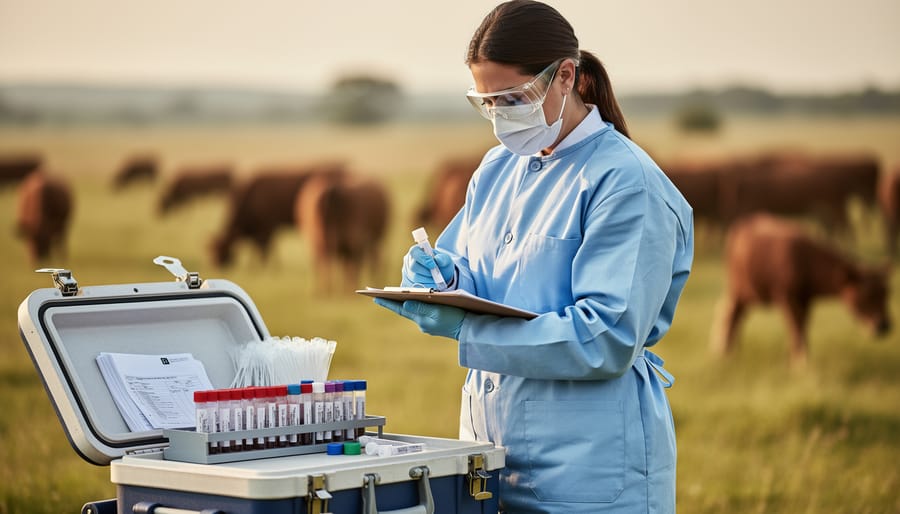
- A trained biologist, conservation officer, or community monitor collects samples, such as tissue, blood, or a brain stem for prion testing, using protective gear and proper handling.
- Samples go to a diagnostic laboratory. For reportable diseases (those the law requires be reported to federal authorities), confirmation typically involves a federal lab.
- Results are shared with the relevant governments, and where treaty or harvesting rights are involved, with affected First Nations and other Indigenous communities.
- Officials decide on a response, which may include movement restrictions, targeted culls, closures of feeding sites, or public advisories.
How far each step goes depends on the disease. A single case of rabies may trigger a local advisory, while chronic wasting disease can lead to multi-year monitoring zones and harvest testing programs. Responses also differ between jurisdictions, which is why early, respectful engagement with Indigenous guardians and harvesters matters. Their on-the-ground knowledge often means problems are spotted sooner, and decisions land better when communities help shape them rather than simply being told.
How Law and Community Action Protect Wildlife Health
Behind every disease response is a series of decisions, and those decisions are not always made in public. Law gives communities a way to ask questions, demand evidence, and hold governments to their own commitments.
Consider how this can play out for a species like the little brown bat, which has been devastated by white-nose syndrome. Under the Species at Risk Act, a listed species is supposed to receive recovery planning and protection of its critical habitat (the places it needs to survive and reproduce). When those obligations stall, litigation can press governments to act on what the statute already requires. A court case is rarely the first step, but it can be the lever that moves a stalled process.
Information is another tool. Access-to-information requests let the public see what surveillance data exists, how agencies assess disease risk, and whether recovery timelines are being met. Sunlight tends to improve decisions, because science-based policy is easier to defend, and to demand, when the evidence is on the table.
The strongest results come from partnership. Nature’s Resilience Canada works with Indigenous communities whose knowledge of local animals, seasonal patterns, and land change is often the earliest warning system available. Indigenous guardians notice sick or unusual wildlife long before a lab report arrives. When legal advocacy is built alongside that knowledge, rather than after decisions are already made, it can help ensure that disease responses respect treaty rights and protect the habitat that keeps wildlife resilient.
Legal action and community stewardship are not separate efforts. Together, they push for disease management that is transparent, evidence-driven, and accountable.
What You Can Do: Reporting, Prevention, and Advocacy
To keep pressing for accountable, science-based policy, connect with environmental policy & law centers working on these issues.
Common Questions About Wildlife Diseases in Canada
Are wildlife diseases a risk to people?
Some are, and these are called zoonoses, meaning diseases that can pass between animals and people. Rabies is the best-known example, so avoid touching sick or dead wildlife and wash your hands after any contact with animals or their environments.
What should I do if I find a sick or dead animal?
Keep your distance, keep pets and children away, and do not try to move or care for it yourself. Contact your provincial or territorial wildlife agency, or a local wildlife health or rehabilitation organization, and note the location and species if you can.
Who is in charge of responding?
Responsibility is shared. Provinces and territories lead most day-to-day wildlife management, the federal government handles reportable diseases, and Indigenous communities are rights-holders and stewards whose knowledge and consent matter.
How does habitat protection reduce disease risk?
Intact habitat gives animals room to spread out and access food and clean water, which lowers the stress and crowding that can help pathogens move.
Many of these questions come up again and again for hunters, landowners, and neighbours who simply want to do the right thing. If you want to see how people push for stronger protections, read about how environmental advocates turn concern for wildlife into legal change.
Wildlife diseases are not only a health problem to be solved by veterinarians and labs. They are a signal about the condition of the land, water, and communities that animals depend on. When habitat is fragmented, polluted, or lost, animals are pushed closer together and under greater stress, and illness finds an easier path.
That is why healthy wildlife depends on protected habitat, on governments and corporations that are held to account for the decisions they make, and on respectful partnership with Indigenous communities. First Nations, Inuit, and Métis peoples have watched over these ecosystems for generations. Their knowledge and rights belong at the table from the start, not after the plans are drawn.
The tools to protect wildlife already exist in Canadian law. They work best when people use them. If you want to see stronger protection for species and the places they live, learn more about legal action for wildlife and habitat in Canada, and consider supporting the work that makes those laws count.