 By kevin
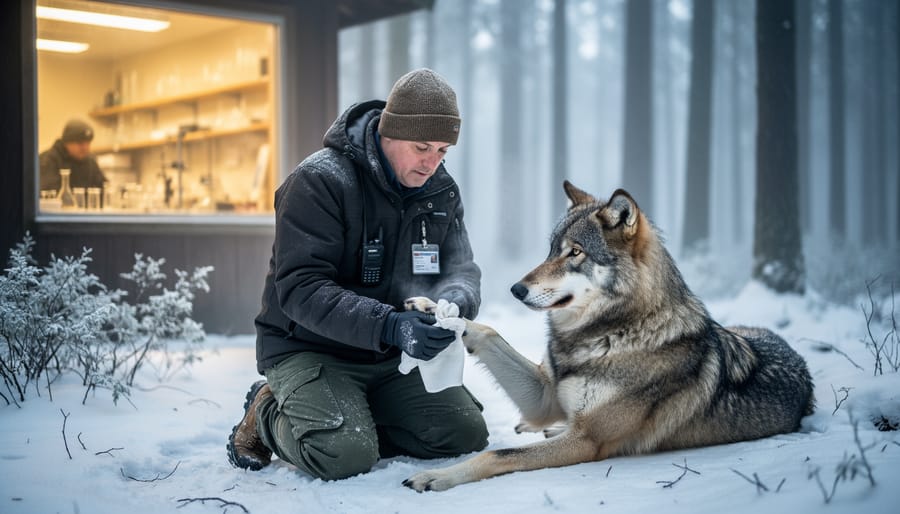
Tissue recovery is the process by which damaged or stressed cells, muscles, skin, and connective structures repair themselves and return to working order. In a wild animal, that might mean a wolf’s torn muscle knitting back together after a hard winter hunt. In a laboratory, it means studying the same repair sequence under controlled conditions, such as the work done with compounds like Researched Peptides TB-500, a synthetic peptide that scientists investigate for its role in cell migration and repair.
Why does this matter beyond the lab bench? Because injury and healing sit at the centre of how wildlife survives. An animal that recovers quickly from a wound, a snare, or an oil-fouled coat has a better chance of breeding, migrating, and holding its place in an ecosystem. Wildlife biologists watch that process unfold in the field, often across vast territories. Laboratory researchers isolate it, step by step, to see what drives it.
Each group sees something the other can’t. This article explains how recovery works, what field and lab perspectives each contribute, and how that shared knowledge supports conservation and environmental protection, including the place-based understanding that Indigenous communities have built over generations of living alongside wildlife.
What Tissue Recovery Means in Plain Language
Repair Versus Regeneration: Two Different Outcomes
Repair and regeneration are two different ways a body can answer an injury. In repair, the body closes the wound quickly with scar tissue, which patches the gap but doesn’t rebuild what was lost. Regeneration rebuilds the original tissue, so structure and function come back. A mammal healing a skin wound usually repairs, while a salamander can regrow a lost limb. That doesn’t make every mammal a poor healer or every amphibian a perfect one, since species vary a lot.
- Tissue
- A group of similar cells working together to do a job, such as skin, muscle or bone.
- Repair
- Healing that closes a wound, usually with scar tissue, without fully restoring the original tissue.
- Regeneration
- Healing that rebuilds the lost tissue so it matches the original in structure and function.
- Scar tissue
- Dense, fibre-rich tissue that fills a wound quickly but is less flexible and functional than what it replaced.
Scar tissue is a fast, strong fix, and it often comes with scarring with loss of structure. Regeneration is slower and more demanding, but it can leave little trace of the injury.
Why Recovery Is Never Quite the Same in Every Animal
Healing is shaped by what an animal brings to the injury and by what surrounds it. Age matters: younger animals often rebuild tissue faster, while older ones tend to heal slowly and less completely. Species matters too, since the body plans and repair strategies that evolved in a salamander, a fish and a deer are very different.
Nutrition and stress add another layer. An animal that is well fed and calm can direct energy toward rebuilding, while one that is hungry or constantly under pressure often cannot. Researchers who study the factors affecting wound healing point to this mix of internal and external influences.
Contaminants can interfere as well. Pollutants in water or food may slow cell growth or weaken the body’s early response to injury.
This is why field and lab observations differ. A wild animal faces all of these pressures at once, while a lab setting usually isolates just one or two.
How Tissue Recovers: The Stages of Healing
When tissue is injured, the body doesn’t improvise. It follows a recognizable sequence, and researchers commonly describe it as the four phases of healing. Each phase hands off to the next, though they overlap more than a tidy list suggests.
The first phase is the immediate response. Within moments of an injury, blood vessels tighten to limit bleeding, and clotting factors form a plug that seals the break. That clot isn’t only a bandage. It also acts as a temporary scaffold and releases chemical signals that call other cells to the site.
Next comes the inflammatory phase. Immune cells arrive to clear out debris, dead cells and any invading bacteria. The area often looks swollen or red, which can seem alarming but is a sign the cleanup crew is working. If inflammation drags on, as it can with infection or chronic stress, healing tends to stall.
Then the rebuilding begins. Cells multiply and migrate into the wound, new blood vessels grow to feed the repair, and connective tissue is laid down to fill the gap. Skin cells spread across the surface to close it over. In animals that regenerate well, this stage rebuilds the original tissue. In many others, it produces a patch of scar tissue instead.
The final phase is remodeling. The hastily built tissue is reorganized, strengthened and gradually reshaped, sometimes for months or longer. Even then, repaired tissue is often not quite as strong or flexible as the original.
Timing and completeness vary a great deal. Species, age, nutrition, water temperature, season and exposure to contaminants all change how quickly each phase unfolds and how fully it finishes. A fish healing in cold, clean water may follow a very different schedule from one in warm, polluted water. That’s why there’s no single universal timeline, and why both field biologists and laboratory researchers pay close attention to how long each stage takes.
What Wildlife Biologists Learn From Watching Recovery in the Field
Healing as a Signal of Animal and Habitat Health
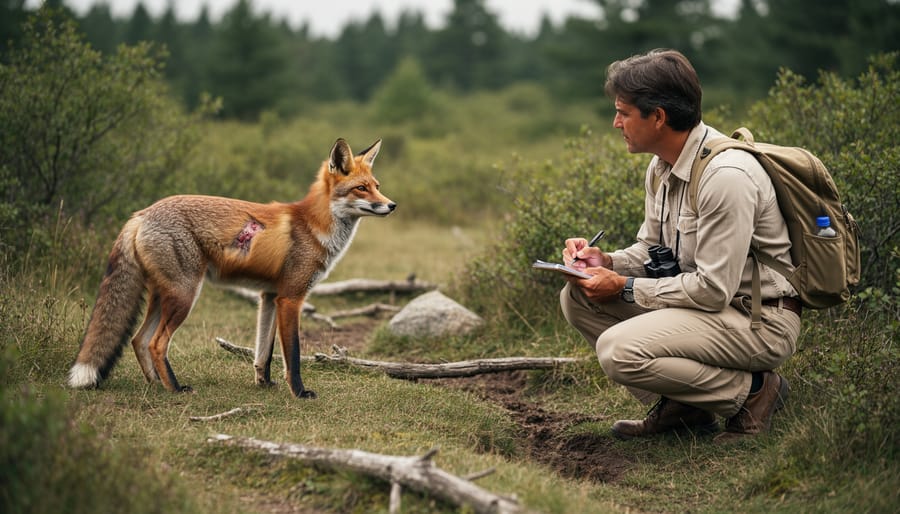
When a wild animal heals slowly or only partly, that is information. Healing takes energy, nutrients and a working immune system, so anything that drains those resources tends to show up first in how well a wound closes. An animal that is underfed, chronically stressed or exposed to contaminants may heal sluggishly, develop persistent sores, or end up with heavy scarring where a clean repair would be expected.
This is why biologists treat recovery as a practical indicator of conditions that are otherwise hard to measure directly. A fish with ragged fins that never seem to mend, or a deer with a wound that lingers through a season of good forage, raises questions worth asking. Is food scarce? Is the water carrying something harmful? Has habitat been disturbed enough to keep animals under constant strain?
A single slow-healing animal proves little, since injury severity, age and species all matter. The signal becomes meaningful when it appears across many individuals in the same place. Patterns of delayed or incomplete recovery across a population can point to a problem with the habitat itself, not just with one unlucky animal, and that is exactly the kind of early warning conservation work depends on.
Working With Indigenous Knowledge Holders
Indigenous communities have watched local wildlife and waterways across many generations, and that long view matters when scientists try to understand recovery. Knowledge holders often notice changes that a short research project can miss: when a fish population looks healthy, how animals typically move through a watershed across the seasons, or when something seems off in a place that has been known intimately for a very long time.
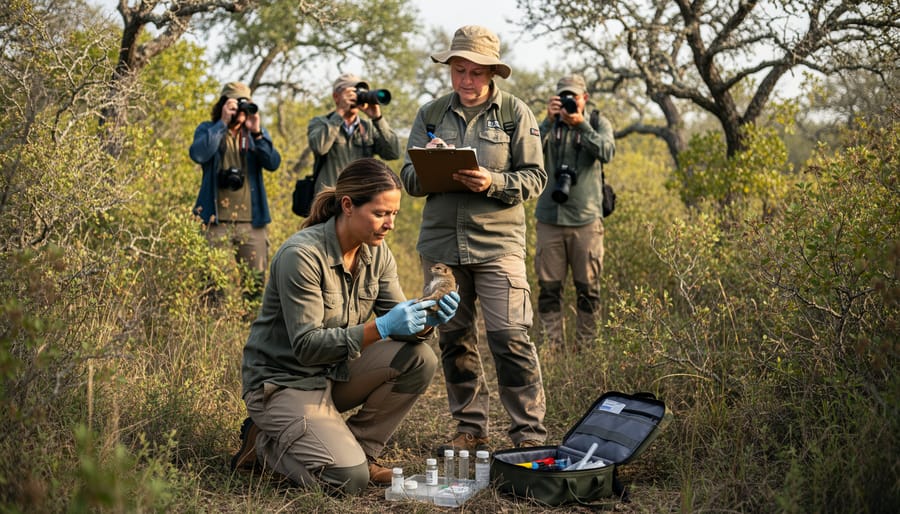
This kind of place-based observation complements scientific monitoring rather than replacing it. Biologists can measure condition, track survival and document healing in a structured way, while knowledge holders help establish what a healthy baseline looks like in a particular place. Together, these sources of understanding give a fuller picture of whether an animal, or an ecosystem, is truly recovering.
Good collaboration starts with respect. That means involving communities early, recognizing their authority over their own knowledge, and sharing findings in return. When it is done well, recovery is understood more accurately and documented in ways that communities themselves can use to protect their lands and waters.
What Laboratory Researchers Learn From Studying Recovery Up Close
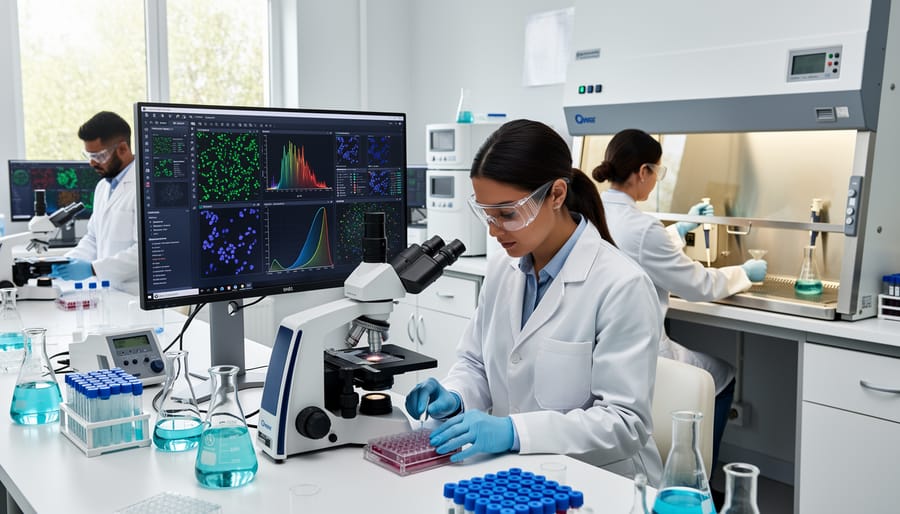
Laboratory researchers approach recovery from the opposite direction. Instead of watching an animal heal in a river or forest, they bring a small piece of the process indoors and strip away everything that isn’t being tested. That is the lab’s great strength: it isolates variables, so a result can be tied to a single cause.
One common tool is a cell culture, which means growing living cells in a dish with controlled nutrients, temperature and oxygen. Researchers can wound a layer of cells on purpose, then watch which ones move in, which divide, and how quickly the gap closes. Tissue samples let them study how different cell types cooperate, rather than just one at a time.
Labs also track the chemical messages that coordinate healing. Cells release signalling molecules that tell neighbouring cells when to arrive, multiply or calm down. By adding, blocking or removing one signal at a time, researchers learn which ones actually trigger rebuilding and which merely accompany it. A biomarker, a measurable substance or cell change that points to what’s happening inside a body, gives them a way to follow that progress without guessing.
The same controls let scientists test how specific substances interfere with healing. They can expose identical samples to different concentrations of a contaminant, keep a clean sample for comparison, and see exactly where repair slows or stops. This is how researchers can examine the effects of the pollutants in waterways that wildlife encounter, one compound at a time, instead of a tangled mixture.
Because conditions are tightly controlled, other labs can run the same test and check the answer. Repeatable results are what turn a promising observation into trustworthy evidence. The limit is that a dish is not a habitat, which is why lab findings are most useful when they are paired with what biologists see in the field.
Where the Two Fields Meet: Shared Lessons From Recovery
A wildlife biologist might notice that fish in a stretch of river downstream from a wastewater outfall carry lesions that seem to linger longer than they should. That observation is a starting point, not an answer. It raises a question the field alone can’t settle: is the slow healing caused by the water, the temperature, a shortage of food, or something else entirely?
This is where laboratory work steps in. Researchers can expose tissue samples or cultured cells to a single substance at a controlled concentration and see whether it slows the rebuilding of tissue. Because everything else is held steady, the cause-and-effect link becomes clear. The findings then travel back to the field. If a lab shows that a certain contaminant interferes with a particular stage of healing, biologists know what to look for in wild animals and which biomarkers, or measurable biological signals, are worth tracking.
Each side fills the other’s gap. The field shows what is actually happening to living animals in messy, real conditions. The lab explains why. Neither is stronger on its own, and together they build a far more reliable picture.
Three shared lessons come out of this partnership:
– Recovery is measurable. How quickly and completely tissue heals gives a practical reading of an animal’s overall health.
– Recovery is sensitive to environmental stress. Pollution, poor nutrition and habitat disturbance can all slow or alter healing.
– Recovery has limits. Even healthy animals can’t always restore damaged tissue fully, and repeated or severe harm can overwhelm the process.
Seeing healing as a window into health, rather than just a biological detail, is what connects the two fields.
How Understanding Tissue Recovery Is Used in Conservation and Environmental Law
From Healing Rates to Evidence Communities Can Use
One healing measurement tells you little. A pattern of them tells you a great deal. When biologists record how quickly and completely animals recover from injury across seasons and sites, that consistency becomes evidence, and evidence is what decision-makers can act on.
- Monitoring how water pollution affects healing in fish and amphibians.
- Assessing habitat quality through animal condition over time.
- Informing protection for species covered by the Species at Risk Act.
- Supporting evidence in environmental decision-making and environmental policy debates.
Communities can contribute directly. Indigenous-led monitoring, grounded in generations of place-based observation, records changes that short-term studies miss. Paired with scientific methods, it strengthens how recovery is documented, and it backs up wildlife legal protections and restoration work, including nature-based solutions. Science alone rarely settles a debate, but steady, well-kept data makes it much harder to ignore.
Common Questions About Tissue Recovery and Wildlife
Readers often arrive at this topic with the same handful of questions. Here are short, plain answers to the most common ones.
Can all animals regenerate tissue?
No. Some species, such as salamanders, can rebuild whole structures like limbs, while most mammals heal mainly by forming scar tissue. Even within one animal, some tissues recover far better than others.
Why do injured wild animals heal differently than lab animals?
Wild animals face changing food supplies, weather, predators and exposure to contaminants, all of which shape healing. Lab animals live in controlled conditions, which makes results easier to compare but less like real life.
Can pollution slow healing?
Research suggests certain contaminants can interfere with how tissue repairs itself, and slow or incomplete healing in wildlife is often treated as a warning sign. Pinpointing exactly which substance is responsible usually takes careful lab testing alongside field observation.
Why does recovery research matter for environmental protection?
Healing is a measurable sign of an animal’s health, and by extension the health of its habitat. That makes recovery data a useful tool for monitoring water quality and supporting stronger protections.
None of these answers is the final word. Healing varies by species, season and circumstance, and good science stays honest about that uncertainty. Still, the patterns are consistent enough to guide real decisions, especially when field observations, laboratory results and the place-based knowledge of Indigenous communities are considered together.
Healing is more than a biological detail. It’s a reliable window into health, whether you’re looking at one injured animal or an entire watershed. Field biologists watch how wild animals mend in real conditions, while laboratory researchers isolate the cells and signals that make mending possible. Each answers questions the other can’t.
Add Indigenous knowledge holders, whose long-term understanding of local wildlife and waters shapes what healthy recovery looks like, and the picture grows richer still. When communities understand this science, they can speak up with confidence for cleaner water, healthier habitat, and stronger environmental protection.