 By kevin
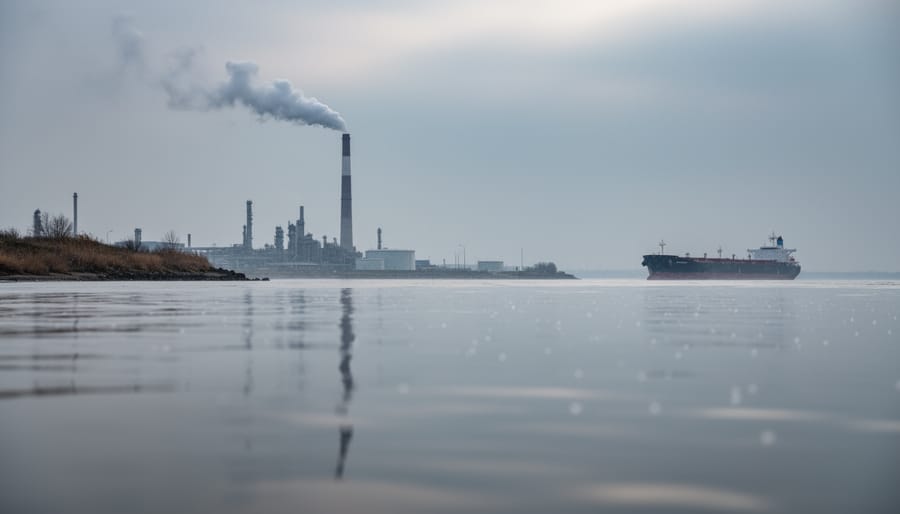
Pollutants from fossil fuels are the harmful substances released when coal, oil, and natural gas are extracted, refined, transported, and burned. They include gases such as carbon dioxide, methane, sulphur dioxide, and nitrogen oxides, along with fine particulate matter (tiny airborne particles small enough to lodge deep in the lungs), heavy metals like mercury, and toxic compounds such as benzene. Some enter the air through a smokestack or tailpipe. Others seep into soil and water from leaking wells, pipelines, tailings ponds, and spills, then travel on wind and current far beyond the original site.
That movement is why these pollutants matter so much. They warm the climate, cause asthma, heart disease, and cancer, and contaminate the water, fish, and wildlife that many communities rely on. The burden isn’t shared equally. First Nations, Métis, and Inuit communities living beside extraction and processing sites have long carried a disproportionate share of the harm, and many have led the monitoring, advocacy, and legal action that brought it into public view.
This article explains how fossil fuel pollutants are generated and spread, the main types and what each does, who is most affected, and how that knowledge is used in Canadian law, policy, and community-led campaigns. Complex terms are defined as we go, so you can follow the science and use it.
What Pollutants From Fossil Fuels Mean in Plain Language
A pollutant is any substance that harms living things or damages the air, water, or soil when it builds up beyond what natural systems can absorb. Pollutants from fossil fuels are the harmful byproducts of coal, oil, and natural gas, released when those fuels are pulled from the ground, moved, refined, and burned. If you want the bigger picture, the effects of fossil fuels start here, with what actually gets released.
Where a pollutant ends up matters. Air pollutants, like smoke and exhaust, drift across regions. Water pollutants, such as spilled oil or wastewater, move through rivers, lakes, and groundwater. Soil pollutants settle into the ground and can linger for decades, reaching plants, animals, and people through food and drinking water.
It also helps to separate two groups. Greenhouse gases trap heat and drive climate change. Toxic contaminants poison living things directly. Some substances are both, and some are only one or the other.
- Greenhouse gas
- A gas, such as carbon dioxide or methane, that traps heat in the atmosphere and warms the planet.
- Particulate matter
- Tiny solid or liquid particles in the air, like soot, that can lodge deep in the lungs.
- Produced water
- Salty, chemical-laden wastewater that comes up with oil and gas during drilling and must be handled carefully.
- Bioaccumulation
- The gradual build-up of a toxic substance in an organism, often increasing as it moves up the food chain.
In Canada, where oil sands, natural gas, and coal have shaped regional economies, these pollutants matter for communities living closest to the source. That includes many First Nations, Inuit, and Métis communities whose lands and waters carry the cost.
How Fossil Fuels Release Pollutants From Extraction to Combustion
From the Ground to the Smokestack
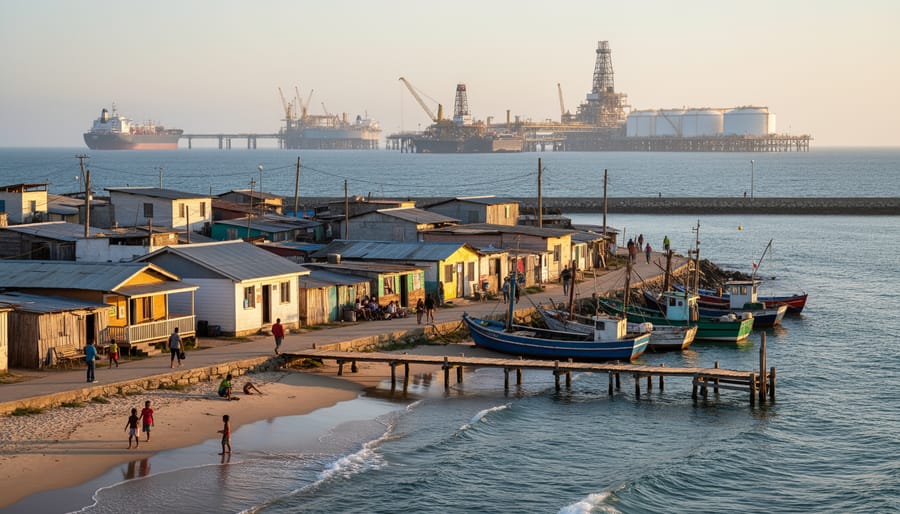
Fossil fuel pollution starts long before anything is burned. At the extraction stage, drilling and mining release methane, the main component of natural gas and a greenhouse gas far more potent than carbon dioxide over the short term. Operators also burn off unwanted gas in a process called flaring, which sends soot, carbon dioxide, and unburned hydrocarbons into the air. In the oil sands, mining leaves behind tailings, a slurry of water, sand, clay, and residual bitumen that must be held in large ponds because it contains toxic compounds.
Transportation brings its own risks. Pipelines, rail cars, and tankers can leak or rupture, releasing crude oil or diluted bitumen into soil and waterways. Even without a dramatic spill, small leaks at valves and compressor stations let methane escape, often unnoticed.
Refining turns crude oil into gasoline, diesel, and other products, and it is energy-intensive. Refineries emit sulphur dioxide, nitrogen oxides, and volatile organic compounds, which are chemicals that evaporate easily and can form smog. They also discharge wastewater containing metals and hydrocarbons that needs treatment before release.
Combustion is the final and largest source. Burning coal, oil, and gas in power plants, vehicles, and furnaces produces carbon dioxide, along with sulphur dioxide, nitrogen oxides, and fine particulate matter (PM2.5), tiny particles small enough to lodge deep in the lungs. Coal also releases mercury, a heavy metal that settles into lakes and rivers.
No single stage tells the whole story. Pollution accumulates across the full lifecycle, and each step shapes who lives closest to the harm.
How Pollutants Travel Through Air, Water, and Land
Pollutants rarely stay where they start. Once released, they move along several pathways, and each one can carry harm well beyond the original site.
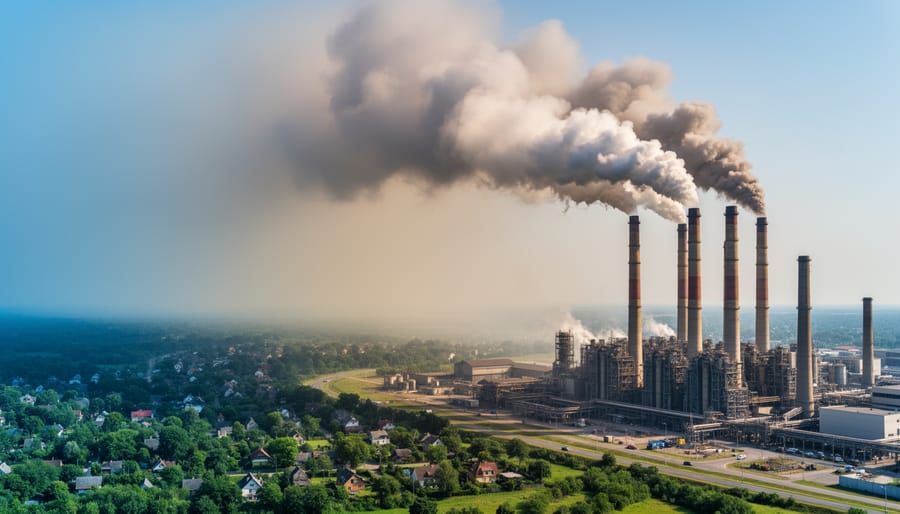
In the air, wind lifts fine particles and gases such as sulphur dioxide and nitrogen oxides and can move them hundreds or thousands of kilometres. As they travel, these gases react with moisture to form acids that fall back to earth as acid rain, snow, or dry deposition. That deposition can acidify lakes, damage forests, and leach metals out of soil.
On the ground, rain washes spilled oil, tailings, and drilling residues into streams, which feed rivers and lakes. Meanwhile, contaminated liquids can slowly seep down through soil into groundwater, where they may linger for decades and reach wells people depend on.
Then there’s bioaccumulation, which means a contaminant builds up in an organism faster than it can be flushed out. Mercury and polycyclic aromatic hydrocarbons, for example, settle into small organisms. Fish eat those organisms, and larger fish, birds, and mammals eat the fish, so concentrations climb at each step of the food web. People who rely on those foods can end up with the heaviest exposure.
This is why distance offers less protection than it sounds. Communities downstream, downwind, or dependent on local fish and wildlife often absorb impacts from activity they had no say in.
The Main Types of Fossil Fuel Pollutants
Air Pollutants and Greenhouse Gases
Burning coal, oil, and natural gas sends a mix of gases and tiny particles into the air. Some warm the planet, and others damage the air we breathe.
Carbon dioxide (CO2) is the most abundant greenhouse gas from fossil fuels. It traps heat in the atmosphere and lingers for centuries, which is why it sits at the centre of climate change in Canada. Methane, the main component of natural gas, escapes through leaks and venting. Over the short term, it traps far more heat than CO2 does.
Other pollutants affect health more directly. Nitrogen oxides come from engines and power plants, while sulphur dioxide is released when sulphur-bearing coal and oil are burned. Both can irritate lungs and contribute to acid rain, which harms lakes and forests.
Fine particulate matter, known as PM2.5, is soot so small it can pass deep into the lungs and bloodstream. It is linked to asthma, heart disease, and early death.
Nitrogen oxides and unburned hydrocarbons also react in sunlight to form ground-level ozone, the main ingredient in smog. Unlike the protective ozone layer high above us, this ozone makes breathing harder, especially for children, seniors, and people with respiratory conditions.
Water and Soil Contaminants
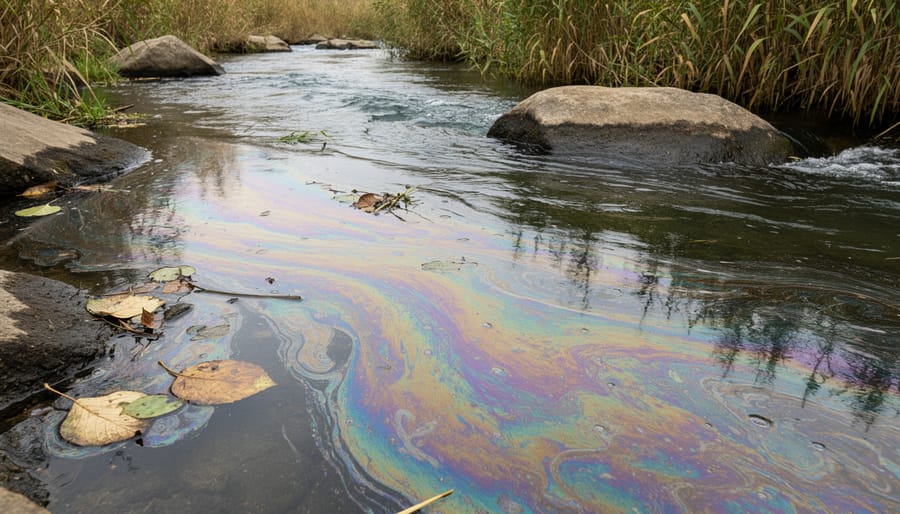
Fossil fuel activity leaves its mark in water and soil long after the work moves on. An oil spill is the most visible form: crude coats shorelines, smothers vegetation, and can linger in sediment for decades. Less visible is produced water, the salty, chemical-laden fluid that comes up alongside oil and gas. It can contain hydrocarbons, heavy metals, and naturally occurring radioactive material, and if it leaks or is spilled, it can poison the ground it touches.
Tailings ponds, the large basins that hold mining and oil sands waste, present another concern. Seepage can carry contaminants into groundwater and nearby rivers. Among the most worrying are heavy metals such as mercury and arsenic. These don’t break down. Instead, they build up in sediment and move through food webs, a process called bioaccumulation, where toxins concentrate in animals higher up the chain.
Polycyclic aromatic hydrocarbons, or PAHs, are another group to know. These are compounds formed when fuels burn or are processed, and some are linked to cancer and developmental harm in fish and wildlife.
The consequences are practical. Fisheries can decline or become unsafe to harvest, drinking water sources may need costly treatment, and wetlands and spawning grounds lose the clean conditions that wildlife depend on to survive.
Solid and Hazardous Waste
Fossil fuel use leaves behind a lot of solid waste. Coal ash, the powdery residue from burning coal, can contain arsenic, lead and mercury. Refineries and oil sands operations generate sludge, a thick mix of oil, water and sediment. Drilling produces cuttings and used drilling fluids, which may carry salts, metals and hydrocarbons.
None of this simply disappears. It sits in ponds, landfills or storage sites that must hold for decades, and leaks can reach groundwater and rivers. That raises hard questions about who pays for long-term monitoring, who is responsible when a site fails, and how contaminated land can be properly cleaned up.
Who Feels the Impact: Ecosystems, Health, and Indigenous Communities
Pollution doesn’t land evenly. Think of a fish in a northern river downstream of a tailings pond. It absorbs mercury and other metals from the water and its food. A larger fish eats it, and then a person does. Scientists call this bioaccumulation, the build-up of a contaminant in living tissue over time, and it explains why small releases can matter a great deal at the top of the food web.
Wildlife feels this first. Birds that land on oil-slicked water lose the insulation in their feathers. Moose, caribou and waterfowl can take in contaminants through the plants they eat and the water they drink. Fine particulate matter and nitrogen oxides in the air are linked to asthma, heart disease and reduced lung function, and children and elders tend to be hit hardest.
For many Indigenous communities, the damage reaches past physical health. Fish, game, berries and clean water are tied to ceremony, language, and the right to hunt, fish and gather protected under treaties and Section 35 of Canada’s Constitution. When people begin to doubt whether the fish are safe to eat, a food source and a way of passing knowledge between generations are both at risk.
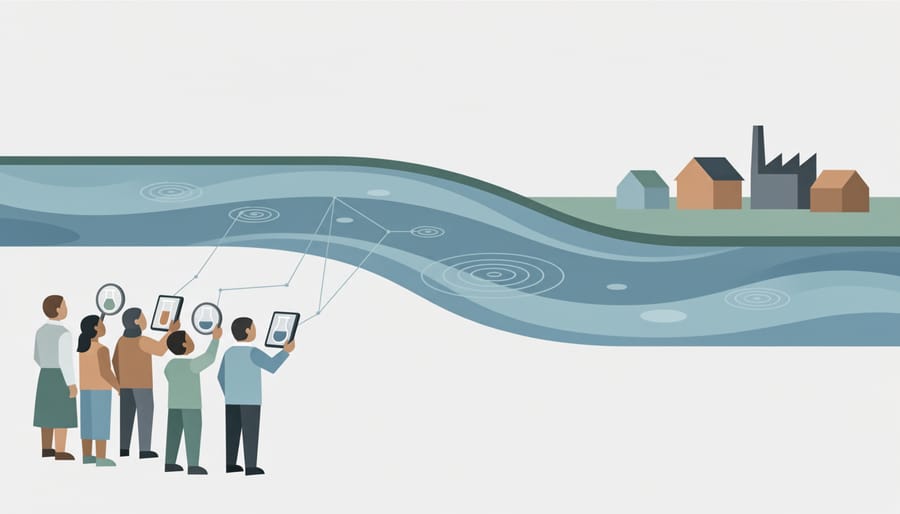
Communities aren’t waiting on others for answers. In many places, Indigenous guardians and land-based monitoring programs sample water, track wildlife health and record changes in traditional foods, drawing on both Western science and knowledge held for generations. Experiences differ from nation to nation, shaped by local geography, history and the type of industry nearby, so no single story speaks for everyone. What many communities share is expertise on their own territories, and that expertise often reveals problems that official monitoring misses.
How Knowledge of Fossil Fuel Pollutants Is Used in Law, Policy, and Action
Standards, Monitoring, and Environmental Assessment
Scientific evidence about pollutants is what turns a general worry into a rule that can be enforced. When researchers show that a substance harms fish, lungs, or drinking water at a certain concentration, regulators can set limits, such as air quality objectives or discharge thresholds, and build them into project permits. Environmental assessments then ask a practical question: given what we know about these contaminants, what will a proposed mine, pipeline, or gas plant release, and where will it end up?
Rules only work if someone checks. Industry self-reporting and government sampling are one layer, but Indigenous-led and community-based monitoring add another. Guardians programs, for example, bring traditional knowledge together with water sampling and wildlife observation, catching changes that periodic surveys can miss. Their data increasingly informs assessments and compliance questions.
Communities that want help navigating these processes can turn to environmental policy and law centers which often support participation in permitting and review.
Legal Action and Accountability in Practice
When pollution harms people and ecosystems, the courts become one of the few places where evidence can force action. Legal efforts usually succeed when science, community knowledge, and sound legal strategy work together.
Take the Beaver Lake Cree Nation’s long-running case against the governments of Alberta and Canada. The nation argues that the cumulative effect of oil sands development has undermined its treaty-protected rights to hunt, fish, and trap. The case has been in the courts for years, and a key early ruling confirmed that the nation could pursue its claims rather than being forced to prove its position through narrower, project-by-project challenges.
Several legal terms come up repeatedly in cases like this one:
– Standing: the right to bring a case, which requires showing a genuine interest in the issue.
– Injunction: a court order that stops an activity, or requires one, while a dispute is decided.
– Duty to consult: the Crown’s obligation to meaningfully consult Indigenous peoples before decisions that could affect their rights.
The lesson from these cases is that strong evidence matters, and so does partnership. Indigenous-led monitoring, scientific experts, and environmental advocates each bring something the others lack. Together, they turn local observations into legal arguments that courts can act on.
How Pollutants From Fossil Fuels Works
Pollution from fossil fuels works through a chain of release, movement, and exposure. First, a source lets something escape: a flare burns off gas at a wellsite, a valve leaks methane, a pipe corrodes and spills, or a smokestack vents the byproducts of burning coal or diesel. Combustion is the biggest single driver. When fuel burns with air, carbon is oxidized into carbon dioxide, while sulphur and nitrogen impurities form sulphur dioxide and nitrogen oxides, and incomplete burning leaves behind soot.
Once released, the substances don’t stay put. Wind lifts gases and fine particles and can carry them hundreds of kilometres. Sunlight drives reactions that turn nitrogen oxides into ground-level ozone, and sulphur and nitrogen compounds dissolve in moisture and fall back as acid rain. Liquids and solids move by gravity and water instead, seeping into soil, washing into streams, and settling in sediments.
Exposure is the final link. People and wildlife breathe, drink, or eat what these pathways deliver, and some contaminants build up in fish and game over time, concentrating as they move up the food chain.
Common Questions About Fossil Fuel Pollutants
Readers often ask the same handful of questions once they understand what fossil fuels release. Here are clear answers to the most common ones.
Are natural gas emissions cleaner than coal?
When burned, natural gas generally releases less carbon dioxide, sulphur dioxide, and particulate matter than coal. But natural gas is mostly methane, a potent greenhouse gas, and leaks during extraction and transport can erode that advantage.
What is the difference between air pollution and greenhouse gas emissions?
Air pollutants, such as fine particulates, nitrogen oxides, and sulphur dioxide, mainly harm health and ecosystems close to where they are released. Greenhouse gases, such as carbon dioxide and methane, trap heat and drive climate change globally. Some substances, like methane, can play both roles.
How can communities find out what is being released nearby?
Federal and provincial governments publish emissions and air quality data, and facilities above certain thresholds must report what they release. Community-based and Indigenous-led monitoring can also fill gaps, giving residents their own evidence about local air, water, and traditional foods.
What can individuals and groups do?
You can learn what is permitted and reported in your area, take part in environmental assessments and public comment periods, and support community monitoring. Groups can also work with legal and Indigenous partners to press for stronger standards and accountability.
None of these answers is the last word. They are starting points, and the more you understand how pollutants move and who they affect, the better placed you are to ask sharper questions of the companies and governments responsible for them.
Back on that shoreline, the picture looks different now. The haze over the processing plant, the sheen on the water, the worry about whether the fish are safe to eat: each one traces back to a specific pollutant with a specific source and a specific path to the people living nearby. That is what knowing the science gives us. It turns a vague unease into evidence.
And evidence is what drives change. Air and water standards, environmental assessments, and court decisions all rest on someone showing what was released, where it went, and who it affected. The strongest work happens when that effort is shared, especially in partnership with Indigenous communities whose knowledge of land and water, built over generations, often spots harm long before instruments do.
You don’t need a law degree to take part. Learn what’s being released near you, ask questions, support community-led monitoring, and stand alongside those defending their territories. Clean land and water are worth protecting, and informed people are how that happens.