 By kevin
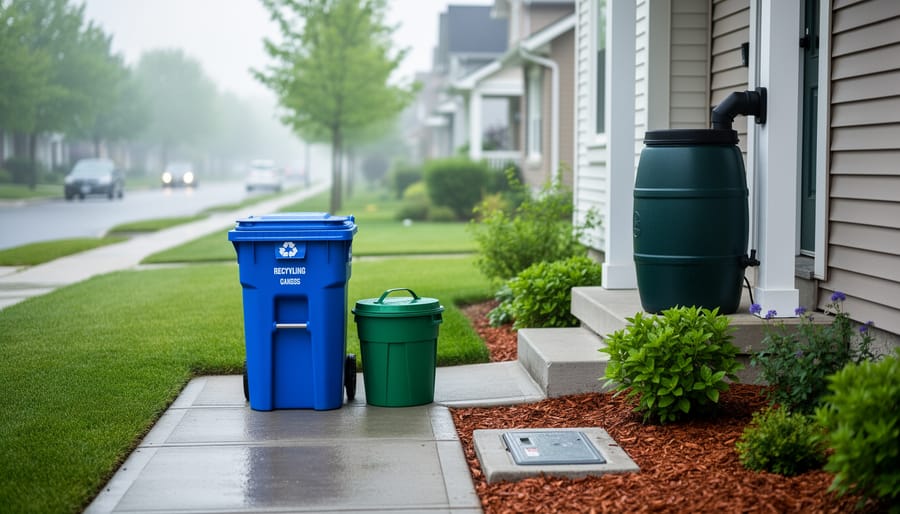
Living sustainably in Canada starts with one honest look at your own household, then three focused changes: energy, waste, and water. Do an audit first, which takes a weekend and costs nothing, then work through the changes in order of impact, follow your municipality’s rules, and check your results against your utility bills. Most households can get meaningful progress underway in a few months, and the difficulty is low to moderate. The only real prerequisite is knowing what you use now.
Why does this order work? You can’t cut what you haven’t measured. A heating bill, a garbage tag count, and a water meter reading tell you where your footprint actually sits, so you spend effort where it matters rather than where it feels good. That keeps the work practical, not performative.
Household choices matter most when they connect to something bigger. What goes down your drain affects local water bodies, and wastewater is regulated for a reason. Many First Nations, Inuit, and Métis communities have protected these lands and waters for generations, and their stewardship offers lessons that no product label can. Canadian environmental law gives citizens a way to hold polluters accountable when voluntary action isn’t enough. If you want the broader picture, you can learn how to take action in Canada beyond your front door.
The steps below walk you through each stage, including what to gather, what to avoid, and how to confirm your changes are working.
What You’ll Need Before You Begin: Tools, Materials, and Local Information

Know Your Local Rules and Resources
Sustainable living in Canada looks different depending on where you live, and that’s by design. Waste, energy, and water are largely managed by municipalities and provinces, so the rules you follow in Halifax won’t match those in Calgary or Whitehorse. Curbside organics collection is a good example: some cities offer it, others don’t yet. Extended producer responsibility (EPR) is a policy that makes manufacturers, not taxpayers, pay for collecting and recycling the packaging and products they sell, and since EPR set provincially what’s accepted at your depot can vary by province. Rainwater harvesting rules also differ, and so do federal and provincial retrofit rebates.
Don’t assume a program exists or that its terms haven’t changed. Check your municipal website and provincial energy or environment ministry for current details before you spend money. Gather a few simple things first:
- Recent utility bills (electricity, gas, and water)
- A home energy audit booklet or your provincial program contact
- A notebook or app for tracking household waste
- Reusable containers for food storage and shopping
- A rain barrel, only where your municipality permits one
- Your municipality’s waste-sorting guide
- A simple water-use tracker
With these in hand, you’ll know exactly which local programs apply to you.
Safety Warnings and When to Stop and Call a Professional

Most sustainability upgrades are safe for a careful homeowner. A few are not, and knowing where the line sits keeps a good project from becoming a costly or dangerous one.
Here are the stop conditions worth keeping in mind:
– Old insulation. Loose-fill vermiculite in an attic may contain asbestos, and some older flooring, plaster, and pipe wrap can too. If you find any of it, stop and hire a qualified abatement contractor.
– Combustion appliances. Air sealing makes a house more airtight. Furnaces, water heaters, and wood stoves can then backdraft, pulling exhaust gases such as carbon monoxide into living spaces. Install working carbon monoxide alarms and have a technician test your appliances before and after sealing.
– Rainwater and greywater. Greywater is lightly used household water from sinks, showers, and laundry. Both it and collected rainwater can carry bacteria and contaminants. Do not use either on edible plants or indoors without checking your provincial and municipal rules.
– Electrical work. Wiring for heat pumps, solar panels, or EV chargers should be done by a licensed electrician, and often requires a permit.
– Household hazardous waste. Paint, solvents, batteries, and pesticides should never go down the drain or in the trash. Take them to your municipality’s designated drop-off.
When in doubt, pause and ask a professional. Stopping costs a phone call, and working around hazards can cost far more.
Step-by-Step: Building a Sustainable Household Routine
Step 1: Audit Your Energy Use and Make Your Home Winter-Ready
Start with the bills you already have. Pull your last twelve months of electricity and heating statements and look for the seasonal swing, because winter spikes show where your home leaks heat. Then check your provincial electricity mix. In hydro-heavy provinces like Quebec, Manitoba and British Columbia, electricity is already low-carbon, so swapping fossil heating for electric makes a big difference. In grids that still lean on gas or coal, such as Alberta and Saskatchewan, cutting total demand matters more, and it’s worth looking at renewable energy options for your own home.
Next, book a home energy assessment with a registered advisor. They run a blower-door test to find drafts and show you where insulation falls short. Here’s the whole process in order, with this step as the first move:
- Audit your energy, water and waste.
- Set two or three priorities.
- Cut energy use and improve home efficiency.
- Reduce and sort your waste.
- Protect water at home.
- Shift how you travel and what you buy.
- Track results and adjust.
For winter readiness, air seal first, since gaps around windows, attic hatches and rim joists cost more than most people expect. Add insulation where the assessment flags it. A cold-climate heat pump can then replace or supplement a furnace, and these models keep working at very low temperatures. Set a smart thermostat to drop a few degrees overnight and while you’re out, rather than swinging wildly.
Federal and provincial rebate programs exist for assessments, insulation and heat pumps, but details change often. Confirm what’s available with your province or utility before you buy.
Step 2: Cut Household Waste Using Your City’s Systems
Start with the waste hierarchy, because the order matters: reduce first, reuse second, recycle third, and compost whatever organic material is left. The biggest wins come before anything reaches a bin.
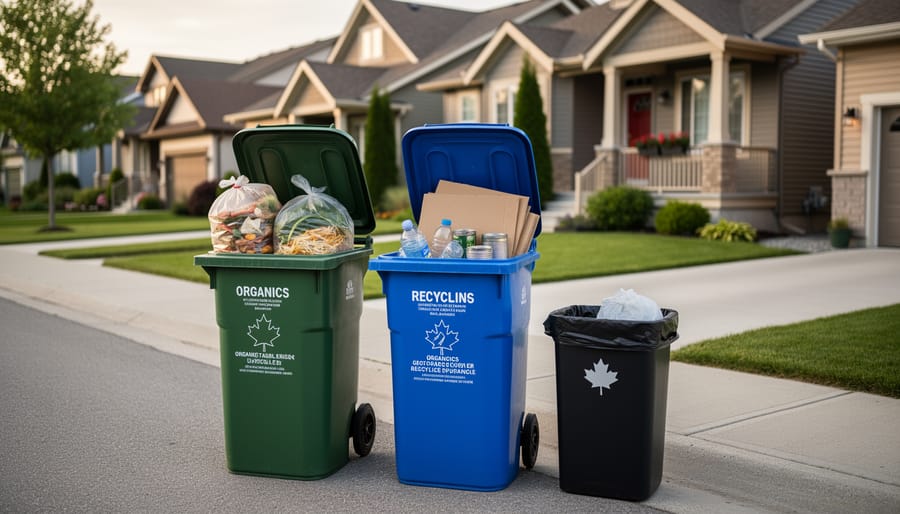
Food waste is a good place to begin. Plan meals around what’s already in your fridge, freeze extras, and store produce properly. In many Canadian cities, food scraps can go into a green bin or organics cart. That is called organics diversion, which means keeping food and yard waste out of landfills, where it breaks down and releases methane, a potent greenhouse gas. Check your municipality’s website to see what your program accepts.
Before buying new, try repair. Local repair cafés, sewing, and basic tool skills extend the life of clothing, appliances, and furniture. Secondhand stores and online marketplaces handle most of the rest.
When something does go in the recycling bin, it needs to be clean and in the right stream. A greasy pizza box or a bagful of plastic bags can spoil a whole batch. Contamination can send loads of otherwise good material to landfill, so when you’re unsure, look it up locally rather than guessing.
You’ll also hear about extended producer responsibility, or EPR. It’s a policy approach that makes producers, not taxpayers, cover the cost of managing their packaging and products at end of life. Programs and rules vary by province, so confirm what applies where you live.
Step 3: Protect Water at Home and Downstream
Water leaves your home in two very different ways, and treating them the same is where most mistakes happen. Wastewater is the used water from sinks, toilets, and showers. It travels through pipes to a treatment plant, where physical filtering and biological processes remove solids and contaminants before the water is released back to a river, lake, or ocean. This is called wastewater treatment. Stormwater runoff is rain or snowmelt that flows off roofs, driveways, and streets. In many places it goes straight to a creek or lake with no treatment at all.
Start with simple fixtures. Low-flow showerheads, faucet aerators, and dual-flush or high-efficiency toilets cut water use without changing your routine.
Then watch what goes down the drain. Treatment plants are built for human waste and toilet paper, so flushable wipes, dental floss, and cotton swabs clog pipes and pumps, even when the package says “flushable.” Pharmaceuticals can pass through treatment and reach local waterways, so take unused medication to a pharmacy take-back program. Paint, motor oil, solvents, and cleaning chemicals belong at a household hazardous waste depot, never in a sink, toilet, or storm drain. Check your municipality for depot locations and hours.
Outdoors, slow the water down. A rain garden is a shallow planted dip that soaks up runoff from a downspout. Permeable pavers or gravel let rain filter into the ground instead of racing across pavement. Both reduce the load on storm systems and help keep nearby watersheds cleaner.
Step 4: Shift How You Move and What You Buy
Transportation is often the largest piece of a household’s footprint, and it’s the hardest one to change in a country built around distance and cold. Start with the trips you repeat. If a bus, train, or bike route covers your commute even two or three days a week, that counts. Carpooling and car-sharing help where transit thins out. For a broader look at how policy and technology are shifting, see this overview of sustainable transportation.
Be honest about your setting. A downtown renter and a family in a northern or rural community face very different options, and neither is failing. Electric vehicles can work well in many regions, but cold weather reduces range, so check how a model performs in winter and whether charging is realistic where you live. Often the most sustainable choice is keeping a reliable car you already own and combining trips.
What you buy matters too. Choose seasonal, local food when you can, and plan meals to cut waste. Favour durable, repairable goods over cheap items you’ll replace.
Read product claims with care. Greenwashing means marketing that makes a product sound more environmentally friendly than it really is. Vague words like “eco” or “natural” prove little. Look for specific, verifiable details, such as named certifications, clear material lists, and repair or take-back options.
Learning From Indigenous Stewardship and Community Action
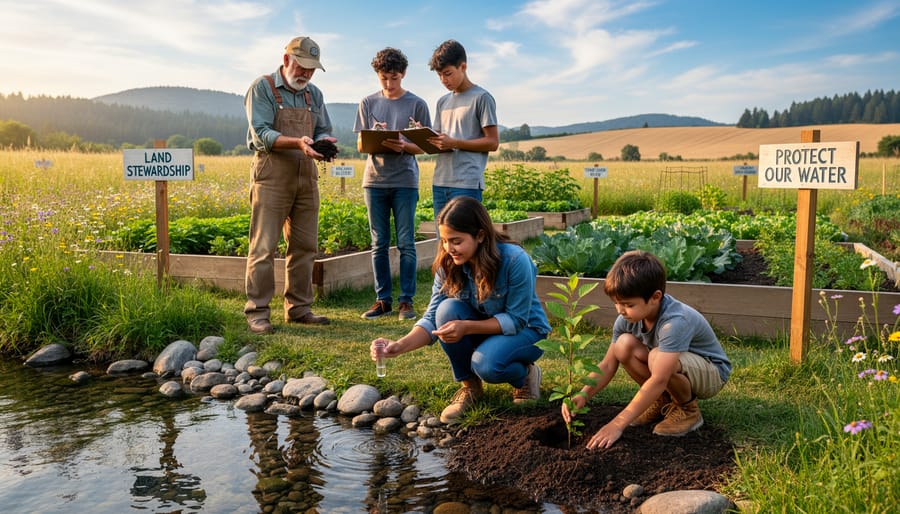
Long before anyone talked about carbon footprints, Indigenous peoples across what is now Canada were practicing a way of living that kept land and water healthy for generations. Many Indigenous communities describe this as a relationship rather than a resource-management plan. Land, water, plants, and animals are understood as relatives, and people carry responsibilities toward them.
Several principles show up again and again in Indigenous teachings, though they vary from Nation to Nation. Reciprocity means giving back when you take, whether that is harvesting only what you need or caring for the place that feeds you. Long-term thinking asks how a decision will affect people seven generations ahead, not just next season. And responsibility to future generations turns sustainability from a lifestyle choice into a duty.
These ideas translate easily to a household. When you plan meals to avoid waste, repair a coat instead of replacing it, or keep chemicals out of a storm drain, you are practicing the same habits of restraint and care. Personal choices matter most when they sit inside a wider commitment to the places we share.
That wider commitment is where community action comes in. Across the country, Indigenous-led programs, including guardians initiatives that monitor and look after traditional territories, are protecting watersheds, wildlife, and coastlines. Collaboration with Indigenous communities tends to strengthen environmental protection because it brings deep, place-based knowledge into decisions that affect land and water.
You can take part respectfully. Look for Indigenous-led conservation and education programs in your region, and learn directly from Indigenous voices rather than relying on secondhand summaries. Join a local watershed or cleanup group, attend public consultations, and ask how Indigenous knowledge is being included. Because programs and protocols differ widely, confirm details with the Nation or organization itself before assuming how to get involved.
When Personal Action Isn’t Enough: How Law Protects What Households Can’t
Switching to LED bulbs and composting your scraps matter, but a household can’t stop a pipeline, a polluting plant, or an unsafe wastewater discharge. That’s where law comes in, and ordinary people have more access to it than many realize.
Consider a general example. A community learns that a proposed industrial project could affect a nearby river. Residents don’t have to simply watch. Many projects trigger an environmental assessmenta formal review that weighs a project’s likely effects on land, water, wildlife, and communities before approval. The public can usually submit comments, ask questions, and have their concerns recorded in the decision file. Indigenous communities often hold distinct rights and a vital role in these processes, and their knowledge frequently shapes better outcomes.
Access to information is the second tool. Freedom-of-information and public registry systems let citizens request monitoring data, permits, and compliance records. You can’t hold anyone accountable for pollution you can’t see in the numbers.
Third are the courts. To bring certain challenges, a person or group may need standingmeaning the legal right to bring a case because they’re directly affected or have a recognized public-interest connection. Rules vary by province and by type of proceeding, so confirm the details with a legal clinic or environmental law organization.
If you want to see how this works in practice, learning about environmental policy and law in Canada is a strong starting point. Your household habits and your voice in these processes work best together.
Checking Your Progress and Planning Next Steps
Common Questions About Sustainable Living in Canada
Many Canadians start with the same few worries, so here are straight answers to the most common ones.
Is sustainable living affordable?
Many of the best first steps, like cutting food waste, fixing things before replacing them, and buying secondhand, save money. Bigger upgrades such as heat pumps cost more upfront, so check which federal, provincial, or municipal rebates apply to you before you commit.
Can renters make a difference?
Yes. Renters can control their own habits, from energy use and waste sorting to water-wise routines, and can ask landlords about efficiency upgrades or organics collection.
What if my community has limited recycling or transit?
Focus on what you can control, such as reducing waste at the source, composting where possible, and combining trips. Rural and northern options really do differ, and there is no shame in working within them.
How do I avoid greenwashing?
Be wary of vague claims like “eco-friendly” with nothing to back them up. Look for specific, verifiable details about what a product does and how it is made.
Individual action matters most when it connects to something larger. Your household choices build habits and demand, and joining community groups, supporting Indigenous-led conservation, and taking part in public consultations help protect land and water in ways one home never could alone.
Sustainable living in Canada isn’t built in a single dramatic overhaul. It’s built from small, consistent steps: a sealed draft here, a properly sorted bin there, a paint can taken to the right drop-off instead of down the drain. Those habits add up, especially when neighbours, community groups, and local governments move in the same direction.
They also work best alongside the bigger picture. Indigenous communities have cared for these lands and waters for generations, and their knowledge of reciprocity and long-term responsibility remains one of the strongest guides we have. Environmental law, meanwhile, gives people a way to hold polluters and decision-makers accountable when household action alone can’t reach the problem.
So start this week. Pull out your utility bills, walk through your home, and complete your baseline audit. Then look up your municipality’s programs, join a local group, and take part in the next public consultation. Protecting Canada’s land and water begins at your own front door.