 By kevin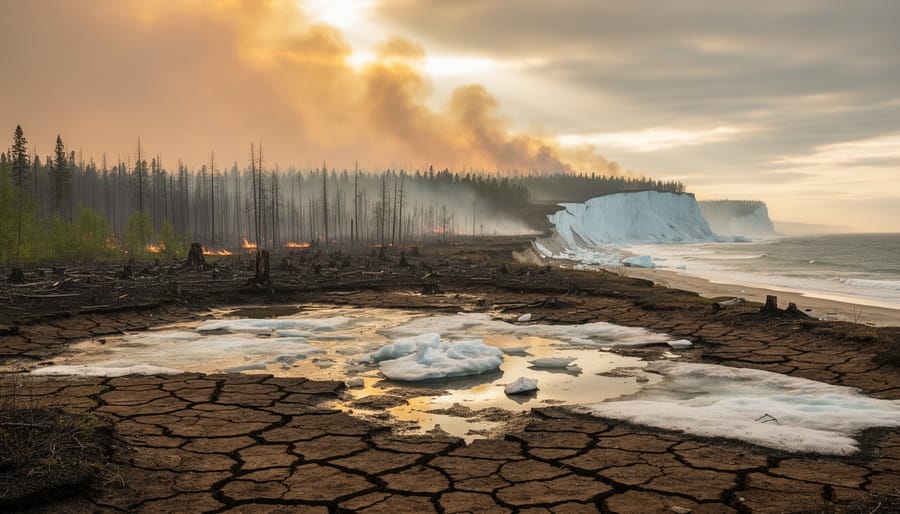
The question of how global warming affects the environment has moved from theoretical concern to documented reality across Canadian landscapes. In 2023, Canada experienced its worst wildfire season on record, with over 18 million hectares burned. That’s an area larger than all of Greece scorched in a single year. By 2026, we’re witnessing acceleration rather than relief, as rising temperatures fundamentally reshape ecosystems from the Arctic tundra to coastal rainforests.
Global warming doesn’t just make things warmer. It disrupts the intricate balance that sustains life on Earth. When permafrost thaws in northern communities, it releases methane that has been locked away for millennia while destabilizing the ground beneath homes and infrastructure. When ocean temperatures rise by even two degrees, coral reefs bleach and die, taking entire marine food webs with them. When seasonal patterns shift, migratory birds arrive to find their food sources have already peaked and declined.
These aren’t distant problems for future generations. Indigenous communities across Canada have documented dramatic environmental changes over the past two decades: caribou populations collapsing as their migration routes become impassable, traditional fishing grounds depleted as water temperatures climb, and sacred sites eroding as coastlines retreat. Their knowledge, built over thousands of years of careful observation, provides some of our most reliable evidence of how rapidly our environment is changing.
The impacts cascade through every ecosystem. Forests face unprecedented stress from invasive species that once couldn’t survive our winters. Wetlands dry up, eliminating crucial habitat for countless species. Glaciers that have fed our rivers for centuries retreat at visible rates, threatening water security for millions.
Understanding these mechanisms matters because solutions exist, but only if we recognize the urgency and scope of what we’re facing.
The Accelerating Pace of Environmental Change in Canada
Canada isn’t just warming, it’s warming faster than most places on Earth. While global temperatures rise, Canada warming twice as fast as the global average means our ecosystems face compounding pressures that accelerate environmental breakdown. This isn’t an abstract future threat. It’s reshaping landscapes, altering wildlife patterns, and destabilizing natural systems right now, in ways that communities from the Yukon to Nova Scotia are witnessing firsthand.
The numbers tell a stark story. The last three fire seasons rank among the ten worst on record, a clustering that reflects how rising temperatures create conditions ripe for catastrophic burns. In 2023, Canada experienced its most destructive wildfire season ever, with fires consuming 16.5 million hectares, nearly seven times the historical average. Then 2024 brought the Jasper wildfire, which destroyed one-third of the town’s structures and caused an estimated $1.23 billion in insured damages, demonstrating how warming doesn’t just affect remote forests but reaches into our communities.
This accelerated pace matters because ecosystems evolved over millennia to function within certain temperature ranges. When those ranges shift in decades rather than centuries, species can’t adapt quickly enough. Trees that once thrived become stressed and vulnerable to pests. Permafrost that stabilized northern landscapes for thousands of years begins to thaw. Fish populations adapted to cold waters face temperatures their physiology can’t tolerate.
Understanding this acceleration is crucial for grasping why Canada faces such urgent environmental challenges. We’re not experiencing gradual, manageable change. We’re watching systems tip toward transformation at a pace that outstrips our natural and institutional capacity to respond. The question isn’t whether global warming affects our environment, it’s whether we’ll act with the speed that our doubled warming rate demands.
Wildfires: The Most Visible Scar on Canadian Landscapes
The 2023 Wildfire Season: A Watershed Moment
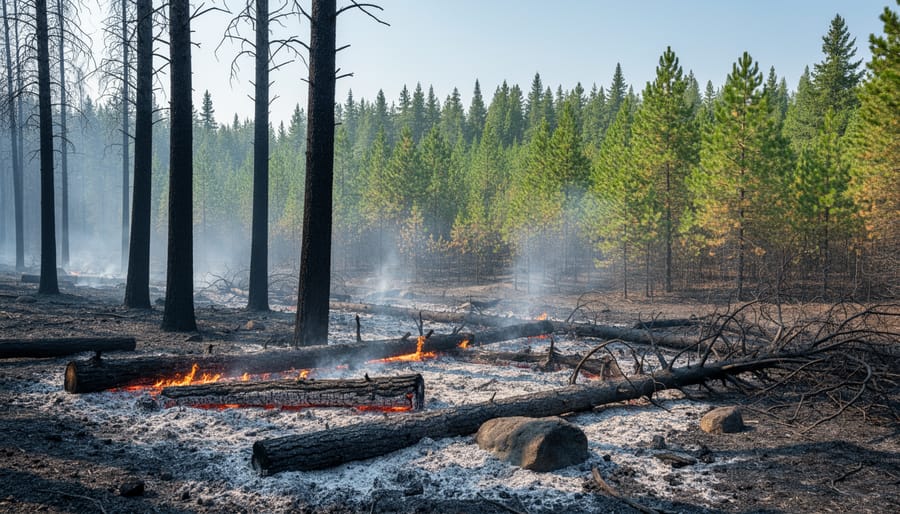
The 2023 wildfire season forced Canadians to confront a new environmental reality. Fires consumed 16.5 million hectares of forest, grassland, and boreal ecosystem, nearly seven times more than the historical average and enough area to cover the entirety of England and Wales combined. This wasn’t a statistical anomaly. It was the direct result of warming temperatures, prolonged droughts, and ecosystem stress that global warming amplifies each year.
The scale of destruction reshaped entire landscapes. Mature forests that had stored carbon for decades went up in smoke, releasing millions of tonnes back into the atmosphere and creating a feedback loop that accelerates warming. Wildlife populations lost critical habitat during breeding and migration seasons, with many species displaced from territories they’d occupied for generations. The record-breaking 15 million hectares figure doesn’t capture the cascading ecological damage: soil sterilization, watershed contamination, and the loss of old-growth forests that can’t be replaced within a human lifetime.
What made 2023 a watershed moment wasn’t just the numbers. It was the recognition that Canada’s forests, long considered stable carbon sinks, had become vulnerable tinderboxes. The season demonstrated how global warming doesn’t gradually warm ecosystems, it triggers rapid, irreversible transformations that demand immediate legal and policy responses.
Jasper 2024: When Fire Reaches Our Communities
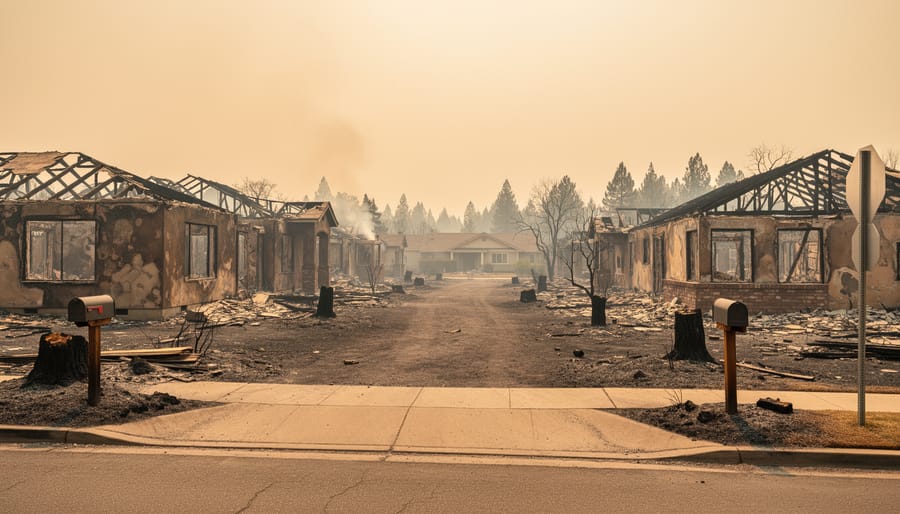
The July 2024 Jasper wildfire brought global warming’s environmental consequences into sharp focus when flames consumed one-third of the town’s structures in Jasper National Park, forcing the evacuation of 25,000 people and leaving insured damages estimated at $1.23 billion. But the financial toll tells only part of the story. This fire swept through a UNESCO World Heritage Site, destroying mature subalpine forest that had taken centuries to develop and wiping out critical habitat for grizzly bears, caribou, and countless other species that depend on these high-elevation ecosystems.
The immediate devastation was obvious: blackened mountainsides, charred wildlife corridors, and a beloved mountain town transformed into an apocalyptic landscape. Yet the long-term environmental consequences will unfold over decades. The burned forest canopy that once regulated temperature and moisture has vanished, exposing soil to erosion that will wash sediment into pristine mountain streams. Wildlife that survived the flames face a transformed landscape with reduced food sources and shelter, forcing territorial shifts that cascade through the entire Rocky Mountain ecosystem.
What makes Jasper significant is not just the scale of destruction, but its location. This was not remote boreal forest burning unseen. It was a fire that reached into the heart of one of Canada’s most iconic mountain communities, demonstrating that no ecosystem is too sacred, no elevation too high, and no location too protected to escape the reach of climate-intensified wildfires. The Jasper fire collapsed the psychological distance many Canadians maintained between environmental crisis and their own lives, making abstract warming trends viscerally real through images of destroyed homes against a backdrop of scorched alpine valleys.
Beyond Fire: Other Critical Environmental Impacts
Arctic and Boreal Ecosystem Transformations
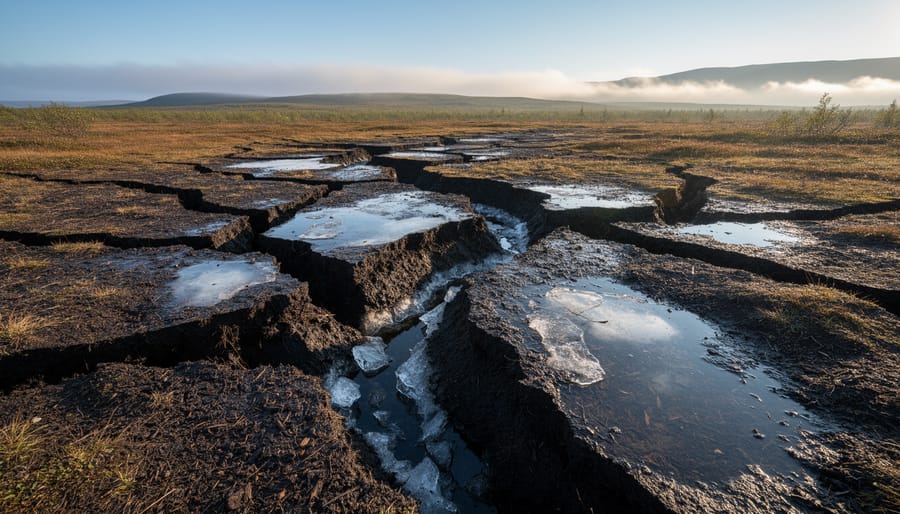
Canada’s Arctic and boreal regions are undergoing environmental upheaval at a pace that defies historical precedent. Permafrost that remained frozen for millennia now thaws in summer months, destabilizing the ground beneath northern infrastructure and releasing methane, a greenhouse gas far more potent than carbon dioxide, into the atmosphere. This thawing transforms stable tundra into collapsed, waterlogged landscapes called thermokarst, fundamentally altering drainage patterns and vegetation.
The boreal forest, which stretches across 30% of Canada’s landmass, faces stress from multiple directions. Warmer temperatures push tree lines northward while simultaneously making southern boreal zones vulnerable to drought and insect infestations that historically couldn’t survive the cold winters. Spruce budworm and mountain pine beetle now devastate forests that once served as critical carbon sinks, turning these ecosystems from carbon storage systems into carbon sources.
Wildlife ranges shift in response. Caribou herds, already struggling with habitat fragmentation, now contend with changing vegetation patterns and earlier spring melts that affect calving timing. Southern species like white-tailed deer move northward, bringing parasites and diseases that northern wildlife never evolved to resist.
For Indigenous communities whose ancestors lived on these lands for thousands of years, the changes threaten cultural practices rooted in predictable seasonal patterns. Traditional hunting routes become unreliable when ice forms later and melts earlier. Food sources move or disappear entirely. The knowledge passed down through generations, when to travel, where to hunt, which ice is safe, no longer matches the environment these communities now face.
Freshwater and Marine Environment Disruption
Canada’s position at the confluence of three oceans and holding roughly 20 percent of the world’s freshwater makes its aquatic systems particularly vulnerable to warming. Rising water temperatures disrupt thermal stratification in lakes, reducing oxygen levels in deeper waters where cold-water fish like lake trout depend on stable conditions. Species accustomed to specific temperature ranges face shrinking habitats as their thermal refuges disappear.
Ice loss compounds these pressures. Earlier spring melts and later freeze-ups alter nutrient cycling in northern lakes, affecting everything from algae blooms to fish spawning timing. Arctic marine mammals, including beluga whales and ringed seals, lose critical ice platforms for breeding and resting. Coastal communities relying on sea ice for transportation and hunting watch traditional routes become unpredictable and dangerous.
Ocean acidification, driven by increased carbon dioxide absorption, threatens shellfish populations along all three coasts. Oyster larvae struggle to form shells in more acidic waters, disrupting both wild populations and aquaculture operations. Meanwhile, warming Pacific waters push species like salmon into thermal stress, weakening runs that feed entire ecosystems and sustain Indigenous fisheries spanning generations.
Freshwater systems face additional strain from altered precipitation patterns. Some regions experience intensified flooding while others endure prolonged droughts, creating whiplash conditions that aquatic species cannot adapt to quickly enough. The cumulative effect reshapes not just individual species populations but the fundamental ecological relationships that define Canadian waterways.
Wildlife Under Pressure
Canadian wildlife populations face mounting pressures as global warming reshapes the landscapes they depend on. Caribou herds in the boreal forest struggle as warming temperatures expand tick populations and alter traditional migration routes, while polar bears lose critical sea ice hunting grounds. Fish species in warming rivers and lakes face thermal stress, forcing shifts in spawning timing and location that disrupt food webs. These disruptions often intensify human-wildlife conflict as animals venture into developed areas searching for food and habitat, yet media coverage of these impacts frequently suffers from wildlife false balance presenting industry perspectives alongside scientific evidence as if both carried equal weight. The cascading effects extend beyond individual species: as pollinators emerge earlier due to warmer springs but find their food plants blooming on different schedules, entire ecosystems lose synchronization, threatening the complex relationships that have evolved over millennia.
Indigenous Knowledge and Environmental Observation
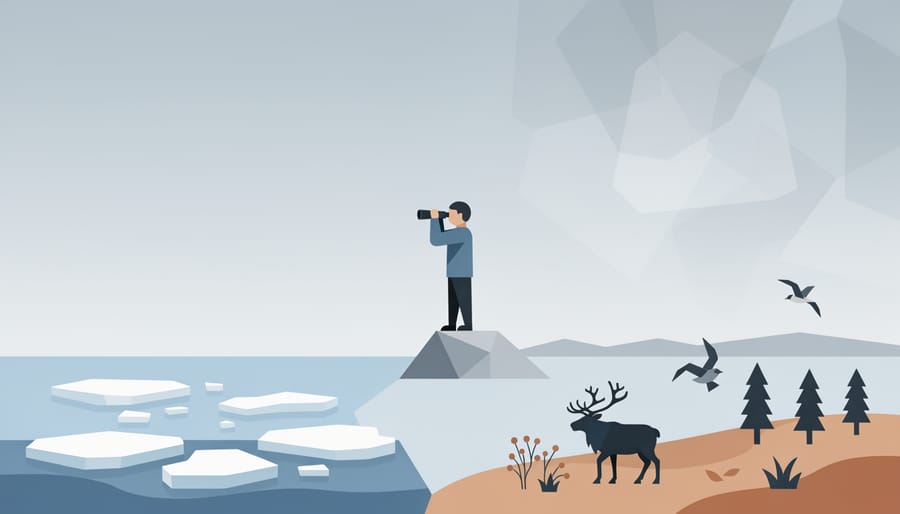
For thousands of years before formal climate science existed, Indigenous peoples across Canada have observed, documented, and adapted to environmental patterns through seasonal cycles and generational knowledge transfer. Today, as global warming accelerates environmental change, these communities are often the first to witness transformations in ecosystems they have stewarded for millennia. Their observations carry a temporal depth and place-based specificity that Western science, despite its technological sophistication, cannot replicate.
Elders in northern communities describe ice forming weeks later than in their youth and thawing earlier each spring. Hunters report caribou migration routes shifting as vegetation zones move northward. Coastal First Nations document salmon runs declining and unfamiliar species appearing in traditional fishing waters. These aren’t anecdotal observations but systematic monitoring rooted in intimate, multi-generational knowledge of specific territories. When an elder notes that a berry-picking site has shifted timing by ten days over two decades, that represents calibrated observation refined through centuries of seasonal harvest practice.
Traditional ecological knowledge offers what scientific instruments cannot: continuous monitoring across generations in places where research stations don’t exist, nuanced understanding of interconnected ecosystem relationships, and early detection of subtle changes that precede measurable scientific thresholds. Where western science might measure temperature increases or species population counts, Indigenous knowledge holders recognize cascading effects across entire systems because their survival has always depended on reading these relationships accurately.
True environmental protection requires recognizing that Indigenous communities are not just witnesses to climate change but knowledge keepers whose expertise is foundational to understanding and responding to ecosystem transformations.
Progressive environmental organizations, including those focused on legal advocacy, increasingly recognize this expertise as essential rather than supplementary. Collaboration means centering Indigenous voices in environmental assessments, incorporating traditional knowledge into legal strategies for habitat protection, and supporting Indigenous-led conservation initiatives. Several successful environmental cases in Canada have been strengthened by combining scientific evidence with Indigenous testimony about observed environmental changes over time.
The federal government’s commitment to reconciliation includes provisions for incorporating traditional ecological knowledge into environmental decision-making, though implementation remains inconsistent. Courts have increasingly acknowledged Indigenous knowledge as valid evidence in environmental litigation. For lawyers and advocates working on climate cases, building genuine partnerships with Indigenous communities strengthens both the evidentiary foundation and the moral authority of environmental protection efforts.
The Legal and Policy Response to Environmental Degradation
Canada’s legal framework for environmental protection operates through multiple mechanisms, each offering distinct pathways to address how global warming affects the environment. Federal legislation sets the foundation: the Canadian Environmental Protection Act governs toxic substances and pollution, while the Species at Risk Act protects habitats critical for threatened wildlife adapting to climate disruption. These laws create enforceable obligations for government agencies to consider climate impacts in project approvals, habitat designations, and recovery planning for vulnerable species.
Government accountability remains central to environmental law. Courts have increasingly recognized that federal and provincial governments cannot ignore their climate commitments when approving development projects. Environmental assessment processes now require proponents to quantify greenhouse gas emissions and explain how projects align with Canada’s emissions reduction targets. When agencies fail to adequately assess climate impacts, environmental organizations can challenge approvals through judicial review, forcing more rigorous analysis of how proposed activities might worsen environmental degradation.
Corporate responsibility for emissions has evolved significantly. Companies operating in Canada face growing legal pressure to account for their climate footprint. Some jurisdictions require large emitters to report emissions publicly, creating transparency that enables community groups to track pollution sources. Organizations like Nature’s Resilience Canada work to ensure corporations cannot externalize environmental costs without accountability, using legal tools to challenge inadequate environmental assessments and push for stronger conditions on industrial approvals.
Recent victories demonstrate the power of strategic environmental litigation. Courts have overturned pipeline approvals that failed to properly consider climate impacts and marine habitat destruction. Environmental groups have successfully compelled governments to strengthen regulations protecting critical habitats from industrial disturbance. Indigenous communities have won legal recognition that development decisions affecting their territories must incorporate traditional ecological knowledge about environmental changes.
Habitat protection mechanisms intersect directly with climate response. Designating protected areas preserves carbon sinks in forests and wetlands while providing refuges where species can adapt to changing conditions. Legal challenges have expanded protected area boundaries and prevented development in ecosystems already stressed by warming. These protections recognize that maintaining ecosystem integrity helps buffer against climate impacts while supporting biodiversity.
The path forward requires continued legal pressure alongside policy reform, ensuring governments and corporations face real consequences when their decisions accelerate environmental harm.
What Can Be Done: Pathways Forward for 2026 and Beyond
The scope of environmental damage from global warming demands action at every level, but structural change remains the most powerful lever. Governments must strengthen emissions regulations, enforce existing environmental protections, and hold corporations accountable for climate impacts. Legal action has proven effective in pushing reluctant institutions forward, recent court victories have forced governments to justify inadequate climate plans and compelled companies to reduce their carbon footprints. Citizens can amplify this pressure by supporting environmental law organizations, participating in consultations on climate policy, and demanding their representatives treat environmental protection as the urgent priority it is.
Systemic solutions include accelerating the transition to clean renewable energy expanding protected areas to safeguard vulnerable ecosystems, and investing in nature-based solutions that both reduce emissions and restore damaged landscapes. Infrastructure decisions made in 2026 will shape Canada’s environmental trajectory for decades. Prioritizing sustainable transportation retrofitting buildings for energy efficiency, and redesigning urban areas to reduce emissions all require government leadership backed by public demand.
Individual action matters most when it contributes to collective pressure for these structural changes. Reducing personal emissions helps, but organizing communities, supporting Indigenous-led conservation initiatives, and joining campaigns for stronger environmental legislation creates the political momentum needed for policy shifts. The environmental impacts catalogued throughout this article are not inevitable, they are the result of choices, which means different choices can alter the trajectory. Every person who demands better from institutions, supports legal challenges to inadequate climate action, or amplifies Indigenous voices in environmental decision-making becomes part of the solution.
The question of how global warming affects the environment demands more than acknowledgment. It requires action. Across Canada, where warming accelerates at twice the global rate, we’ve witnessed 16.5 million hectares consumed by fire in a single season, permafrost collapsing beneath northern communities, and ecosystems transforming faster than species can adapt. These aren’t abstract future threats. They’re documented realities reshaping our landscapes right now.
Yet within this urgency lies genuine opportunity for change. Environmental law organizations are securing legal victories that hold governments and corporations accountable for emissions and habitat destruction. Indigenous communities continue applying generations of ecological knowledge to climate adaptation strategies, often leading the most effective conservation initiatives. Citizens are organizing, pushing for stronger environmental protections through advocacy, litigation support, and grassroots pressure that shifts policy.
The severity of environmental impacts we face calls for coordinated responses across every sector. Legal frameworks must evolve to reflect ecological science. Policy must centre Indigenous perspectives and rights. Corporate practices require accountability that matches their environmental footprint. No single approach will reverse decades of cumulative damage, but collective action creates momentum that individual efforts cannot achieve alone.
Environmental justice remains possible when communities, legal advocates, and engaged citizens work together. Recognition of what’s at stake, combined with sustained pressure for systemic change, can still protect what remains and begin restoring what’s been lost.