
 By kevin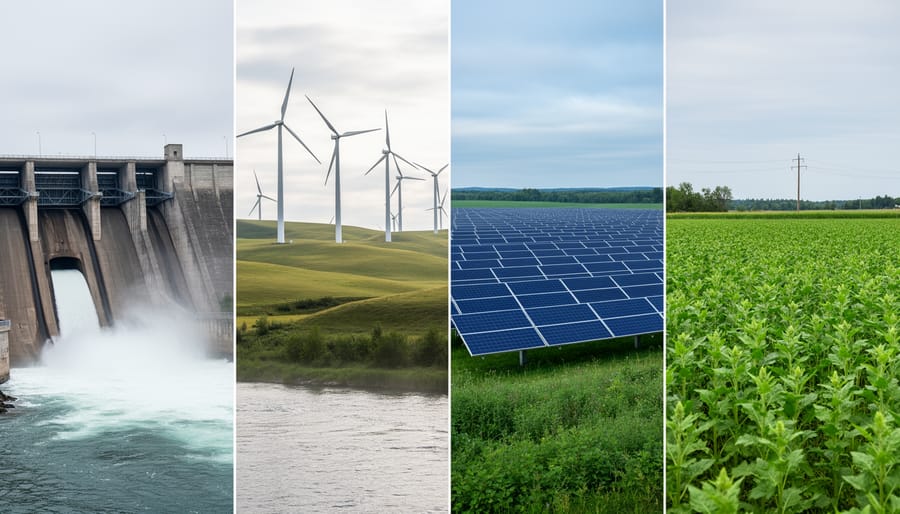
Canada’s energy future will be powered by four renewable sources: hydroelectricity, wind, solar, and bioenergy. By 2035, these technologies will form the backbone of our national grid as federal legislation, including the Clean Electricity Regulations and amendments to the Canadian Energy Regulator Act, mandates a transition away from fossil fuels. This shift isn’t just an environmental imperative. It’s a legal reality backed by binding commitments under the Canadian Net-Zero Emissions Accountability Act.
Understanding which renewable sources will shape our energy landscape matters because this transition affects electricity rates, job creation, land use, and the constitutional rights of Indigenous peoples whose territories host much of Canada’s renewable potential. Each energy source carries distinct legal frameworks governing project approval, environmental assessment, and Indigenous consultation requirements under the United Nations Declaration on the Rights of Indigenous Peoples Act.
The path to 2035 requires more than installing wind turbines and solar panels. It demands informed citizens who can take action through regulatory comment periods, hold governments accountable to their legal obligations, and ensure Indigenous communities maintain decision-making authority over projects on their lands. The renewable energy sources we examine here aren’t theoretical possibilities. They’re legally mandated pillars of Canada’s energy transition, each with proven capacity, existing infrastructure, and established pathways for public participation in their governance.
How These Four Energy Sources Were Chosen
Selecting these four renewable energy sources wasn’t arbitrary. Each meets a rigorous set of criteria that reflects both technical viability and Canada’s unique legal and social landscape in 2026. These criteria ensure the chosen technologies can realistically power Canada’s 2035 climate commitments while respecting Indigenous sovereignty and environmental protection standards.
The selection framework balanced practical energy considerations with legal accountability:
- Strong regulatory support through federal and provincial legislation already in place or under development
- Demonstrated scalability across Canada’s varied geography, from coastal regions to prairie expanses to northern territories
- Proven track record with operational projects showing reliable performance and economic viability
- Genuine potential for meaningful Indigenous partnerships and co-ownership models
- Minimal environmental impact when proper legal safeguards and monitoring requirements are enforced
Federal legislation like the Canadian Net-Zero Emissions Accountability Act and the Impact Assessment Act provides the overarching legal structure, while provinces have enacted complementary frameworks. Ontario’s Green Energy Act, British Columbia’s Clean Energy Act, and Quebec’s Act respecting the Transition énergétique establish provincial targets and approval processes. Alberta has introduced renewable energy regulations that govern project siting and environmental standards.
Critically, each source must pass the consultation and accommodation requirements under Section 35 of the Constitution Act, which protects Aboriginal rights. The Supreme Court’s decisions in cases like Haida Nation v. British Columbia have established that governments have a duty to consult Indigenous communities before approving projects affecting their territories. Technologies that facilitate true partnerships rather than token consultation rose to the top of our list.
These four sources represent the most legally defensible, scalable, and partnership-ready options for Canada’s renewable transition.
1. Hydroelectric Power: Canada’s Renewable Foundation
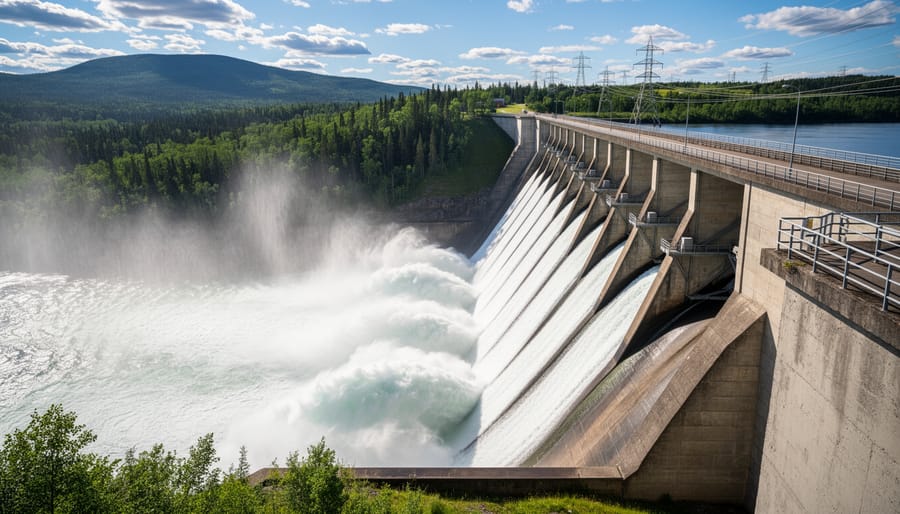
Hydroelectric power generates roughly 60% of Canada’s electricity, cementing its status as the country’s renewable energy workhorse. From British Columbia’s massive storage dams to Quebec’s sprawling run-of-river systems, hydro infrastructure has powered Canadian homes and industries for over a century. As the federal government targets net-zero emissions by 2050, hydroelectric projects scheduled through 2035 will add thousands of megawatts to the national grid while serving as a proving ground for reconciliation principles in energy development.
Run-of-river projects divert a portion of a watercourse through turbines without creating large reservoirs, minimizing ecosystem disruption. These installations appeal to communities wary of flooding traditional territories, though they require careful fish passage design. Storage dams, by contrast, create reservoirs that regulate flow year-round, providing both baseload power and grid stability during peak demand. Provincial Crown corporations like BC Hydro and Hydro-Québec manage most large-scale facilities, operating under complex webs of federal fisheries law, provincial water allocation statutes, and environmental assessment requirements.
Legal frameworks governing water use stem from the Canadian Environmental Protection Act, the Fisheries Act, and provincial water management legislation. Section 35 of the Fisheries Act prohibits harmful alteration of fish habitat, forcing dam operators to fund fish ladders, hatchery programs, and habitat restoration downstream. The Impact Assessment Act requires federal review for projects exceeding 200 MW capacity, triggering consultation duties with affected Indigenous nations under the Crown’s constitutional obligation. The hydroelectric capacity and targets tracked by federal energy regulators show Quebec planning 2,000 MW of new generation by 2035, much of it on rivers flowing through Cree and Innu territories.
Collaboration models have evolved dramatically since the paternalistic mega-projects of the 1970s. The Wuskwatim Dam in northern Manitoba, completed in 2012, operates as a partnership between Manitoba Hydro and Nisichawayasihk Cree Nation, who hold a 33% equity stake and seats on the project management board. More recently, the Keeyask Generating Station saw four Cree nations negotiate Impact Benefit Agreements guaranteeing employment quotas, environmental monitoring roles, and revenue sharing tied to electricity sales. These agreements don’t erase past harms but represent legally binding commitments that give Indigenous communities leverage if promises go unmet.
Environmental considerations extend beyond fish to sediment flow, temperature regulation, and mercury methylation in newly flooded organic soils. Modern projects must demonstrate that cumulative impacts won’t push species toward threatened status, a standard that has killed poorly planned proposals at the assessment stage. The legal victories here often come from Indigenous-led challenges: in 2021, Treaty 8 First Nations in British Columbia secured a court order halting Site C Dam preconstruction work until the province completed a full climate resilience assessment, forcing BC Hydro back to the drawing board with updated flood modeling.
2. Wind Energy: Harnessing Canada’s Coastal and Prairie Winds
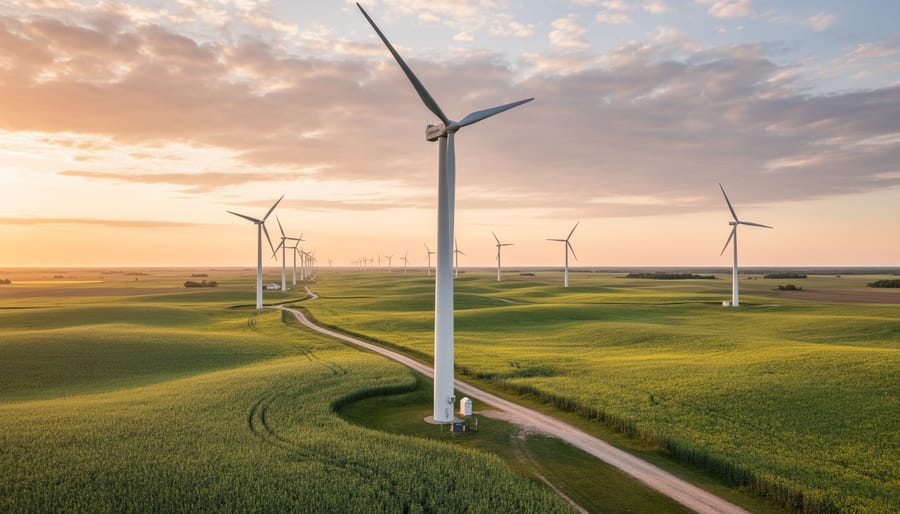
Wind energy stands as one of Canada’s fastest-growing renewable resources, with installed capacity projected to triple by 2035 as provinces race to meet emission reduction targets. The technology has matured from experimental prairie turbines in the 1990s to sophisticated offshore arrays now planned for Atlantic and Pacific coastlines.
Onshore wind dominates the current landscape, with Alberta, Saskatchewan, and Ontario leading provincial deployments. Alberta alone added 1,800 megawatts between 2019 and 2025, transforming former ranchland into revenue-generating clean energy zones. The prairies offer consistent wind speeds averaging 6-7 metres per second at turbine height, making them ideal for utility-scale projects. Coastal provinces are developing offshore wind capacity, particularly Nova Scotia and Newfoundland, where ocean winds blow stronger and more reliably than land-based alternatives. British Columbia’s coastal waters present similar opportunities, though complex seabed topography and marine protection zones require careful site selection.
The regulatory framework for wind development layers federal environmental laws atop provincial energy approvals. Developers must navigate the Impact Assessment Act for large projects, provincial environmental assessment processes, species-at-risk protections under federal and provincial legislation, and municipal land-use bylaws. This multi-tiered system creates accountability checkpoints where communities and environmental groups can challenge proposals that fail to meet legal standards. The courts have upheld challenges against wind projects that inadequately assessed bird collision risks or bypassed required consultations with nearby residents.
Indigenous-led and co-owned wind projects represent the sector’s most promising reconciliation pathway. The Cowichan Tribes in British Columbia developed a 60-megawatt wind farm on their traditional territory, maintaining full ownership and directing revenues toward community housing and cultural programs. Similarly, the Kebaowek First Nation in Quebec partnered with a private developer to co-own a 150-megawatt project, securing 50 percent equity and guaranteed local employment. These arrangements flip the traditional model where Indigenous communities merely receive consultation rather than economic benefit and decision-making power.
Bird and bat mortality remains a persistent concern, addressed through legally mandated mitigation. Developers must conduct pre-construction surveys identifying migration corridors and nesting areas, implement seasonal shutdowns during peak migration periods if warranted, and monitor post-construction mortality to trigger adaptive management. Failure to comply can result in prosecution under the Migratory Birds Convention Act or provincial wildlife statutes, with penalties reaching six figures per incident.
Canada’s wind capacity is expected to reach 35,000 megawatts by 2035, up from roughly 14,000 megawatts in 2026. This growth hinges on streamlined regulatory processes that maintain environmental safeguards while reducing approval timelines, currently averaging three to five years from proposal to operation.
3. Solar Energy: From Urban Rooftops to Remote Communities
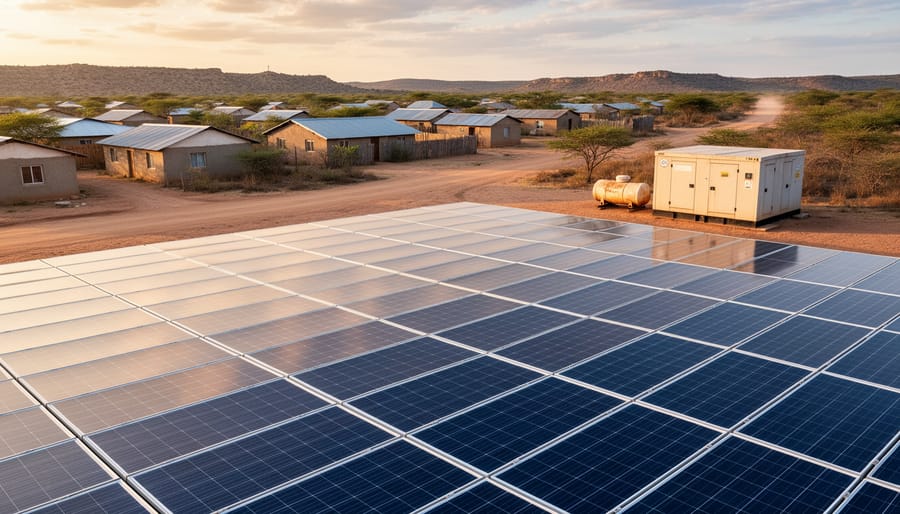
Solar photovoltaic capacity is expanding rapidly across Canada, from commercial installations on urban buildings to standalone systems powering remote First Nations communities. While hydroelectric power dominates national generation, solar fills critical gaps, particularly in regions beyond the reach of transmission lines and in provinces seeking to diversify their energy mix beyond fossil fuels.
Southern Ontario, Alberta, and British Columbia lead provincial solar development, driven by falling panel costs and improved efficiency ratings. Large-scale solar farms now compete economically with natural gas peaking plants, especially when paired with battery storage. But solar’s transformative impact extends far beyond utility-scale projects. Rooftop installations on homes and businesses give property owners direct control over their electricity generation, supported by net metering programs that credit excess power fed back to the grid.
Net metering policies vary by province, yet all rest on a common legal principle: homeowners have the right to generate renewable electricity and receive fair compensation. Provincial utility regulators establish the rates and connection requirements, while federal building codes increasingly mandate solar-ready infrastructure in new construction. These frameworks protect consumers from utility resistance while ensuring grid stability. Homeowners considering solar should review their provincial net metering rules and any municipal bylaws affecting installation, as some jurisdictions impose permitting requirements that can delay projects.
Federal incentive programs, including the Canada Greener Homes Grant and Indigenous off-grid initiatives, provide financial backing with clear legal foundations in climate legislation. These programs require applicants to meet efficiency standards and use certified installers, creating accountability mechanisms that prevent shoddy installations while supporting skilled trades. The grants have proven especially impactful in remote communities, where diesel dependency creates both environmental harm and energy insecurity.
Fifteen First Nations communities transitioned from diesel to solar-plus-battery systems between 2023 and 2025, reducing greenhouse gas emissions while slashing fuel transportation costs. Fort Severn First Nation in northern Ontario now generates the majority of its electricity from solar arrays installed on community buildings and a dedicated solar field. The project, developed in partnership with the community and funded through Indigenous climate programs, demonstrates how renewable energy strengthens self-determination. Diesel generators remain as backup, but runtime has dropped by over 60 percent.
Agricultural solar projects represent another growth area, with farmers installing panels on barn roofs or dedicating marginal land to dual-use systems that allow crops or livestock grazing beneath elevated arrays. Provincial agricultural land commissions review these projects to ensure they don’t compromise food production, balancing renewable energy goals against land preservation mandates. Legal disputes occasionally arise when municipalities attempt to block agricultural solar through restrictive zoning, but courts have generally sided with landowners exercising their property rights within environmental regulations.
By 2035, solar is projected to supply 6 percent of Canada’s electricity, a modest share nationally, but a lifeline for hundreds of off-grid communities gaining energy sovereignty.
4. Geothermal Energy: Canada’s Emerging Frontier
Geothermal energy represents Canada’s most untapped renewable frontier, with western provinces sitting atop substantial underground heat reserves that could supply clean baseload power for decades. Unlike intermittent solar and wind, geothermal plants operate continuously regardless of weather, making them particularly valuable as the country phases out coal and reduces fossil fuel impacts. British Columbia, Alberta, and Saskatchewan have identified multiple high-potential geothermal zones, yet regulatory frameworks remain in their infancy compared to hydroelectric or wind legislation.
The legal landscape for geothermal development sits at the intersection of mineral rights, water law, and environmental protection. Subsurface rights historically granted for oil and gas extraction don’t automatically extend to geothermal fluids, creating jurisdictional ambiguity that provinces are only beginning to address through new legislation. Alberta introduced its Geothermal Resource Development Act in 2024, establishing Crown ownership of geothermal resources and creating a tenure system separate from petroleum rights. British Columbia followed with amendments to its Clean Energy Act, but regulatory gaps persist around long-term monitoring obligations and liability for induced seismicity.
Indigenous consultation requirements apply with particular force to geothermal projects, given their subsurface nature and permanent infrastructure footprint. The duty to consult extends beyond surface impacts to include potential effects on groundwater systems that Indigenous communities rely on for drinking water, ceremonies, and traditional medicines. Several pilot projects currently under development, including a 5-megawatt facility in Treaty 8 territory, have incorporated First Nations as equity partners from the outset rather than treating consultation as a compliance checkbox. These partnerships recognize that geothermal development alters the land for generations, requiring governance models that respect Indigenous sovereignty.
Commercial viability timelines remain longer than other renewables. While demonstration projects are producing power as of 2026, industry analysts project commercial-scale geothermal won’t contribute meaningfully to grid capacity until 2030 at the earliest. The environmental advantages justify this patience: geothermal installations require minimal surface disturbance compared to solar farms or wind arrays, making them compatible with agricultural land use or even a natural yard on the surface above. Wells drilled for geothermal energy don’t fragment wildlife habitat or alter bird migration corridors. The technology also provides a potential economic transition pathway for oil and gas workers whose skills in drilling and reservoir management transfer directly to geothermal operations.
Common Questions About Canada’s Renewable Energy Transition
How are renewable projects held legally accountable for environmental promises?
Renewable energy projects undergo federal or provincial environmental assessments that set binding conditions. Proponents must obtain permits, submit monitoring reports, and face enforcement actions including fines or project suspension if they violate environmental protections. Citizens and environmental groups can launch judicial reviews or private prosecutions when governments or companies fail to enforce these commitments.
What rights do Indigenous communities have in energy development on their territories?
The Crown has a constitutional duty to consult and, where appropriate, accommodate Indigenous peoples when development may impact treaty or Aboriginal rights. For projects on traditional territories, communities must receive meaningful consultation, and courts have repeatedly halted projects that proceeded without proper engagement. Many First Nations now negotiate impact benefit agreements or equity partnerships that give them decision-making power and revenue sharing.
How can individuals support or challenge renewable energy projects?
You can participate in public comment periods during environmental assessments, attend community meetings, and submit written concerns about specific projects. To challenge a project legally, you may file objections with regulatory bodies, request judicial review of approval decisions, or support environmental organizations bringing legal action. Supporting Indigenous-led renewable initiatives through advocacy or investment strengthens community-driven energy transitions.
What happens if Canada misses 2035 targets?
Missing legislated climate targets triggers accountability mechanisms under the Canadian Net-Zero Emissions Accountability Act, including mandatory progress reports to Parliament and potential legal challenges. While the Act doesn’t impose automatic penalties, failure opens the door to litigation from provinces, municipalities, or citizens arguing the federal government breached its legal climate obligations. International reputation damage and difficulty accessing climate financing would compound domestic consequences.
Understanding the legal architecture behind renewable energy helps you navigate this transition as an informed participant. An environmental assessment is the process evaluating a project’s potential environmental, social, and health impacts before approval, with public input shaping the final decision. Renewable energy credits (also called renewable energy certificates) represent proof that one megawatt-hour of electricity was generated from a renewable source, allowing utilities and businesses to meet clean energy requirements even when buying from the general grid.
The duty to consult isn’t just bureaucratic procedure. It’s a constitutional requirement flowing from section 35 of the Constitution Act, 1982, which recognizes and affirms Aboriginal and treaty rights. Courts have strengthened this duty over decades, making it clear that consultation must be meaningful, not a formality, and that Indigenous knowledge must inform project design and approval conditions. When energy companies skip this step or treat it superficially, projects face costly legal delays or cancellation.
Hydroelectric power, wind, solar, and geothermal energy aren’t just technical solutions, they represent Canada’s pathway to meeting 2035 climate commitments while honouring legal obligations and Indigenous rights. Each renewable source brings distinct advantages to different regions, but their collective success depends on robust environmental laws, transparent regulatory processes, and meaningful partnerships with First Nations, Métis, and Inuit communities.
The legal frameworks governing these energy transitions matter profoundly. Environmental assessments, duty-to-consult requirements, and renewable energy mandates create accountability structures that prevent greenwashing and ensure projects deliver real benefits. When these laws are enforced effectively and Indigenous communities hold decision-making authority over developments on their territories, renewable energy becomes a tool for reconciliation rather than another extractive industry.
You have power in this transition. Contact environmental law organizations when projects bypass proper consultation or environmental safeguards. Support Indigenous-led renewable initiatives that prioritize community sovereignty and sustainable development. Participate in regulatory hearings for proposed wind farms, solar installations, or hydroelectric projects in your region. File complaints when corporations or governments fail to meet their legal commitments.
Nature’s Resilience Canada continues advocating for renewable energy policies that centre environmental justice and Indigenous rights. The 2035 targets are ambitious, but achievable when legal accountability and community partnership guide every megawatt of clean energy we develop. Canada’s renewable future must be legally sound, environmentally responsible, and built on respect for the land and its original stewards.