 By kevin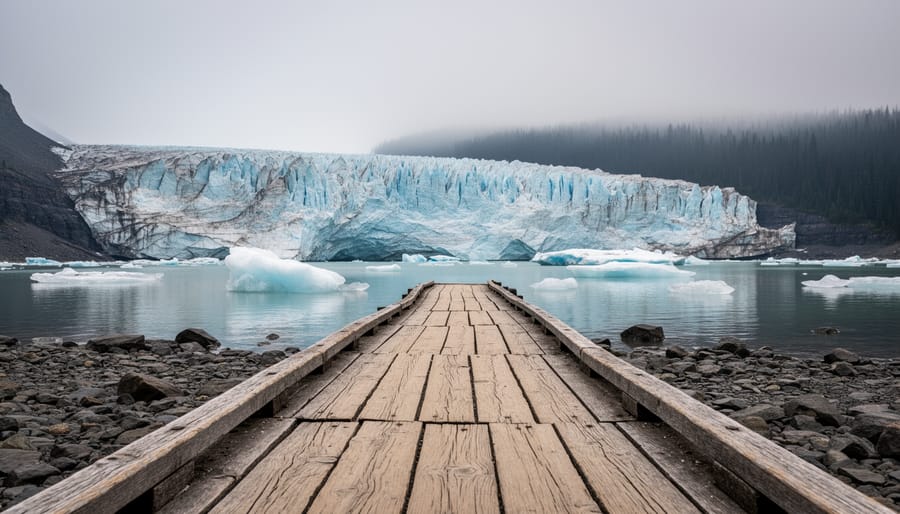
Climate change in Canada refers to the long-term shift in temperature patterns, precipitation, and weather extremes affecting the country at roughly twice the global average rate, transforming ecosystems, communities, and ways of life from coast to coast to coast.
This isn’t a distant threat. Canadian glaciers are retreating, permafrost is thawing beneath northern communities, and wildfire seasons now stretch months longer than they did a generation ago. Coastal towns face rising sea levels while Prairie farmers contend with intensifying droughts. The changes are measurable, immediate, and reshaping how Canadians live, work, and plan for the future.
Understanding climate change in the Canadian context means grappling with both scientific reality and human response. The country’s vast geography creates diverse impacts: what threatens a Nunavut hamlet differs sharply from risks facing Vancouver or Halifax. Yet common threads emerge. Indigenous communities, who have observed environmental shifts for decades, offer crucial knowledge about adaptation and resilience that mainstream science is only beginning to fully recognize and incorporate.
This article explains what climate change means for Canada specifically, how warming manifests across different regions and sectors, and the legal, policy, and community-led solutions taking shape. You’ll find clear definitions of key concepts, examples of impacts already underway, and an overview of collaborative approaches, including litigation strategies and Indigenous-led initiatives, that are driving climate action across the country. The goal is to equip you with knowledge and pathways for meaningful engagement in one of the defining challenges of our time.
Understanding Climate Change in Canada: Definition and Context
Climate change refers to long-term shifts in temperature, precipitation patterns, and other atmospheric conditions that persist over decades or longer. In Canada, this isn’t a distant, abstract concept, it’s a measurable reality reshaping our landscapes, communities, and ecosystems right now. Unlike natural climate variability, which fluctuates over short periods due to phenomena like El Niño or volcanic eruptions, human-caused climate change represents a sustained warming trend driven by greenhouse gas emissions from burning fossil fuels, industrial activity, and land use changes.
The science is clear and alarming: Canada warming twice as fast as the global average, with the country’s mean temperature increasing by approximately 1.7°C since 1948 compared to the global increase of 0.8°C. Northern Canada faces even more dramatic changes, with some Arctic regions warming at nearly three times the global rate. These numbers translate into tangible consequences: longer wildfire seasons, thawing permafrost undermining infrastructure, disrupted growing seasons for agriculture, and disappearing sea ice that Indigenous communities depend on for traditional ways of life.
Understanding key climate terms helps clarify how this crisis unfolds and what solutions mean:
- Greenhouse gases
- Atmospheric gases like carbon dioxide, methane, and nitrous oxide that trap heat, creating a warming effect similar to a blanket around Earth.
- Carbon neutrality
- Achieving a balance between carbon emissions produced and carbon removed from the atmosphere, resulting in net-zero emissions.
- Climate adaptation
- Actions taken to adjust to current and future climate impacts, such as building flood defences or developing drought-resistant crops.
- Climate mitigation
- Efforts to reduce or prevent greenhouse gas emissions, including transitioning to renewable energy and protecting carbon-storing forests.
- Tipping points
- Critical thresholds where climate systems undergo irreversible changes, such as the collapse of ice sheets or dieback of the Amazon rainforest.
Canada’s geographic position makes it particularly vulnerable. Our vast boreal forests and Arctic tundra store massive amounts of carbon that warming temperatures threaten to release. Coastal communities face rising sea levels and intensifying storms. The country’s northern latitude means small temperature increases trigger disproportionate ecological disruptions, from permafrost collapse to altered wildlife migration patterns that affect food security for remote communities.
How Climate Change Works in the Canadian Environment
Arctic Amplification and Northern Canada
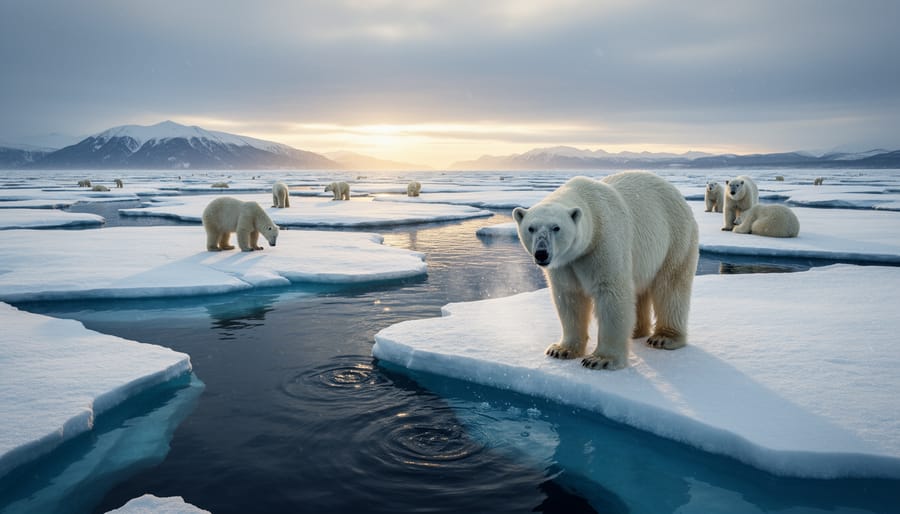
The Arctic region experiences disproportionate warming through a phenomenon called Arctic amplification. Research shows the Arctic warms nearly four times faster than the global average, fundamentally altering Canada’s northern environment. The primary driver is the albedo effect: as white ice and snow melt, they expose darker ocean water and land surfaces that absorb rather than reflect solar radiation. This creates a feedback loop where absorbed heat accelerates further melting, which reduces reflective surfaces, driving even more warming.
For Northern and Indigenous communities, these changes threaten traditional ways of life that have endured for millennia. Thinning sea ice makes hunting dangerous and unpredictable. Permafrost thaw destabilizes buildings, roads, and vital infrastructure while releasing stored carbon. Shorter winters disrupt wildlife migration patterns that communities depend on for food security. Coastal erosion forces entire villages to consider relocation. These impacts compound existing challenges around remote access, housing, and healthcare, disproportionately affecting those whose cultures and livelihoods are inseparable from the land and ice.
Impacts on Canada’s Ecosystems and Wildlife
Canada’s ecosystems, from coastal rainforests to Arctic tundra, are experiencing profound disruptions as temperatures rise and precipitation patterns shift. Wildlife populations face mounting pressures that cascade through food webs and alter the ecological balance that has sustained these systems for millennia.
Migratory species are arriving earlier or later than historical norms, falling out of sync with the food sources they depend on. Caribou herds in the North struggle as warming temperatures change snow conditions and vegetation patterns, while their migration routes are further complicated by infrastructure development. Bird species are shifting their ranges northward, but many face mismatches between peak food availability and nesting periods.
Habitat ranges are compressing or fragmenting as species adapted to cooler climates run out of northward territory. Mountain-dwelling species like pikas and alpine plants are squeezed toward higher elevations with nowhere left to go. Meanwhile, southern species are expanding into newly suitable territory, introducing competition and sometimes disease to resident populations unprepared for these encounters.
Predator-prey dynamics are unraveling as species respond differently to warming. Snowshoe hares in the boreal forest are losing their camouflage advantage as snow cover diminishes, making them more vulnerable to predators. Salmon populations face multiple stressors, warmer stream temperatures, altered flow patterns, and shifting ocean conditions, threatening the entire coastal ecosystem that relies on their annual runs, from bears to eagles to the forests themselves, which are nourished by marine-derived nutrients.
Types and Components of Climate Change Impacts in Canada
Environmental and Ecological Impacts
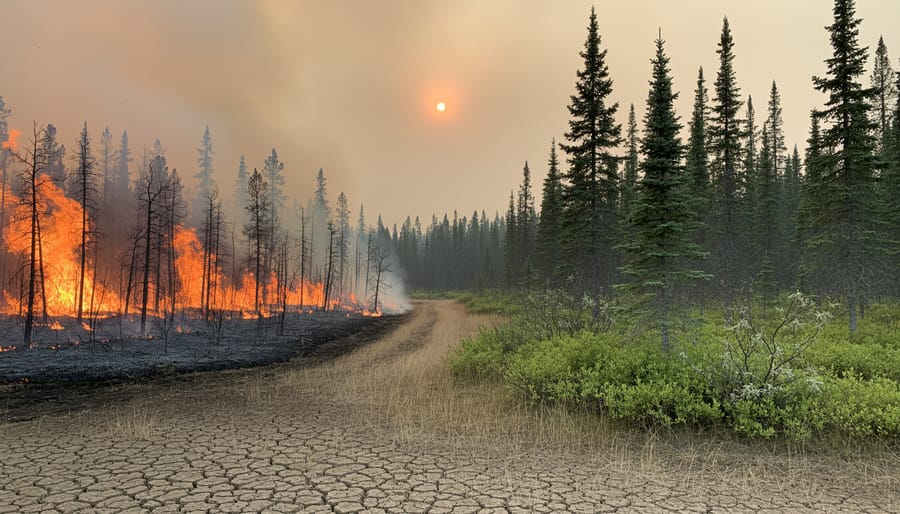
Canada’s forests, which cover nearly 40% of the nation’s landmass, face unprecedented wildfire seasons driven by hotter, drier conditions. The 2023 fire season burned over 18 million hectares, an area larger than Greece, blanketing cities as far south as New York in smoke and displacing thousands of residents. These megafires don’t just destroy timber; they release massive carbon stores, kill wildlife, and transform entire ecosystems from carbon sinks into sources.
Permafrost thaw impacts in Canada threaten infrastructure and release methane, a greenhouse gas 25 times more potent than carbon dioxide, accelerating warming in a vicious feedback loop. Meanwhile, the country’s glaciers are retreating at alarming rates, the Columbia Icefield loses ice equivalent to 5 billion bathtubs annually, jeopardizing freshwater supplies for millions downstream.
Species like caribou, already in decline, lose critical habitat as their ranges shift northward faster than they can migrate. Coastal ecosystems face warming waters that drive salmon populations to collapse, disrupting food webs that sustain orcas, bears, and Indigenous communities reliant on traditional fisheries. These cascading changes don’t respect borders or timelines; they demand immediate, coordinated action to protect what remains.
Social and Economic Impacts
Climate change is reshaping the economic landscape and social fabric of Canadian communities in profound ways. Rising temperatures and extreme weather events threaten traditional livelihoods, particularly in sectors like agriculture, fisheries, and forestry. Farmers across the Prairies face unpredictable growing seasons and increased drought risk, while coastal fishing communities contend with shifting fish stocks and ocean acidification that disrupts marine ecosystems.
Food security is increasingly precarious, especially in remote and Northern communities where traditional harvesting becomes unreliable and transportation costs for imported food continue to climb. Housing faces mounting pressures from flooding, wildfires, and permafrost thaw, driving up insurance premiums and making coverage unaffordable or unavailable in high-risk areas.
These impacts fall disproportionately on vulnerable populations. Indigenous communities experience compounded challenges as climate change undermines traditional food systems, threatens cultural practices tied to the land, and damages infrastructure in remote regions where adaptation resources are limited. Low-income households spend a higher percentage of income on food and energy, making them especially vulnerable to climate-driven price increases. The economic burden of climate change widens existing inequalities, creating an urgent need for climate action that prioritizes equity and supports those most affected.
Regional Variations Across Canada
Climate change doesn’t affect all parts of Canada uniformly. Each region faces distinct challenges shaped by its geography, ecosystems, and proximity to oceans or Arctic systems.
British Columbia’s coastal communities contend with sea level rise, intensified storm surges, and atmospheric rivers that trigger devastating floods and landslides. The province’s forests face unprecedented wildfire seasons, with entire communities evacuated as flames consume millions of hectares.
The Prairies experience longer droughts and extreme heat that stress agriculture and water supplies. Flash flooding alternates with arid conditions, creating unpredictable growing seasons that threaten food production and farm livelihoods.
Ontario and Quebec face more frequent freeze-thaw cycles damaging infrastructure, earlier spring melts causing flooding, and heat waves straining urban centers. The Great Lakes warm, disrupting fisheries and water quality.
Atlantic provinces battle coastal erosion, fiercer hurricanes, and ocean acidification decimating shellfish industries. Storm surges threaten homes and critical infrastructure along vulnerable coastlines.
The North confronts the most dramatic changes: permafrost collapse destabilizes buildings and roads, sea ice loss disrupts traditional hunting, and warming occurs at triple the global rate, fundamentally altering ecosystems that Indigenous communities depend on for food security and cultural continuity.
Climate Action and Solutions Being Implemented in Canada
Legal Mechanisms and Environmental Law
Climate litigation has emerged as a powerful tool for holding governments and corporations accountable on climate action in Canada. Through the courts, citizens and environmental organizations can challenge inadequate climate policies, enforce existing environmental protections, and push for stronger regulatory frameworks.
Judicial review allows courts to assess whether government climate plans meet legal obligations under environmental legislation and constitutional rights. For instance, lawsuits have challenged the federal government’s climate targets as insufficient under the Canadian Environmental Protection Act, forcing more rigorous assessments of emissions reduction strategies. Courts have ruled that climate plans must be grounded in scientific evidence and demonstrate how targets will actually be achieved, not just stated as aspirational goals.
Environmental law enforcement mechanisms include prosecutions under pollution prevention statutes, compliance orders against major emitters, and challenges to project approvals that fail to adequately consider climate impacts. Recent victories have included courts requiring comprehensive greenhouse gas assessments before approving industrial developments and forcing regulators to revisit approvals that downplayed climate risks.
Legal action has directly strengthened climate policy by establishing precedents that expand the scope of environmental assessments, recognize climate change as a legitimate factor in regulatory decisions, and affirm that governments have enforceable duties to protect citizens from climate harms. These cases create binding obligations that shape how climate policy is developed and implemented across jurisdictions, transforming climate commitments from political promises into legal requirements with real consequences for non-compliance.
Federal and Provincial Policy Initiatives
Canada’s climate policy landscape operates on two levels: federal programs that set national direction and provincial initiatives that reflect regional priorities. At the federal level, the cornerstone is carbon pricing through the Greenhouse Gas Pollution Pricing Act, which puts a price on carbon emissions to drive down pollution while returning revenues to households through rebates. The government has committed to reducing emissions by 40-45% below 2005 levels by 2030, backed by sector-specific regulations for electricity, transportation, and heavy industry.
Provincial approaches vary widely. British Columbia pioneered North America’s first broad-based carbon tax in 2008. Quebec and Nova Scotia participate in cap-and-trade systems. Alberta’s industrial carbon pricing targets large emitters, while Saskatchewan initially fought federal carbon pricing in court before implementing its own system.
Clean energy investments include billions allocated for renewable power, grid modernization, and zero-emission vehicle infrastructure. The Clean Fuel Regulations mandate lower carbon intensity in gasoline and diesel.
However, significant gaps persist. Canada’s emissions continue rising in the oil and gas sector despite overall targets. Accountability mechanisms remain weak: the federal Net-Zero Emissions Accountability Act requires progress reports but lacks enforceable penalties for missed targets. This is precisely where legal advocacy gains traction, challenging inadequate climate plans through judicial review and pushing governments to strengthen enforcement mechanisms that translate commitments into measurable results.
Indigenous-Led Climate Solutions
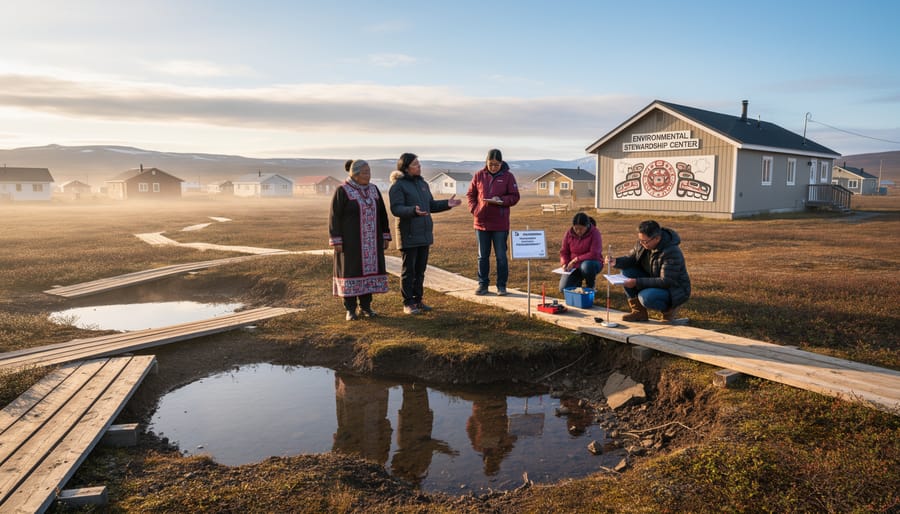
Indigenous peoples have stewarded Canadian lands and waters for millennia, developing sophisticated knowledge systems that foster ecosystem resilience. These time-tested practices, including controlled burns, seasonal harvesting protocols, and holistic landscape management, offer proven climate solutions grounded in deep ecological understanding.
Indigenous Guardian programs now operate across Canada, with trained monitors protecting territories, documenting environmental changes, and applying traditional knowledge to restoration projects. These programs combine ancestral wisdom with modern science, creating effective conservation models that respect cultural practices while addressing contemporary climate threats.
Collaborative partnerships that honour Indigenous sovereignty and rights yield the strongest climate outcomes. When Indigenous communities lead protected area management, co-develop climate adaptation strategies, and participate as equal decision-makers in resource planning, conservation effectiveness increases substantially. Legal recognition of Indigenous land rights strengthens these partnerships, ensuring communities maintain authority over territories they’ve protected for generations.
Meaningful climate action requires more than consultation, it demands genuine partnership where Indigenous knowledge guides policy, and Indigenous communities control implementation on their lands. This approach doesn’t just respect rights; it leverages the most effective climate stewardship model Canada possesses.
How Climate Solutions Are Being Applied: Real-World Uses and Applications
Renewable Energy Transition
Canada’s renewable energy transition is accelerating, with provinces investing billions in clean power infrastructure to displace fossil fuels. Wind capacity has expanded dramatically across the Prairies, where Saskatchewan and Alberta now host some of North America’s largest wind farms generating electricity at costs competitive with natural gas. Solar installations are growing fastest in Ontario and Alberta, benefiting from declining panel prices and improved efficiency even in northern latitudes.
Hydroelectricity remains Canada’s renewable energy backbone, supplying over 60% of the country’s electricity. Quebec and British Columbia continue expanding hydroelectric capacity while upgrading existing dams with modern turbines that increase output without building new reservoirs. Manitoba recently completed the Keeyask Generating Station, a partnership with Indigenous communities that prioritizes environmental protection and equitable benefit-sharing.
The coal phase-out represents Canada’s most significant emissions reduction achievement. Ontario eliminated coal power in 2014, cutting the province’s greenhouse gas emissions by 30 million tonnes annually, equivalent to removing seven million cars from roads. Alberta, once Canada’s largest coal power producer, is transitioning its last coal plants to natural gas or renewables by 2023, ahead of the federal 2030 deadline. This shift demonstrates how policy commitments backed by regulatory frameworks can drive rapid energy transformation.
Nature-Based Solutions and Habitat Protection
Canada’s landscapes themselves offer powerful climate solutions when protected and restored. Wetland restoration projects across the country are reviving ecosystems that naturally store carbon while filtering water and buffering against floods. The St. Lawrence River wetlands restoration, for instance, has sequestered thousands of tonnes of carbon while creating critical habitat for migratory birds.
Reforestation initiatives are expanding beyond traditional tree planting to focus on ecosystem restoration. British Columbia’s old-growth forest protections now cover millions of hectares, preserving carbon sinks that took centuries to develop. These mature forests store vastly more carbon than young plantations while supporting complex biodiversity.
Protected areas have grown significantly through legal mechanisms including court-mandated habitat designations and negotiated conservation agreements. The Indigenous-led Thaidene Nëné National Park Reserve in the Northwest Territories protects 26,000 square kilometres of boreal forest and tundra, combining traditional stewardship with formal legal protection.
Legal advocacy strengthens these efforts by challenging development projects that threaten critical habitats, enforcing existing environmental laws, and pushing governments to meet conservation commitments. Court victories have stopped pipeline expansions through sensitive wetlands and secured enhanced protections for species-at-risk habitat, demonstrating how environmental law translates conservation science into enforceable action.
Sustainable Transportation and Urban Planning
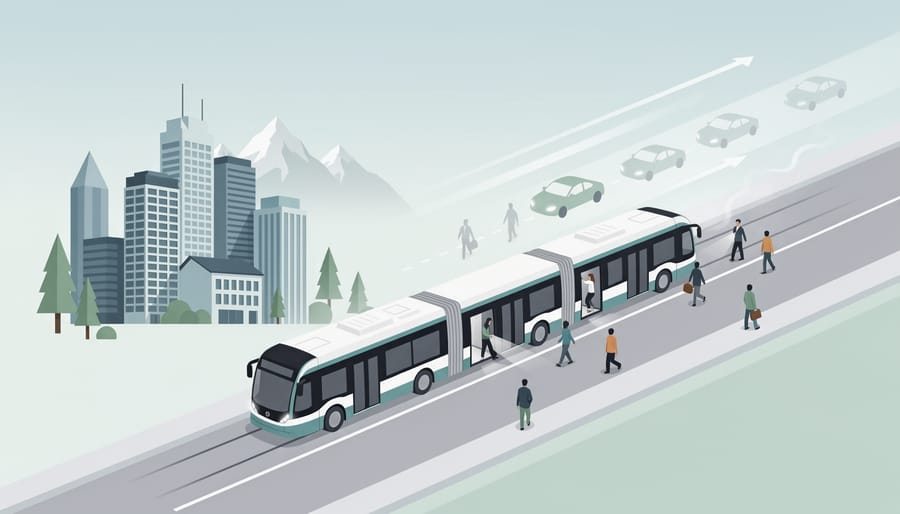
Canada’s cities are reshaping how people move. Vancouver’s SkyTrain expansion added 16 kilometres in 2025, now carrying 600,000 daily riders and cutting an estimated 190,000 tonnes of CO2 annually. Toronto’s Eglinton Crosstown LRT connects previously car-dependent neighbourhoods to rapid transit. Montreal invested $150 million in protected bike lanes since 2020, tripling winter cycling rates.
Electric vehicle adoption accelerated beyond passenger cars. Transit agencies in Calgary, Edmonton and Halifax are converting diesel bus fleets to battery-electric models. Canada’s Zero Emission Vehicle mandate requires 100% new car sales to be electric by 2035, spurring charging infrastructure buildout across provinces.
Urban planning shifted toward density and mixed-use development. Calgary’s Centre City Plan prioritizes infill housing near transit corridors over sprawl. Ottawa’s Official Plan targets 60% of new residential growth within the urban boundary. These changes reduce driving distances, making walking and cycling practical daily options.
Active transportation infrastructure matters: protected bike lanes, pedestrian-priority streets, and winter maintenance that treats sidewalks equally with roads. Cities investing here see measurable mode shifts away from single-occupancy vehicles.
Success Stories: Legal Victories and Collaborative Action
Real progress happens when legal action meets community determination. In 2019, youth activists partnered with environmental lawyers to challenge the federal government’s climate plan, arguing it failed to meet constitutional obligations to protect future generations. The case forced Ottawa to strengthen its emissions targets and establish more rigorous accountability mechanisms, proving that strategic litigation can reshape national policy.
On the ground, collaborative action has produced tangible wins. When a proposed pipeline threatened critical salmon habitat in British Columbia, Indigenous nations joined forces with environmental law groups to challenge the project’s approval. Their combined legal and grassroots strategy led to the Federal Court of Appeal quashing the project in 2018, citing inadequate consultation with Indigenous communities and flawed environmental assessment. This victory didn’t just protect habitat, it established precedent for meaningful Indigenous consent in resource development decisions.
In Manitoba, Inuit communities partnered with conservation organizations to create Tallurutiup Imanga National Marine Conservation Area, protecting 108,000 square kilometers of Arctic waters. The partnership integrated Inuit knowledge into management plans while establishing legal protections for wildlife corridors and migration routes. This collaborative model demonstrates how Indigenous-led stewardship, backed by legal frameworks, delivers results that benefit both ecosystems and communities.
Quebec’s approach shows policy wins driven by public pressure and legal accountability. When citizens sued the province for weakening its climate law, the resulting public attention forced lawmakers to reverse course and strengthen emissions targets. The case never reached trial, but the threat of legal action proved enough to secure meaningful change.
These stories share common threads: strategic use of legal tools, collaboration across communities, and persistence. They prove that accountability mechanisms work when citizens and organizations demand action.
How You Can Contribute to Climate Action in Canada
Every Canadian can contribute meaningfully to climate action, regardless of where you live or what resources you have. The climate crisis requires participation at all levels, from personal choices to systemic advocacy, and your involvement matters in building the collective momentum needed for transformational change.
Start by taking immediate steps that create ripple effects beyond your individual impact:
- Support environmental law organizations working to hold governments and corporations accountable through litigation and advocacy
- Reduce your personal emissions by choosing active transportation, plant-based meals, and energy-efficient options when possible
- Vote for climate action at all levels of government and contact your elected representatives to demand stronger climate policies
- Amplify Indigenous voices and support Indigenous-led climate initiatives that center traditional knowledge and land stewardship
- Join local environmental groups, participate in community cleanups, or volunteer for habitat restoration projects in your area
Beyond these starting points, consider how your specific skills and position can advance climate solutions. Legal professionals can offer pro bono support to environmental cases. Educators can integrate climate literacy into their teaching. Business owners can adopt sustainable practices and advocate within their industries. Parents can engage school boards on climate education and green infrastructure.
Financial contributions to organizations driving legal and policy change multiply your impact by funding expert advocacy that achieves systemic victories. Even small monthly donations sustain the long-term litigation and research necessary to strengthen environmental protections.
Build relationships with Indigenous communities in your region by attending public events, supporting Indigenous-led conservation projects, and learning about the traditional territories where you live. Meaningful reconciliation and climate action go hand in hand, requiring non-Indigenous Canadians to listen, learn, and follow Indigenous leadership on land and water protection.
Remember that climate action isn’t about perfection. It’s about participation, persistence, and collective power working toward justice and sustainability.
Frequently Asked Questions About Climate Change in Canada
Climate change in Canada raises many questions, from the science behind our warming climate to the effectiveness of solutions and how individuals can contribute. Here are answers to some of the most common questions.
Is Canada really warming faster than the global average?
Yes. Canada is warming at roughly twice the global average rate, with the North warming even faster at nearly three times the global rate. This accelerated warming makes Canada particularly vulnerable to climate impacts.
What is Canada’s biggest source of emissions?
The oil and gas sector is Canada’s largest and fastest-growing source of greenhouse gas emissions, followed by transportation and buildings. Addressing emissions from fossil fuel extraction and use remains critical to meeting climate targets.
Can legal action really make a difference in climate policy?
Absolutely. Legal challenges have forced stronger climate accountability, blocked harmful projects, and compelled governments to develop more robust climate plans. Courts are increasingly recognizing climate rights and holding decision-makers accountable to environmental laws.
How do Indigenous communities contribute to climate solutions?
Indigenous peoples steward vast territories with traditional knowledge systems that have sustained ecosystems for thousands of years. Indigenous-led conservation, Guardian programs, and land management practices protect biodiversity and sequester carbon while respecting cultural connections to the land.
What is the most effective climate action I can take as an individual?
Support systemic change through advocacy, voting, and backing organizations that drive legal and policy action. While personal choices matter, collective pressure for accountability and structural solutions creates the largest impact.
Understanding these fundamentals helps demystify climate change and clarifies pathways for meaningful engagement. The science is clear, solutions exist, and Canadians across the country are proving that determined action delivers results. Whether your questions focus on regional impacts, policy mechanisms, or practical steps you can take, the key takeaway remains consistent: climate change demands urgent response, but we possess the tools, knowledge, and collaborative frameworks needed to build a resilient, sustainable future for Canada.
Climate change represents the most pressing challenge facing Canada today, but the path forward is clearer than ever. From coast to coast to coast, Canadians are proving that meaningful action is possible when we combine legal accountability, evidence-based policy, Indigenous wisdom, and collective determination.
The legal victories secured through environmental litigation have strengthened climate policies and forced governments to honor their commitments. Federal and provincial initiatives, though imperfect, continue to evolve under pressure from advocates and communities demanding stronger action. Indigenous-led stewardship demonstrates that protecting ecosystems and respecting traditional knowledge systems creates resilient solutions that benefit everyone.
None of us can solve climate change alone, but together we form an unstoppable force for environmental justice. Whether you support legal advocacy organizations, participate in local climate initiatives, amplify Indigenous voices, or hold elected officials accountable, your contribution matters. Every action creates momentum.
Canada’s future depends on choices we make now. The science is clear, the solutions exist, and the urgency is real. By working collaboratively across communities, cultures, and regions, we can build a sustainable, just future that protects the lands, waters, and ecosystems that sustain us all. The time for climate action is now, and every Canadian has a role to play.