
 By kevin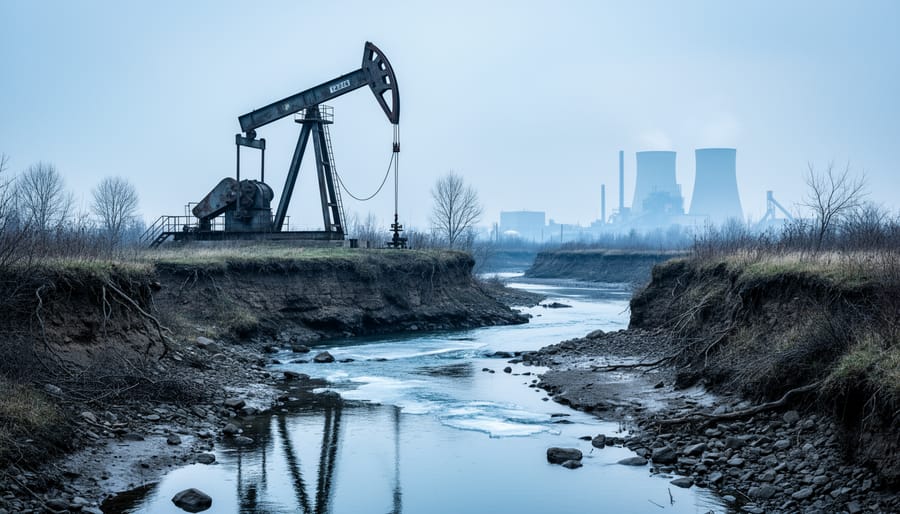
Fossil fuels are carbon-based energy sources formed from ancient plant and animal matter that, when burned, release greenhouse gases and pollutants into the atmosphere, driving climate change and causing widespread environmental harm. Coal, oil, and natural gas power much of the global economy, but their extraction, processing, and combustion degrade air quality, contaminate water systems, destroy habitats, and threaten the stability of ecosystems worldwide.
The consequences are no longer theoretical. Average global temperatures have risen 1.2°C since pre-industrial times, arctic ice continues to shrink at unprecedented rates, and extreme weather events have become more frequent and severe across Canada and beyond. Communities on the frontlines, particularly Indigenous peoples whose traditional territories bear the brunt of extraction projects and climate impacts, have witnessed these changes firsthand. Their knowledge systems and stewardship practices offer critical insights that Western science is only beginning to fully recognize.
Understanding how fossil fuels damage the environment is essential for anyone seeking accountability from polluters or advocating for meaningful policy change. This article breaks down the mechanisms through which fossil fuels harm ecosystems, categorizes the major types of environmental damage, and connects scientific evidence to the legal frameworks that can compel action. You’ll learn how carbon emissions trap heat, why particulate matter threatens human health, and how oil spills devastate marine life. More importantly, you’ll see how this knowledge translates into environmental law, regulatory oversight, and community-led resistance that has already achieved tangible victories.
The science is clear, the impacts are measurable, and the pathways to justice exist.
Understanding Fossil Fuels and Their Environmental Footprint
Fossil fuels are energy sources formed from the ancient remains of plants and animals that lived millions of years ago. When these organisms died, they accumulated in layers of sediment at the bottom of oceans and swamps. Over millions of years, heat and pressure transformed this organic matter into coal, oil, and natural gas, the three primary fossil fuels that power most of the world’s energy systems in 2026.
Coal forms from compressed plant material in ancient swamps and forests. Oil and natural gas develop from marine microorganisms and plankton buried under ocean sediments. This geological process locks carbon that was once part of the atmosphere into underground deposits. The key problem arises when humans extract and burn these fuels for energy.
- Fossil Fuels
- Energy sources (coal, oil, natural gas) created from decomposed organisms buried under layers of earth for millions of years, storing concentrated carbon in solid, liquid, or gaseous form.
- Combustion
- The chemical process of burning fossil fuels with oxygen to release energy, which simultaneously releases carbon dioxide, water vapor, and various pollutants into the atmosphere.
- Greenhouse Gases
- Atmospheric gases like carbon dioxide and methane that trap heat from the sun, warming the planet when present in excessive concentrations beyond natural levels.
- Carbon Cycle
- The natural circulation of carbon through Earth’s atmosphere, oceans, soil, and living organisms, a balance disrupted when fossil fuel combustion releases stored carbon faster than ecosystems can absorb it.
- Ecological Consequences
- The cascading environmental harms resulting from fossil fuel use, including climate disruption, habitat destruction, pollution, and threats to biodiversity and ecosystem health.
When fossil fuels burn, they release the carbon stored for millennia back into the atmosphere as carbon dioxide. A single ton of coal produces roughly 2.5 tons of CO2 when burned. This rapid release overwhelms natural carbon absorption systems like forests and oceans. Combustion also releases methane, sulfur dioxide, nitrogen oxides, particulate matter, and toxic chemicals that never existed in concentrated form during those millions of years of formation.
Global dependency on fossil fuels remains staggering as of 2026, with these energy sources still providing approximately 80 percent of worldwide energy consumption despite growing renewable alternatives. This scale means billions of tons of greenhouse gases enter the atmosphere annually, fundamentally altering Earth’s climate systems and ecosystems in ways that will persist for generations.
How Fossil Fuel Extraction and Use Damages the Environment
Climate Change and Atmospheric Effects
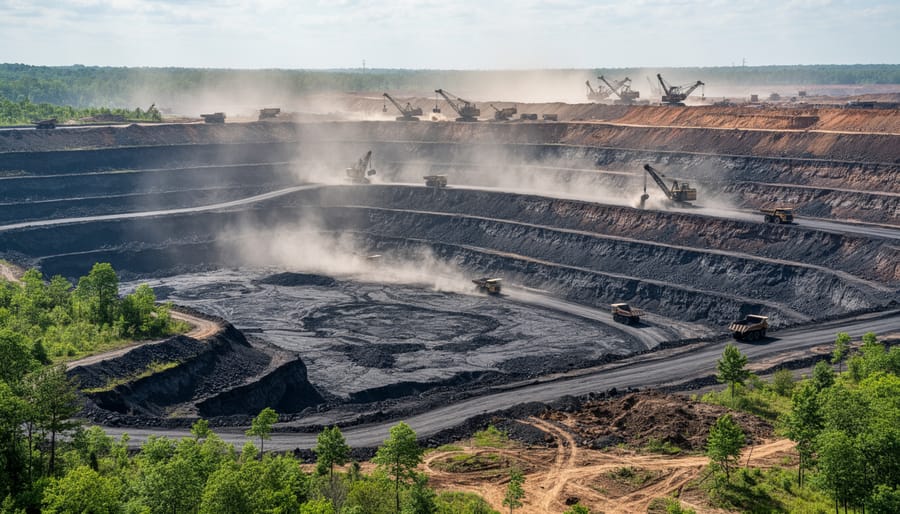
When coal, oil, or natural gas burns, it releases carbon dioxide that has been locked underground for millions of years. This CO2 accumulates in the atmosphere like a blanket, trapping heat that would otherwise escape to space. Methane leaks from drilling sites and pipelines compound the problem, this gas traps over 80 times more heat than CO2 in its first two decades in the atmosphere.
The numbers tell a stark story. Global temperatures have risen approximately 1.2°C since pre-industrial times, with 2026 tracking as one of the warmest years on record. Canada is warming at roughly twice the global average, fundamentally altering ecosystems from coast to coast to coast. Arctic sea ice continues shrinking, permafrost thaws at accelerating rates, and fire seasons stretch longer each year.
Ocean waters absorb about 30% of released CO2, creating carbonic acid that lowers pH levels. This ocean acidification weakens shells and skeletons of marine life, disrupting food chains from plankton to salmon populations that Indigenous coastal communities have relied upon for millennia.
Indigenous peoples across Canada document these changes through generations of ecological observation. Elders note shifting animal migration patterns, unfamiliar species appearing in traditional territories, and sacred plants blooming weeks earlier than oral histories record. This traditional knowledge, spanning centuries, corroborates scientific measurements while revealing impacts that instruments alone cannot capture, the cultural and spiritual dimensions of ecosystems unraveling under climate pressure.
Air Pollution and Human Health Impacts
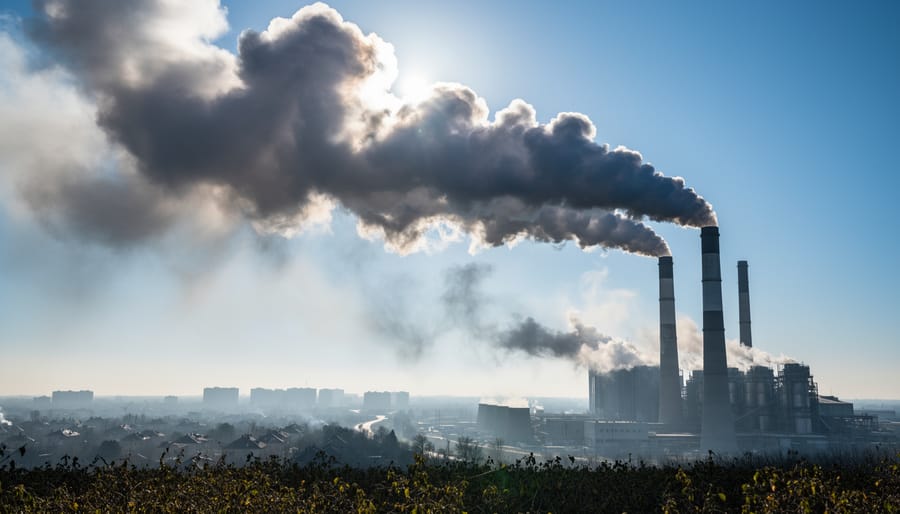
Burning coal, oil, and natural gas releases a cocktail of pollutants that directly threaten human health. Particulate matter, tiny particles small enough to penetrate deep into the lungs and bloodstream, causes respiratory distress, aggravates asthma, and triggers heart attacks. Nitrogen oxides and sulfur dioxide contribute to smog and acid rain, inflaming airways and reducing lung function, especially in children and the elderly.
The cardiovascular toll is severe. Long-term exposure to fossil fuel air pollution increases stroke risk, damages blood vessels, and elevates rates of heart disease. Research shows that power plants discharge wastewater and emissions that compound these risks in nearby populations.
Indigenous communities living near extraction sites, refineries, and coal-fired stations bear a disproportionate burden. These populations often experience elevated cancer rates, chronic respiratory conditions, and shorter life expectancy, outcomes tied to proximity to pollution sources and decades of environmental injustice. First Nations in Alberta’s tar sands region, for instance, report unusually high levels of rare cancers and autoimmune disorders. The air quality crisis isn’t abstract; it’s a pattern of harm concentrated where regulatory oversight has historically failed and where communities have the least political power to resist industrial encroachment.
Water Contamination and Aquatic Ecosystem Damage
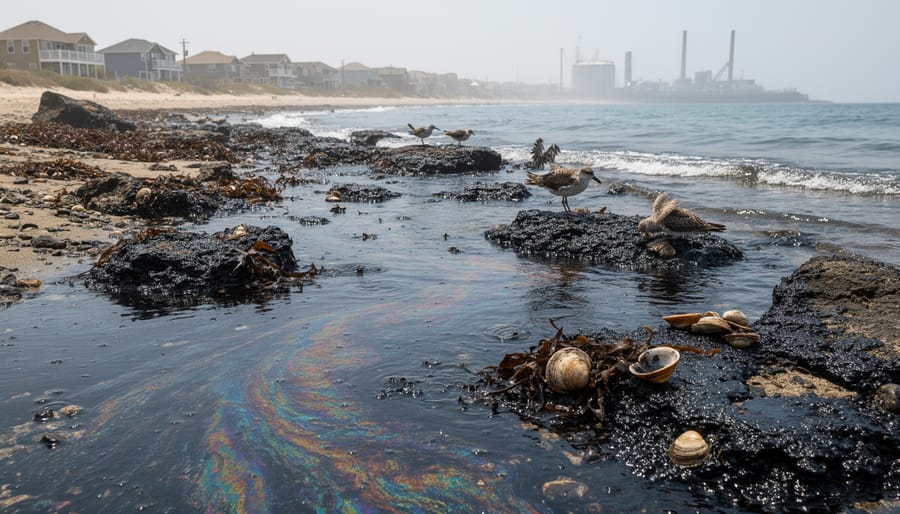
Oil spills dump crude petroleum into rivers, lakes, and coastal waters, smothering fish eggs, poisoning marine mammals, and leaving toxic residues that persist for decades. The 2010 Kalamazoo River spill in Michigan sent diluted bitumen from Canadian tar sands into a major tributary, contaminating 60 kilometres of waterway and killing thousands of fish and birds. Even small pipeline leaks accumulate over time, degrading aquatic habitats.
Hydraulic fracturing generates millions of litres of contaminated wastewater laced with benzene, toluene, heavy metals, and radioactive materials. When this flowback escapes holding ponds or is improperly disposed of, it seeps into groundwater and surface water. Communities near fracking operations in British Columbia have documented methane in drinking wells and declining fish health in nearby streams.
Coal ash ponds store arsenic, mercury, lead, and selenium from burned coal. These toxins leach into waterways, bioaccumulating in fish tissue and rendering entire fisheries unsafe for consumption. Indigenous communities that depend on traditional fishing face a cruel choice: abandon cultural practices or risk poisoning their families.
Power plants discharge heated water into rivers, raising temperatures that stress cold-water species like salmon and trout. This thermal pollution disrupts spawning cycles, lowers dissolved oxygen, and shifts entire aquatic ecosystems. Treaty-protected waters in the Great Lakes and Pacific coast face cumulative impacts from multiple fossil fuel sources, threatening Indigenous harvesting rights and food security.
Land Degradation and Habitat Destruction
Fossil fuel extraction transforms landscapes on a massive scale, leaving scars that persist for generations. Strip mining for coal removes entire layers of topsoil and vegetation, destroying the land’s ability to support plant life and wildlife. In Alberta’s oilsands region alone, over 900 square kilometers of boreal forest have been cleared, habitat critical for caribou, migratory birds, and countless other species already facing threats from climate change.
Mountaintop removal coal mining obliterates entire peaks, dumping millions of tons of debris into valleys and burying streams that once sustained diverse aquatic communities. The technique renders land unusable for decades, if restoration ever becomes possible.
Pipeline corridors and drilling pads fragment forests and grasslands, creating barriers that disrupt wildlife movement and breeding patterns. These industrial footprints bisect traditional Indigenous territories where communities have hunted, fished, and gathered medicines for millennia. For species at risk like woodland caribou and sage grouse, this habitat fragmentation compounds existing pressures and accelerates population decline.
Soil erosion follows extraction activities as vegetation loss exposes earth to wind and water. Without root systems to hold soil in place, nutrient-rich topsoil washes away, degrading water quality downstream and making ecosystem recovery nearly impossible without intensive, costly restoration efforts.
Major Categories of Fossil Fuel Environmental Impacts
Environmental damage from fossil fuels doesn’t follow a single pathway. Instead, the harm radiates outward through interconnected systems, each impact category revealing a different facet of ecological disruption. Understanding these dimensions helps clarify why comprehensive legal protections are essential and why environmental law organizations work across multiple fronts to hold polluters accountable.
The major categories of fossil fuel environmental impacts include:
- Atmospheric and climate impacts: greenhouse gas emissions driving climate change in Canada and globally, plus heat-trapping methane from extraction operations
- Water quality impacts: contamination of rivers, lakes, and aquifers from spills, fracking fluids, coal ash leachate, and refinery discharge
- Terrestrial ecosystem impacts: habitat fragmentation from pipelines and drilling pads, soil erosion from mining, and toxic residues that persist for decades
- Biodiversity loss: population declines in species dependent on intact ecosystems, particularly in regions facing heavy extraction pressure
- Ocean acidification and marine impacts: absorption of atmospheric CO2 lowering ocean pH, coral bleaching, disrupted fish reproduction, and coastal oil spill damage
- Public health externalities: respiratory illness, cancer clusters near refineries, cardiovascular disease from particulate pollution, and contaminated drinking water supplies
These categories overlap and compound one another. A single coal-fired power plant contributes to climate destabilization through CO2 emissions while simultaneously releasing mercury that bioaccumulates in fish, creating both atmospheric and water quality problems that harm human health. Pipeline spills damage terrestrial habitats at the leak site, contaminate downstream water sources, and kill aquatic life for years afterward.
Indigenous communities in Canada often experience multiple impact categories simultaneously. A First Nation whose traditional territory hosts oil sands operations may face air pollution affecting respiratory health, water contamination threatening treaty fishing rights, habitat destruction reducing access to traditional foods, and climate shifts altering the timing of seasonal harvests. This layered harm explains why environmental justice litigation increasingly recognizes cumulative impacts rather than treating each damage type in isolation.
Monitoring nature’s recovery signals within these categories helps assess whether legal interventions and policy changes are working. When litigation forces stronger regulations on industrial emissions, scientists track improvements in air quality metrics. When pipeline projects are blocked through collaborative advocacy, ecologists document habitat recovery rates. These measurable outcomes demonstrate that legal accountability produces real environmental protection, not just symbolic victories.
Real-World Applications: Legal and Policy Responses to Fossil Fuel Damage
Environmental Justice Litigation
Environmental law has become a powerful tool for confronting the environmental damage caused by fossil fuel operations. Courts across Canada have delivered landmark rulings that force corporations and governments to acknowledge their responsibilities under environmental protection statutes, treaty rights, and constitutional obligations.
In 2020, the Federal Court of Appeal struck down approval of the Trans Mountain pipeline expansion, finding that the government failed to adequately consult with Indigenous nations and consider marine impacts on endangered Southern Resident killer whales. This decision demonstrated that projects cannot proceed when proper environmental assessments are bypassed, regardless of economic pressure. The ruling led to a more comprehensive review process and stronger habitat protection measures.
British Columbia’s Supreme Court set another precedent when it ordered a mining company to pay $40 million for the catastrophic Mount Polley tailings dam breach in 2014, which released billions of litres of contaminated water into salmon-bearing waterways. The 2023 judgment held executives personally liable, sending a clear message about corporate accountability for environmental disasters.
Climate litigation is evolving beyond project-specific challenges. Youth activists and environmental organizations have launched constitutional cases arguing that continued fossil fuel expansion violates the right to life and security guaranteed under the Canadian Charter of Rights and Freedoms. While outcomes remain uncertain, these cases are forcing governments to defend their climate policies in court and justify emissions trajectories that threaten future generations.
Indigenous-Led Protection and Collaboration
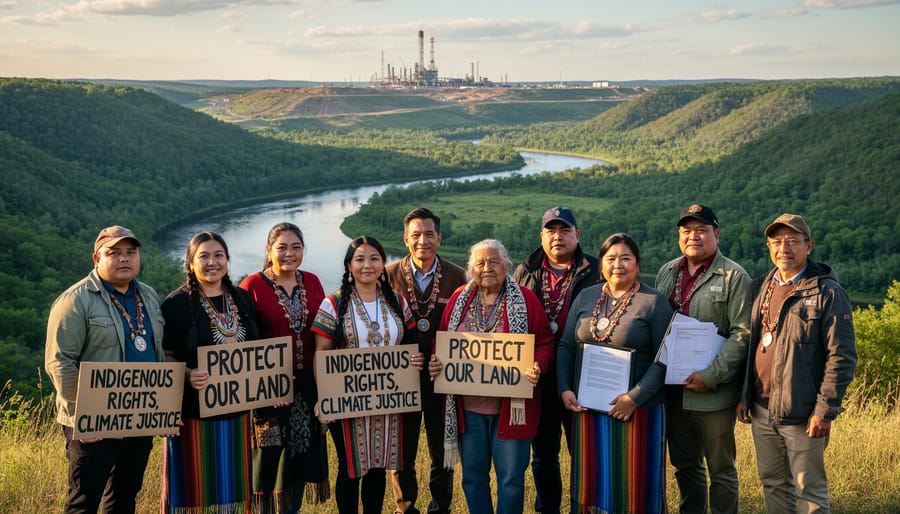
Across Canada, Indigenous communities stand at the forefront of protecting lands and waters from fossil fuel extraction, wielding both ancestral knowledge and modern legal tools. These efforts have reshaped environmental law and repeatedly halted projects that threatened ecosystems.
The Wet’suwet’en Nation’s opposition to the Coastal GasLink pipeline demonstrates this power. Hereditary chiefs invoked unceded territorial rights and traditional governance structures, combined with court challenges based on inadequate consultation under Section 35 of the Constitution Act. Their resistance drew international attention to the legal duty to obtain free, prior and informed consent before development on Indigenous lands.
Similarly, Tsleil-Waututh Nation partnered with environmental law organizations to challenge the Trans Mountain pipeline expansion. Their legal team presented traditional use studies documenting millennia of relationship with waters threatened by tanker traffic, alongside expert testimony on spill risks to salmon spawning grounds. The Federal Court of Appeal ruled in 2018 that Canada had failed its consultation obligations, forcing a project review.
Traditional ecological knowledge strengthens these legal cases substantially. When Athabasca Chipewyan First Nation challenged oilsands expansion, elders testified about changing caribou migration patterns and contaminated fish populations observed over decades. Courts increasingly recognize this knowledge as valid evidence of environmental harm, not mere cultural testimony.
Environmental law charities provide crucial support: conducting impact assessments, funding litigation, training community paralegals in administrative law, and amplifying Indigenous voices in policy forums. This collaboration between legal expertise and land-based knowledge creates more comprehensive environmental protection than either approach alone. Indigenous-led conservation now protects over 14 percent of Canada’s land base, often blocking fossil fuel projects that would have accelerated climate breakdown and habitat loss.
The Path Forward: Reducing Fossil Fuel Environmental Harm
Addressing the environmental devastation caused by fossil fuels demands coordinated action across legal, policy, and community levels. While the scale of harm can feel overwhelming, meaningful pathways exist to accelerate the shift away from fossil fuels and hold polluters accountable for the damage they’ve caused.
Policy reform stands as the most powerful lever for change. Canada needs stringent regulations that phase out fossil fuel subsidies, which totalled billions in 2026, and redirect those funds toward renewable infrastructure. Environmental impact assessments must incorporate long-term climate consequences and give meaningful weight to Indigenous ecological knowledge. Strengthening the Canadian Environmental Protection Act and expanding protected areas creates legal barriers against new extraction projects while safeguarding critical habitats.
Legal accountability mechanisms provide essential tools for environmental protection. Environmental law charities work to establish precedents that make corporations financially responsible for cleanup costs, ecosystem restoration, and climate adaptation expenses. Class action lawsuits and judicial reviews challenge inadequate environmental approvals, while strategic litigation can force governments to meet their emissions reduction targets rather than treating them as aspirational goals.
The renewable energy transition requires both infrastructure investment and community support. Solar, wind, and geothermal technologies have matured significantly, making decentralized energy systems viable for communities tired of depending on fossil fuel imports. Even individual actions, from converting lawns into natural yard habitats that sequester carbon to choosing electric vehicles, contribute to reduced fossil fuel demand when multiplied across thousands of households.
Citizen advocacy amplifies every other solution. Supporting environmental law charities through donations or volunteer work strengthens legal challenges against destructive projects. Attending public consultations on pipeline approvals, contacting elected representatives about climate legislation, and participating in Indigenous-led land protection efforts all create political pressure for systemic change. Collaboration between legal experts, scientists, Indigenous knowledge keepers, and concerned citizens builds the coalition needed to dismantle fossil fuel dependence and repair the environmental damage already inflicted.
Common Questions About Fossil Fuels and the Environment
The shift away from fossil fuels raises practical questions about timelines, alternatives, legal protections, and pathways for change. These are some of the most common concerns people voice when considering fossil fuel environmental impacts and the transition to cleaner energy.
Can renewable energy fully replace fossil fuels?
Yes, renewable energy technologies like wind, solar, and hydroelectric power have the capacity to meet global energy needs, though the transition requires significant infrastructure investment, grid modernization, and political will. Many jurisdictions in Canada and worldwide are already generating substantial portions of their electricity from renewables, demonstrating technical feasibility.
How long do fossil fuel environmental impacts last?
Some impacts persist for decades or centuries: CO2 remains in the atmosphere for hundreds of years, oil spills can contaminate marine ecosystems for generations, and abandoned coal mines leak pollutants indefinitely without remediation. Land scarred by extraction may never fully recover its original ecological function.
What legal protections exist for habitats threatened by fossil fuel projects?
Canadian environmental law includes the Species at Risk Act, the Impact Assessment Act, and constitutional protections for Indigenous rights and treaty territories. Environmental charities and Indigenous groups use these tools to challenge destructive projects through litigation, regulatory interventions, and court orders halting development in sensitive areas.
What role do Indigenous communities play in fossil fuel resistance?
Indigenous peoples are at the forefront of protecting lands and waters from fossil fuel expansion, leveraging treaty rights, traditional ecological knowledge, and legal partnerships with environmental organizations. Their leadership has stopped numerous pipelines and extraction projects while offering alternative visions for sustainable development that respect natural systems.
Understanding your legal rights strengthens your ability to participate in environmental protection. Canadian law recognizes the public interest in healthy ecosystems and provides mechanisms for citizens to hold governments and corporations accountable when fossil fuel activities threaten environmental integrity. Environmental law organizations offer resources to help communities navigate regulatory processes, file objections to harmful projects, and support litigation that defends air, water, and habitat quality.
The transition timeline depends heavily on policy choices made now. While renewable technology exists and continues improving, fossil fuel subsidies and regulatory favouritism slow the shift. Removing these barriers and redirecting investment toward clean energy infrastructure can accelerate the transition significantly, reducing environmental harm sooner while creating employment in sustainable sectors.
The environmental toll of fossil fuels extends across every system that sustains life on Earth. From greenhouse gases that destabilize our climate to toxic pollutants poisoning the air we breathe, contaminated water threatening aquatic ecosystems, and scarred landscapes displacing wildlife and communities, the evidence of harm is overwhelming and undeniable. These impacts fall disproportionately on Indigenous peoples, low-income communities, and future generations who bear the consequences of decisions made today.
Understanding these environmental effects is only the first step. Real change demands legal accountability for polluters, enforceable regulations that protect ecosystems over profits, and policy reforms that prioritize renewable energy and environmental justice. Canada’s environmental law framework provides pathways to challenge destructive projects, hold corporations responsible for ecological damage, and defend treaty-protected lands and waters. When environmental organizations collaborate with Indigenous communities, combining traditional ecological knowledge with legal expertise, they create powerful forces for protection and restoration.
The transition away from fossil fuels is not just an environmental necessity but a legal and moral imperative. Courts increasingly recognize climate change and pollution as harms requiring remedy. Governments face mounting pressure to strengthen environmental protections and accelerate clean energy adoption. Citizens have more power than they realize to influence these outcomes through advocacy, supporting environmental law charities, and demanding accountability from elected officials and corporations.
You can contribute to this critical work. Support organizations fighting for environmental justice in courtrooms and communities. Take climate action by staying informed, raising your voice, and standing with those protecting our shared environment. The legal tools exist, the knowledge is clear, and the time to act is now. Together, we can hold polluters accountable and build a sustainable future that respects both nature and the rights of all communities.