
 By kevin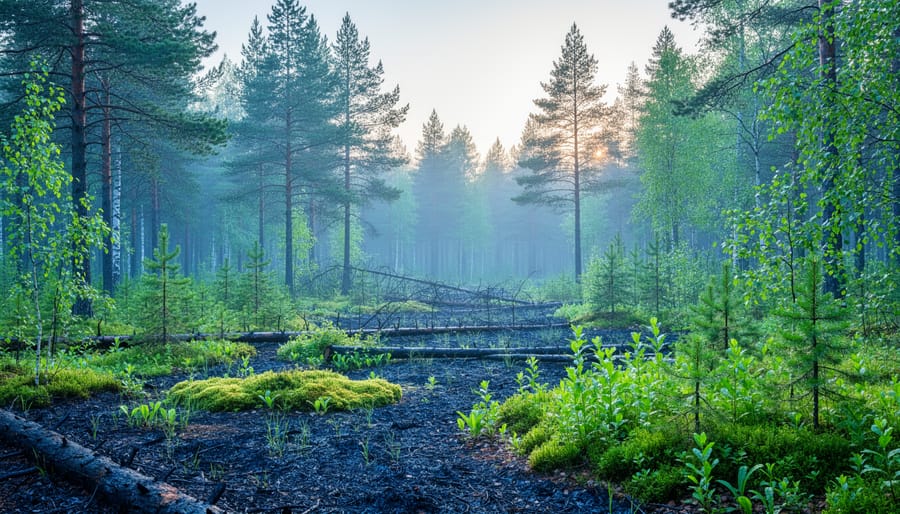
The question of whether climate change is getting better doesn’t have a simple yes or no answer. Climate change refers to the long-term shifts in global temperatures and weather patterns, and while some indicators show progress in certain areas, others continue to deteriorate. What “getting better” means depends on which metrics we examine: are we slowing the rate of warming, seeing ecosystems recover, or successfully reducing emissions?
For Canadians watching climate change in Canada unfold through extreme weather events, devastating wildfires, and shifting ecosystems, the answer feels deeply personal. The reality is nuanced. Global greenhouse gas emissions have begun to plateau in some regions, renewable energy adoption has accelerated dramatically, and certain ecosystem restoration efforts are showing measurable success. Yet atmospheric carbon dioxide concentrations continue climbing, global temperatures keep breaking records, and many ecological tipping points remain dangerously close.
This article examines what ecological recovery actually looks like, how ecosystems respond when climate pressure eases, and which signals, both positive and troubling, are emerging from current data. We’ll explore the types of environmental changes scientists monitor, from Arctic ice patterns to forest regeneration rates, and what mixed evidence from phenomena like wildfire frequency tells us about the trajectory we’re on.
Understanding these recovery signals matters because it shapes how we respond. Indigenous communities across Canada have long practiced land stewardship that offers proven climate solutions, and recent legal victories have strengthened environmental protections. The path forward requires both acknowledging genuine progress and confronting ongoing challenges with clear-eyed determination.
Defining Nature’s Recovery Signals
A recovery signal in climate science is any measurable change indicating that an ecosystem’s condition is improving or that environmental degradation has slowed. These signals aren’t always straightforward victories. Some show genuine healing, forests regrowing, species returning, carbon stores rebuilding. Others reveal temporary pauses in decline, or stabilization at a new, diminished baseline rather than a return to historical health.
The distinction matters because it shapes how we interpret progress and set realistic goals. Stabilization means conditions have stopped worsening but remain degraded. True recovery implies measurable movement back toward pre-impact function and biodiversity. A forest that stops losing trees but remains sparse and species-poor has stabilized. One that regains canopy cover, soil health, and native wildlife populations is recovering.
- Recovery signals
- Measurable ecological indicators showing improvement in ecosystem health, such as increasing biodiversity, expanding habitat, or strengthening natural processes like carbon sequestration.
- Climate pressure
- The combined stress that changing temperature, precipitation patterns, extreme weather events, and atmospheric composition place on ecosystems and the species within them.
- Ecosystem resilience
- The capacity of an ecological community to absorb disturbance, adapt to new conditions, and maintain essential functions without collapsing into a fundamentally different state.
- Stabilization vs. recovery
- Stabilization halts further decline at a degraded level; recovery involves measurable improvement toward historical ecosystem function and composition.
- Climate mitigation
- Actions that reduce greenhouse gas emissions or enhance carbon removal from the atmosphere, lessening the severity of future climate change impacts.
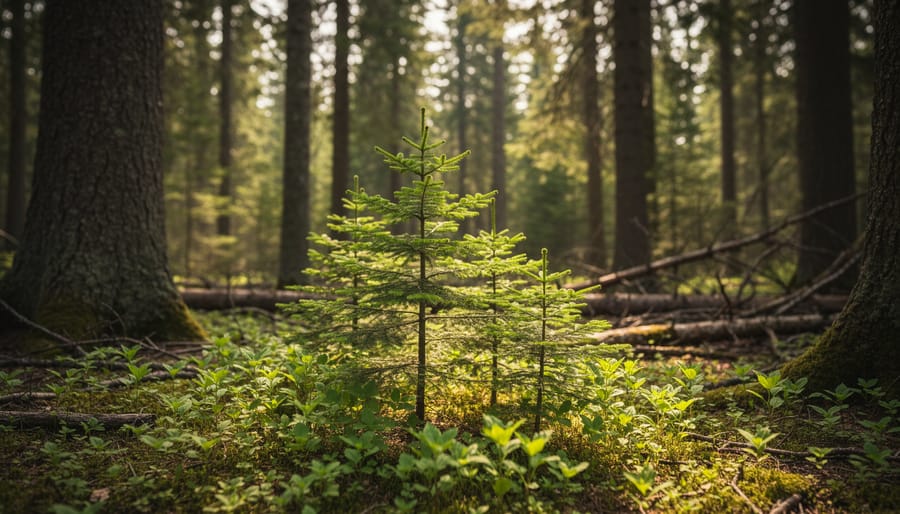
Scientists track recovery through metrics like species population trends, vegetation cover changes, soil carbon levels, water quality measurements, and the frequency of ecosystem disturbances. These indicators reveal whether reduced climate pressure, from mitigation efforts or natural variability, translates into actual environmental improvement. The challenge lies in separating genuine recovery from short-term fluctuations or shifts that mask underlying deterioration.
How Ecosystems Respond to Changing Climate Pressure
The Role of Temperature and Moisture Patterns
Temperature and moisture dictate which plants can grow, when animals reproduce, and how entire food webs function. In Canadian ecosystems, from boreal forests to prairie grasslands, these two factors shape the rhythm of life. When warmer temperatures and less moisture alter historic patterns, ecosystems don’t simply adjust on a smooth curve. They lurch, adapt unevenly, or cross thresholds into entirely new states.
Warmer springs arrive earlier, triggering earlier snowmelt and longer growing seasons. That sounds beneficial until you realize many species evolved tight timing: migrating birds arrive expecting certain insect hatches, which now peak weeks earlier. Mismatches ripple through the system. Reduced moisture compounds the stress. Drier soils mean less water for trees already battling heat, weakening their defences against pests and disease. In Canada’s boreal forests, this combination primes conditions for wildfire, more fuel, longer fire seasons, greater ignition potential.
These shifts also redistribute which areas can support certain ecosystems. Wetlands shrink as evaporation outpaces precipitation. Alpine meadows creep upslope as treelines advance into formerly cold zones. Some species gain new habitat; others lose ground with nowhere left to move. The question isn’t whether ecosystems respond to temperature and moisture changes, they always do, but whether those responses lead toward recovery or breakdown. The answer depends on how fast and how far the changes go, and whether we reduce the pressure in time for ecosystems to stabilize rather than unravel.
Human Activity vs. Climate-Driven Changes
Not all environmental change stems from the same cause, and understanding this difference is essential for interpreting whether conditions are truly improving. When fire activity declines in one region or forest regeneration accelerates in another, we need to ask: Is this nature responding to reduced climate pressure, or is it the result of deliberate human choices like conservation policy, land-use shifts, or reduced fossil fuels impact?
Current evidence shows that reduced tropical burning under limited warming scenarios is primarily driven by changes in human activity rather than climate dynamics. People are clearing less forest for agriculture, suppressing fires more actively, and converting land in ways that reduce ignition sources. These are interventions we control, not automatic ecosystem responses to a cooler or wetter climate.
In contrast, the projected increase in larger, more frequent, and intense wildfires in extra-tropical regions like Canada is driven by climate and rising CO₂ levels. Warmer temperatures and reduced moisture are altering historic wildfire patterns in ways that overwhelm human suppression efforts. Here, climate dynamics are the dominant force, and unless we reduce emissions sharply, these trends will intensify regardless of local land management.
This distinction matters for action. Recovery signals driven by human choices prove that intervention works, but they can be reversed if warming continues unchecked. Climate-driven changes, however, require us to address emissions at the source, not just manage symptoms on the ground.
Types of Recovery Signals in Canadian Ecosystems
Fire Pattern Redistribution Across the Planet
Wildfire patterns worldwide are shifting in ways that complicate the picture of climate recovery. While satellites have documented a global decline in burned area over the past two decades, largely because farmers in tropical savannas and grasslands have converted land for agriculture, reducing the fuel available for fire, that trend masks a dangerous redistribution. Climate and land-use changes are moving fire risk from the equator toward the poles, and the fires emerging in extra-tropical regions burn differently: they’re larger, more intense, and harder to control.
Canadian forests, boreal ecosystems across Russia and Scandinavia, and temperate zones in North America and Australia face projections of larger extra-tropical wildfires even if global warming stabilizes near 1.5 °C. Warmer temperatures and reduced moisture are lengthening fire seasons and drying out vegetation, creating conditions that turn what once were manageable burns into catastrophic events. Under limited warming scenarios, reduced tropical burning driven by human land conversion is offset, and eventually overwhelmed, by climate-driven increases in mid- and high-latitude fire.
The trajectory worsens without aggressive mitigation. If warming continues unchecked, burnt areas could surge across all vegetation types by century’s end, reversing the human-driven declines in fire activity observed today. For Canada, this means the relatively lower fire activity seen in some tropical regions offers no comfort. The redistribution is already underway, and the fires headed toward northern ecosystems carry greater ecological and human costs.
When Positive Signals Reverse Under Higher Warming
The encouraging decline in tropical burning and certain human-driven improvements face a critical vulnerability: they only hold up to a point. Under scenarios where global temperatures rise beyond 1.5 °C, particularly if warming reaches 3 °C or higher with weak climate action, these positive signals begin to reverse.
Scientific projections show that human-driven declines in fire activity are overwhelmed under the highest degrees of warming. At that stage, the climate signal becomes so strong that even substantial land-use changes and fire management efforts can’t prevent a dramatic increase in burnt areas across all vegetation types. The current global decline in burned area, largely driven by agricultural expansion and fire suppression in tropical regions, gets reversed by intensifying heat and drought.
This represents a threshold effect: the environmental improvements we celebrate today remain conditional on limiting warming. When temperature and moisture patterns shift beyond certain tipping points, ecosystems can’t adapt fast enough. Fire regimes that humans have successfully modified for decades suddenly revert to climate-driven behaviour, but with even greater intensity than historical patterns.
The extra-tropical regions facing larger, more frequent, and intense wildfires even under limited warming scenarios will see these effects accelerate dramatically if mitigation fails. Warmer temperatures combined with declining moisture create conditions where fire seasons lengthen, fuel loads dry faster, and ignition sources multiply.
This isn’t speculation, it’s what happens when you push complex systems past their tolerance thresholds. Recovery signals we’re identifying now are real, but fragile. They depend entirely on aggressive, sustained climate action that keeps warming within the lower ranges. Without that commitment, the improvements reverse and the redistribution of fire across the planet accelerates beyond our capacity to manage it.
How Climate Action in Canada Influences Recovery Potential
Legal Victories Creating Space for Nature’s Resilience
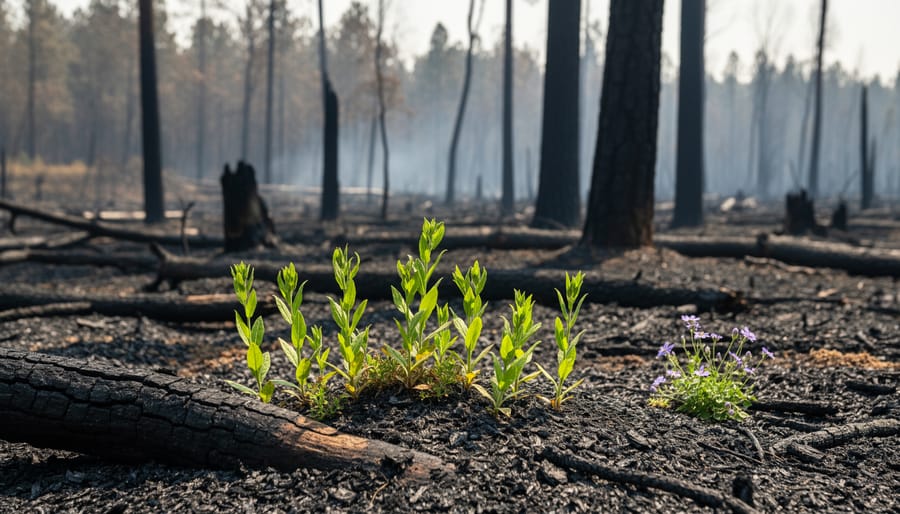
Legal challenges have opened critical pathways for ecosystem recovery across Canada. When courts uphold environmental protections, they create breathing room for forests to regenerate, wetlands to expand, and species to rebound. The Species at Risk Act enforcement, strengthened through litigation, has secured habitat for caribou, salmon, and dozens of other species whose survival depends on intact ecosystems. These legal wins matter because they force governments and industry to account for ecological thresholds before issuing permits or approvals.
Indigenous-led legal action has proven particularly effective at halting projects that would fragment critical habitats. When First Nations secure injunctions against logging or pipeline development on their territories, they protect carbon-storing forests and water systems that regulate regional climate. Courts increasingly recognize Indigenous law and stewardship practices as legitimate frameworks for environmental decision-making, shifting power back to communities who have managed these lands sustainably for millennia.
Policy victories also matter. Commitments to reach clean energy by 2035 reduce ongoing pressure on ecosystems from fossil fuel extraction. Protected area expansions create refuges where wildlife can adapt to changing conditions. Investment in nature-based solutions wetland restoration, urban tree canopy, coastal ecosystem protection, builds resilience while addressing emissions. These aren’t silver bullets, but each victory establishes legal precedent and political momentum that makes the next one easier to win.
Uses: How to Interpret Recovery Signals for Action
Understanding recovery signals is only valuable if we translate observation into meaningful action. Different groups need to use ecosystem response data in distinct ways to drive real climate progress.
Policymakers must ground legislation in ecosystem feedback timelines. When data shows reduced climate pressure allowing forest regeneration or wetland restoration, those windows matter. Policies protecting recovering habitats need long-term enforcement mechanisms because ecosystem responses lag years or decades behind the interventions that create space for them. Budget allocations should align with the proven timeline for specific recovery processes, not political cycles. Wildfire projections showing larger, more frequent, and intense fires in extra-tropical regions under warming scenarios demand immediate investment in prevention infrastructure and community protection, not reactive emergency spending after disasters strike.
Activists and legal advocates can leverage recovery signals as evidence in litigation and accountability campaigns. When ecosystems show resilience given reduced pressure, that demonstrates what’s possible with stronger protections. Conversely, deteriorating conditions despite conservation efforts reveal inadequate policy scope or enforcement gaps. Document local ecosystem changes through community science initiatives. This ground-level data strengthens legal cases and counters corporate or government claims that current measures suffice. Push decision-makers to start climate action that matches the scale and urgency ecosystem data reveals.
Communities, particularly Indigenous nations practicing traditional stewardship, hold irreplaceable knowledge for interpreting subtle recovery signals Western science may overlook. Combining Indigenous ecological monitoring with scientific datasets creates a fuller picture of ecosystem health and response capacity. Local observation identifies threshold moments when ecosystems tip toward recovery or collapse, allowing rapid intervention before changes become irreversible.
For all audiences, treat ecosystem response data as a diagnostic tool, not a scorecard. Positive signals don’t mean the crisis is over. They reveal which interventions work and where to intensify effort. Concerning trends, like human-driven fire declines reversing under the highest warming scenarios, spotlight where current action falls dangerously short. Use recovery signals to refine strategy, demand accountability, and direct resources toward interventions that demonstrably reduce climate pressure enough for nature’s resilience to emerge.
Frequently Asked Questions
What is causing wildland fire patterns to change?
Warmer temperatures and less moisture are altering historic wildland fire patterns, while human land-use changes also play a significant role. Climate and land-use changes are redistributing fire across the planet, creating new patterns that differ markedly from historical norms.
Is wildland fire increasing in Canada?
Canada falls within extra-tropical regions where larger, more frequent, and intense wildfires are projected even under limited warming scenarios. These changes are driven primarily by shifts in climate and atmospheric CO2 rather than by human land-use patterns alone.
Are we seeing real improvement or temporary stabilization?
The distinction matters enormously for understanding whether ecosystems are genuinely recovering. Some positive signals, like reduced burning in tropical regions driven by human activity changes, can be reversed under the highest degrees of warming, meaning what looks like improvement today may not hold if climate pressure intensifies.
How do ecosystems respond when climate pressure eases?
Ecosystem responses depend on the duration and degree of pressure reduction, the specific stressors involved, and the resilience of the system itself. Recovery isn’t instantaneous, there’s often a significant lag between when climate stressors decrease and when observable improvements in ecosystem health emerge, shaped by feedback loops and adaptation timelines.
These questions reflect the complexity and uncertainty many people feel when trying to understand whether environmental conditions are genuinely improving. The honest answer is that recovery signals are mixed and highly conditional. Even under scenarios where global warming is limited to around 1.5 degrees Celsius, wildfire patterns are projected to change substantially by the end of this century, with extra-tropical regions like Canada facing increased fire activity while some tropical areas see declines.
Context shapes interpretation. A decline in burnt area in one region doesn’t necessarily indicate global improvement, it may simply reflect fire redistribution driven by changing climate and land-use patterns. Similarly, short-term stabilization in an ecosystem indicator doesn’t guarantee long-term recovery if underlying climate pressures continue to build.
For those engaged in environmental advocacy and legal work, understanding these nuances is critical. When a corporation or government claims environmental improvement based on selective data, asking whether the signal represents genuine recovery or temporary stabilization, and what happens under higher warming scenarios, cuts through misleading narratives. With low climate change mitigation, burnt areas increase greatly across all vegetation types, overwhelming the current global decline in fire activity.
The question “is climate change getting better” ultimately depends on what we do next. Some ecosystems show resilience when given space to recover, but that resilience has limits. The recovery signals we see today are fragile, contingent on sustained and aggressive climate action rather than proof that the crisis is resolving on its own.
Types or components
Understanding whether climate change is getting better requires examining four interconnected components that scientists and communities use to evaluate ecosystem health and trajectory.
Baseline Conditions establish the reference point against which we measure change. These include pre-industrial climate norms, historical ecosystem function, and Indigenous knowledge of traditional environmental patterns. Without accurate baselines, we can’t distinguish between recovery and fluctuation.
Pressure Indicators track the forces driving ecosystem stress. These encompass greenhouse gas concentrations, temperature trends, precipitation changes, and the intensity of extreme weather events. Warmer temperatures and less moisture are altering historic patterns, particularly affecting wildfire regimes.
Response Signals capture how ecosystems react to changing pressure. These include species distribution shifts, vegetation health, carbon sequestration rates, and disturbance patterns like wildfire frequency and intensity. In extra-tropical regions like Canada, climate and land-use changes are redistributing fire activity, with projections showing larger, more frequent, and intense wildfires even under limited warming scenarios.
Recovery Timeframes acknowledge that ecosystem responses lag behind the changes that trigger them. Some improvements appear quickly when pressure eases, while others require decades or centuries of sustained conditions to materialize fully.
The question of whether climate change is getting better doesn’t have a simple yes or no answer. Nature’s recovery signals reveal a conditional reality: some ecosystems show resilience when climate pressure eases, but these improvements depend entirely on sustained, aggressive action to limit warming. The evidence is clear that modest warming scenarios allow for localized recovery in certain regions, while delayed action or inadequate emission cuts will overwhelm current gains. Even positive trends, like reduced burning in tropical areas driven by land-use changes, reverse under higher warming thresholds.
This complexity demands more than passive hope. It requires legal advocacy that protects vulnerable ecosystems, partnerships with Indigenous communities who hold irreplaceable stewardship knowledge, and relentless accountability for governments and corporations whose decisions shape our climate trajectory. Environmental law isn’t abstract policy work, it’s the mechanism that creates breathing room for nature to demonstrate its remarkable capacity to heal when given the chance.
Understanding recovery signals equips us to act with precision rather than despair. Each legal victory, each protected watershed, each collaborative stewardship agreement represents a deliberate choice to support nature’s resilience. The window for conditional recovery remains open, but it narrows with every delay. Your engagement in environmental justice work, whether through advocacy, supporting legal challenges, amplifying Indigenous voices, or demanding accountability from decision-makers, directly influences whether these fragile recovery signals strengthen or disappear.