
 By kevin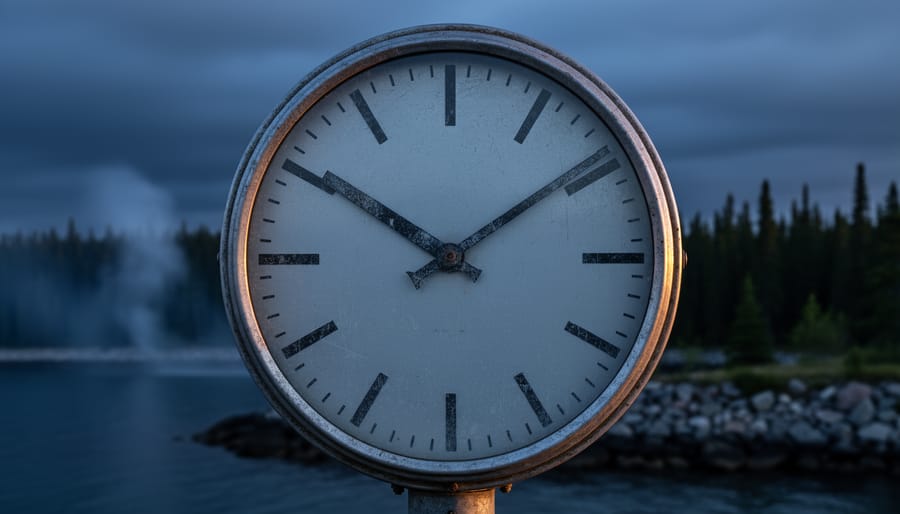
The Climate Clock is a digital countdown timer designed to show how much time remains before the world crosses a critical threshold in global warming. By translating complex climate data into an urgent, ticking deadline, the clock converts abstract scientific projections into a tangible reality anyone can grasp at a glance.
Think of it as a global alarm system. Rather than relying on charts, reports, or scientific papers to communicate the climate crisis, this tool displays a single, stark number: the years, days, hours, and minutes left before humanity exhausts the carbon budget scientists say will keep warming below 1.5°C. It’s a visual reminder that climate change in Canada and globally isn’t a distant problem for future generations. It’s happening now, and the window to act is narrowing.
But this isn’t just about fear. The Climate Clock also highlights a “lifeline” metric, showing the percentage of global energy now coming from renewable sources. That dual message matters. Yes, the countdown creates urgency, but the rising renewable energy percentage demonstrates that solutions exist and progress is possible when communities, governments, and industries commit to change.
For Canadians watching wildfires intensify, coastlines erode, and Indigenous lands face mounting threats, the clock offers something climate data alone cannot: a shared reference point for collective action. It transforms scientific consensus into a rallying cry, reminding us that time is limited but not yet gone. The question isn’t whether we can meet this moment. It’s whether we will.
Understanding the Climate Clock Mechanism
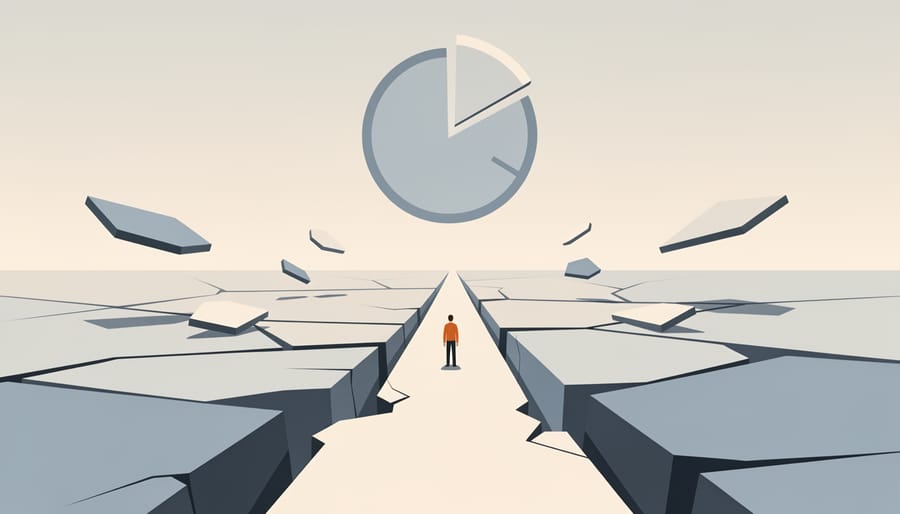
The Climate Clock operates on a straightforward yet scientifically grounded principle: it translates the world’s remaining carbon budget into a live countdown. At its core, the clock calculates how much time remains before humanity exhausts the amount of carbon dioxide we can emit while still having a reasonable chance of limiting global warming to 1.5°C above pre-industrial levels. This threshold matters because beyond it, the risk of triggering irreversible tipping points increases dramatically, melting ice sheets, collapsing ocean currents, and runaway permafrost thaw that lock in centuries of warming.
The methodology draws from the Intergovernmental Panel on Climate Change’s assessment of the global carbon budget, which estimates how many metric tons of CO₂ can still enter the atmosphere before we breach the 1.5°C carbon budget deadline. The clock then divides this remaining budget by current global emissions rates to project a deadline. Because the calculation assumes annual emissions rate data that updates regularly, the countdown adjusts as emissions rise or fall, making it a dynamic reflection of our collective choices rather than a fixed prophecy.
What the deadline represents is not the moment Earth becomes uninhabitable, but the point at which we lose our best chance to avoid the most severe climate disruptions. Scientists consider 1.5°C a critical guardrail: warming beyond this level amplifies droughts, floods, heatwaves, and ecosystem collapse in ways that become exponentially harder to manage or reverse. The clock’s power lies in its clarity, it strips away the abstraction of parts-per-million CO₂ concentrations and gigatons of emissions, replacing them with something visceral: years, months, days, and seconds ticking away.
Why the Clock Matters: Translating Science into Urgency
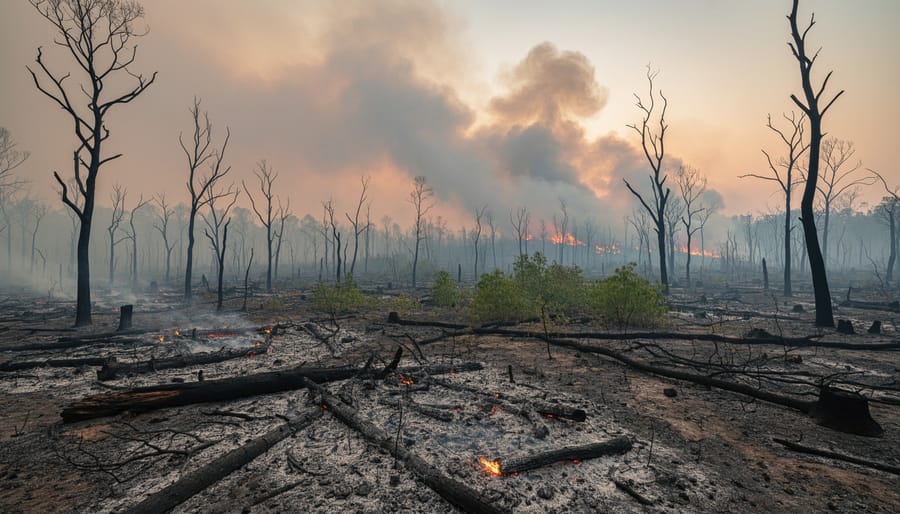
Climate data alone rarely moves people to act. When scientists speak of parts per million CO₂ or projected temperature increases by 2100, the numbers float past most of us without landing. The Climate Clock changes that equation by converting abstract measurements into something visceral: time running out. It transforms the glacial pace of institutional reports into an urgent countdown that ticks away in real seconds, making the climate crisis immediate rather than theoretical.
Research in environmental psychology shows that humans struggle with gradual, distant threats. We evolved to respond to immediate danger, the predator at the edge of camp, not the slow accumulation of atmospheric carbon. This cognitive mismatch explains why polling consistently shows Canadians acknowledge climate change yet rank it below immediate economic concerns. A visual countdown exploits a different psychological lever: deadline anxiety. When we see time draining away, our brains shift from abstract concern to concrete urgency. The Clock’s ticking numbers trigger the same neural pathways activated when we face a project deadline or catch a flight.
This matters because climate apathy isn’t rooted in denial so much as distance. People feel powerless when the problem seems too large and the timeline too vague. The Clock counters both. It defines a specific threshold, the point beyond which Earth’s systems tip into cascading, irreversible changes, and counts down to it. That specificity offers something to rally around, a clear target that makes “doing something now” feel meaningful rather than futile.
Indigenous perspectives add depth the Clock alone cannot provide. Many First Nations understand time relationally rather than linearly. The Haudenosaunee Seventh Generation Principle asks whether decisions today honour seven generations forward. This isn’t countdown thinking; it’s connective thinking that links present actions to ancestral responsibilities and descendants’ wellbeing. When the Climate Clock’s urgency combines with Indigenous relationality to future generations, we get both the push of a deadline and the pull of kinship, a more complete picture of why every fraction of a degree matters, and to whom.
The Clock doesn’t solve climate change. It reframes our relationship to it, making the invisible visible and the gradual immediate.
Canada’s Race Against the Clock
Legal Accountability and the Ticking Clock
Environmental law organizations increasingly wield climate science timelines as evidence in litigation, transforming abstract deadlines into legal arguments courts cannot ignore. When governments miss emissions targets or approve projects incompatible with remaining carbon budgets, lawyers point to the clock, demonstrating how each delay shrinks the window for meaningful intervention. These cases establish precedent that climate commitments aren’t aspirational; they’re enforceable obligations with measurable deadlines.
Recent litigation has forced governments to strengthen climate plans by proving current policies fail to meet legislated targets within the timeframes science demands. Courts in several jurisdictions have ruled that approving fossil fuel infrastructure while claiming climate leadership violates legal duties to future generations. The countdown becomes courtroom evidence: expert testimony calculates how specific projects consume portions of remaining carbon budgets, making the abstract urgency mathematically concrete.
Nature’s Resilience Canada applies this approach in cases challenging inadequate environmental assessments that ignore cumulative climate impacts. By connecting proposed developments, from resource extraction to sustainable transportation infrastructure gaps, to Canada’s narrowing compliance window, legal teams demonstrate how individual approvals collectively determine whether we meet or miss critical thresholds.
Courts increasingly recognize their role in enforcing climate timelines when executive branches stall. Judicial decisions now reference carbon budgets, temperature targets, and the diminishing years available to implement solutions, establishing that the clock’s urgency carries legal weight beyond public awareness campaigns.
Beyond the Countdown: What Actions Can Turn Back the Clock

The countdown isn’t fixed. Every policy shift, every emission cut, and every patch of forest restored adds seconds back to the clock. Canada has the legal framework, the natural resources, and the communities ready to act, what’s missing is the political will to enforce accountability and scale solutions fast enough to matter.
Strong climate policy starts with legally binding emissions caps that apply to all sectors, especially oil and gas. Federal net-zero commitments mean nothing without enforceable timelines and penalties for non-compliance. Environmental law groups are pushing courts to interpret existing statutes more strictly, using judicial review to challenge permits, subsidies, and regulatory exemptions that lock in fossil fuel dependence. Readers can support these efforts by funding legal advocacy organizations, submitting public comments during regulatory consultations, and backing candidates who prioritize environmental law reform.
Corporate accountability means ending greenwashing and forcing disclosure. Mandatory climate risk reporting, supply chain transparency rules, and shareholder resolutions are legal tools that expose companies dragging their feet. When corporations face lawsuits for misleading climate claims or failing fiduciary duties to address climate risk, the cost of inaction rises sharply.
Indigenous-led conservation offers one of the most effective paths to slowing the clock. Traditional ecological knowledge has guided sustainable land stewardship for millennia, and Indigenous Protected and Conserved Areas now safeguard biodiversity hotspots while sequestering carbon. Co-management agreements that respect Indigenous sovereignty and fund Guardian programs turn legal recognition into measurable climate benefits. Nature-based solutions like wetland restoration, old-growth protection, and regenerative agriculture don’t just buy time, they reverse damage.
Grassroots movements amplify legal pressure. Community energy co-ops, youth-led climate strikes, and local rezoning fights for transit-oriented development create the political conditions that make bold policy possible. When courts see widespread public demand for climate action, judicial interpretation shifts. Legal victories happen because organized communities make them politically viable.
The clock responds to collective action, but only if that action targets the systems locking in emissions, not just individual carbon footprints.
Common Questions About the Climate Change Clock
How accurate is the Climate Clock’s countdown?
The countdown reflects current emission rates and carbon budget calculations based on peer-reviewed climate science, but it’s an estimate rather than a precise prediction. Different models and assumptions about climate sensitivity, feedback mechanisms, and future emissions can shift the timeline by months or years.
What happens when the clock reaches zero?
Zero doesn’t mean sudden catastrophe, it marks the point where we’ve exhausted the carbon budget for staying below 1.5°C warming with reasonable probability. Crossing this threshold increases the likelihood of triggering irreversible tipping points like ice sheet collapse, but action remains valuable even beyond the deadline to limit further warming.
Why do different climate clocks show different times?
Variations arise from different methodologies: some clocks use a 1.5°C target while others use 2°C; some incorporate recent emissions data more quickly; others factor in varying probabilities of success (50% versus 67% chance of staying below thresholds). The differences reflect legitimate scientific debate about modeling approaches rather than fundamental disagreement on climate urgency.
Can we actually extend the deadline through climate action?
Yes. Rapid emissions reductions, scaling carbon removal technologies, and protecting natural carbon sinks like forests and wetlands can slow the countdown or even buy additional time. The clock isn’t fixed, it recalculates based on real-world progress, meaning aggressive climate policies genuinely change the timeline.
The Climate Clock doesn’t account for every climate feedback loop, partly because some remain scientifically uncertain and partly to maintain clarity in communication. Methane release from thawing permafrost, Amazon rainforest dieback, and albedo changes from melting ice could accelerate warming faster than current models predict. This means the clock may actually be conservative, offering more reason for urgent action rather than complacency about the time displayed.
Understanding these nuances helps readers engage with the clock as a tool for motivation rather than despair. It translates the abstract challenge of climate change into something concrete while acknowledging the complexity of Earth’s climate system. For Nature’s Resilience Canada, these questions underscore why legal accountability matters now, courts can enforce the emissions reductions that genuinely move the clock’s hands, protecting Canada’s environment before critical thresholds pass.
The Climate Clock stands before us not as a monument to inevitable doom, but as a catalyst for transformative action. Every second that ticks away is both a reminder of what we risk losing and a call to marshal the legal, political, and moral resources needed to safeguard Canada’s environmental future. Nature’s Resilience Canada recognizes that the urgency this countdown represents demands more than awareness, it requires enforceable accountability through the courts, policy reform grounded in climate science, and the courage to challenge systems that perpetuate ecological harm.
Time hasn’t run out yet. The deadline can shift when emissions fall, when governments honour their commitments, and when corporations face real consequences for environmental damage. Legal victories that force stronger protections, Indigenous-led conservation initiatives rooted in millennial stewardship practices, and grassroots movements demanding change all have the power to bend the climate curve. The clock measures what happens when we act as much as when we don’t.
This isn’t a fight any single organization, community, or government can win alone. It requires collaboration across sectors, environmental lawyers working alongside Indigenous nations, scientists informing policy, citizens holding elected officials accountable. The Climate Clock’s countdown will only stop when collective action replaces complacency. Every lawsuit filed, every hectare protected, every voice raised in defence of ecosystems pushes back against the ticking. Canada’s future depends on whether we choose to watch the clock or reset it together.