
 By kevin
Environmental policy and law centers serve as the legal backbone of Canada’s fight for ecological protection, combining litigation expertise with policy advocacy to challenge harmful development, defend wildlife habitat, and hold governments accountable to environmental commitments. These organizations deploy lawyers, policy analysts, and scientists to enforce existing environmental laws while pushing for stronger regulations that address climate change, biodiversity loss, and pollution. They take governments and corporations to court when projects threaten ecosystems, negotiate settlements that create lasting protection, and empower communities with the legal tools to defend their local environments.
For Canadians increasingly worried about climate impacts and environmental degradation, these centers offer a critical pathway to action. They represent citizens who can’t afford legal representation, amplify Indigenous voices in land use decisions, and translate complex environmental science into courtroom arguments that judges can’t ignore. The work happens at every level: challenging federal pipeline approvals, contesting provincial logging permits, and defending municipal watershed protections.
What makes these organizations powerful is their ability to turn public concern into legal precedent. A single well-crafted lawsuit can stop a destructive project, establish new environmental standards, and ripple across jurisdictions for years. Many centers collaborate directly with First Nations and Métis communities, recognizing that Indigenous legal traditions and land stewardship offer essential frameworks for environmental protection. This partnership approach has reshaped how courts understand environmental rights and governmental duties to consult and accommodate Indigenous peoples.
Whether you’re facing a local environmental threat, seeking career opportunities in environmental law, or wanting to support systemic change through strategic litigation, understanding how these centers function gives you concrete ways to engage with Canada’s most effective environmental defenders.
What Environmental Policy and Law Centers Are

Environmental policy and law centers are specialized charitable organizations that use legal tools and expertise to protect Canada’s environment. These centers operate as independent advocacy organizations, employing environmental lawyers, policy analysts, and scientists who work to defend ecosystems, wildlife, and communities from environmental harm. Unlike government agencies or private firms, these centers exist specifically to serve the public interest in environmental protection, often representing communities and groups who lack resources to mount legal challenges on their own.
These organizations operate within Canada’s legal framework, which includes federal statutes like the Canadian Environmental Protection Act, the Species at Risk Act, and provincial environmental legislation. They also engage with broader policy initiatives, including the federal sustainable development strategy that coordinates Canada’s efforts toward the 2030 Agenda for Sustainable Development. By working within established legal channels, these centers challenge government decisions, hold corporations accountable for pollution and habitat destruction, and advocate for stronger environmental protections.
What distinguishes environmental law centers from other environmental groups is their strategic focus on legal mechanisms. While many organizations engage in education or grassroots mobilization, law centers specialize in litigation, regulatory intervention, and policy analysis. They file lawsuits to stop harmful projects, submit expert testimony in regulatory hearings, and draft legislation proposals that strengthen environmental safeguards.
These centers occupy a vital position in Canada’s environmental advocacy landscape, bridging the gap between affected communities and complex legal systems. They provide legal representation to Indigenous nations defending traditional territories, support municipalities resisting unwanted development, and empower citizens to participate meaningfully in environmental decision-making processes that shape their communities and ecosystems.
What Environmental Law Centers Do
Legal Advocacy and Litigation

Environmental law centers deploy a range of legal mechanisms to protect Canada’s ecosystems and hold violators accountable. These organizations file lawsuits to stop projects that threaten sensitive habitats, challenge government decisions that weaken environmental safeguards, and use freedom of information requests to expose regulatory gaps. When a proposed development risks harming endangered species or vital watersheds, lawyers at these centers may seek injunctions to pause construction while courts assess environmental impact assessments for compliance with federal and provincial laws.
Strategic litigation often focuses on enforcing existing regulations that government agencies have failed to uphold. Centers might challenge permits issued without adequate consultation with affected Indigenous nations, argue that environmental assessments ignored cumulative impacts, or compel regulators to apply pollution limits consistently across industries. Some cases target specific polluters through civil actions, seeking remedies for contamination or habitat destruction. Others pursue judicial review of policy decisions, asking courts to rule that a ministerial approval violated statutory requirements or constitutional protections.
These legal strategies rarely work in isolation. Environmental law centers frequently coordinate with grassroots groups, providing the legal expertise that local communities need to defend their land and water. They also participate in regulatory hearings, submit expert evidence during environmental reviews, and intervene in cases where government or industry positions threaten to set harmful precedents. By combining courtroom advocacy with public education and collaboration, these centers turn legal victories into lasting environmental protections that benefit ecosystems and communities across Canada.
Policy Development and Reform

Environmental law centers shape the legal frameworks that govern environmental protection across Canada by participating directly in policy development and legislative reform. Rather than solely responding to environmental harms through litigation, these organizations work proactively with governments to strengthen laws before damage occurs. They submit detailed briefs to parliamentary committees, participate in regulatory consultations, and draft model legislation that addresses gaps in existing environmental protections. This upstream work targets federal statutes like the Canadian Environmental Protection Act and the Fisheries Act, provincial resource management laws, and municipal land-use bylaws that directly affect habitat conservation and development patterns.
Their policy advocacy spans multiple environmental domains, including:
- Climate action and greenhouse gas emissions reduction strategies
- Biodiversity protection and endangered species habitat preservation
- Pollution control for air, water, and soil quality
- Environmental assessment processes for major projects
- Chemical safety and toxics management
- Sustainable resource extraction and forestry practices
This reform work connects to Canada’s broader sustainable development commitments. Employment and Social Development Canada coordinates implementation of the 2030 Agenda for Sustainable Development, with departmental strategies outlining contributions to federal sustainability goals between 2022 and 2026. Environmental law centers amplify these efforts by identifying where existing policies fall short and proposing legally enforceable mechanisms that translate sustainability commitments into tangible environmental outcomes. They bridge the gap between high-level government strategy documents and the specific regulatory teeth needed to achieve meaningful change, ensuring that Canada’s environmental legislation evolves to meet both current ecological threats and international obligations.
Collaboration with Indigenous Communities
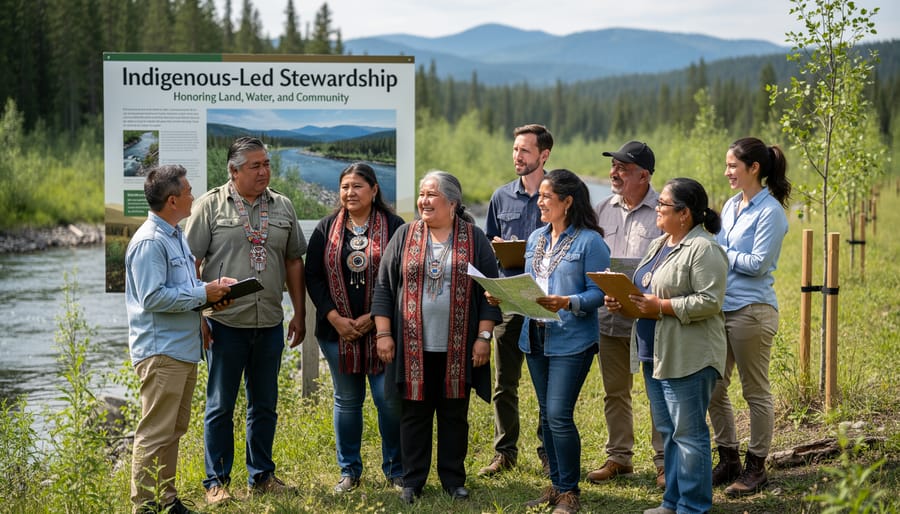
Environmental law centers recognize that Indigenous peoples hold inherent rights to their territories and possess generations of ecological knowledge essential for effective conservation. These organizations support Indigenous communities in defending their lands from industrial development, resource extraction, and environmental degradation that threatens both cultural heritage and ecosystems.
Partnership takes multiple forms. Law centers provide legal expertise to Indigenous nations pursuing treaty rights enforcement, challenging projects that violate consultation obligations, or seeking recognition of traditional governance over ancestral lands. They work alongside Indigenous legal traditions rather than imposing Western frameworks, combining both systems to strengthen protection efforts.
Centers also amplify Indigenous-led conservation initiatives by helping establish Indigenous Protected and Conserved Areas, supporting co-management agreements, and ensuring traditional knowledge informs environmental assessments. This collaboration addresses the reality that Indigenous territories contain some of Canada’s most intact ecosystems, making their stewardship critical to national biodiversity goals.
The relationship extends beyond individual cases. Law centers advocate for systemic reforms that recognize Indigenous jurisdiction over environmental decisions, strengthen consent requirements for development on traditional territories, and ensure Indigenous voices shape climate policy. This approach acknowledges that meaningful environmental protection in Canada cannot happen without respecting Indigenous rights and leadership.
Corporate and Government Accountability
Environmental law centers act as watchdogs, using legal tools to ensure corporations and governments follow environmental rules. They file lawsuits when companies pollute waterways or violate permits, demand transparency through access-to-information requests to uncover regulatory failures, and mobilize public pressure through campaigns that spotlight environmental violations. These centers challenge weak enforcement, questionable approvals, and regulatory loopholes, forcing decision-makers to justify actions that risk ecosystems or public health. By shining light on failures and pursuing legal remedies, they create consequences for environmental harm that might otherwise go unchecked, driving both compliance and stronger protections over time.
Who Environmental Law Centers Serve
Environmental law centers serve a remarkably wide spectrum of Canadian society, from frontline communities facing pollution to legal professionals seeking to advance environmental justice. Their work touches anyone concerned about the health of ecosystems, the safety of drinking water, or the need to take action on climate threats.
Indigenous communities represent critical partners and beneficiaries. Many nations face ongoing battles to protect traditional territories from industrial encroachment, and law centers provide legal resources to defend land rights, support Indigenous-led conservation initiatives, and challenge projects that threaten sacred sites or water sources. This partnership recognizes that Indigenous peoples hold both inherent rights and generations of ecological knowledge essential to effective environmental stewardship.
Grassroots environmental organizations and local advocacy groups regularly turn to law centers when they lack in-house legal expertise. A small watershed protection group confronting a proposed development, or a neighbourhood coalition concerned about air quality from industrial operations, can access legal analysis and strategic guidance that would otherwise remain out of reach.
Affected communities, particularly those in rural, remote, or economically marginalized areas, rely on these centers when facing environmental health threats. Residents living near contaminated sites, families whose water supplies have been compromised, or workers exposed to toxic substances find legal advocates willing to challenge those responsible and demand accountability.
| Stakeholder Group | Primary Benefits | Typical Engagement |
|---|---|---|
| Indigenous Communities | Legal defense of land rights, support for traditional conservation, treaty protection | Partnership agreements, co-litigation, traditional knowledge integration |
| Local Advocacy Groups | Legal expertise, strategic advice, litigation support | Consultation requests, joint campaigns, referrals |
| Affected Communities | Representation against pollution, enforcement of regulations, health protection | Legal intake processes, community meetings, class action participation |
| Legal Professionals | Specialized environmental law development, public interest opportunities | Pro bono cases, research collaboration, continuing education |
| Policymakers | Evidence-based policy recommendations, legal analysis of proposed regulations | Consultations, briefings, written submissions |
Legal professionals and law students engage with these centers as spaces to develop specialized environmental law expertise while contributing to meaningful public interest work. Lawyers offer pro bono support on complex cases, while students gain practical experience that traditional corporate placements cannot provide.
Policymakers and government officials benefit from the rigorous legal analysis these centers produce. When drafting new environmental regulations or evaluating nature-based solutions to environmental challenges, decision-makers often consult research and policy briefs that examine everything from fossil fuels impacts to protected area legislation. These independent legal perspectives strengthen policy development by identifying gaps, potential challenges, and opportunities for more effective environmental protection.
How to Engage with Environmental Law Centers
Seeking Legal Support or Advice
If you’re facing an environmental threat, perhaps a development project threatening local wetlands, industrial pollution affecting your community, or a government decision that overlooks ecological impacts, reaching out to an environmental law center can provide crucial legal guidance and support. Most centers maintain accessible intake processes designed to understand your situation and assess how they can help.
Start by gathering key information before making contact: document the environmental concern (photos, dates, correspondence), identify the parties involved (developers, government agencies, corporations), and note any deadlines for public consultation or legal action. Many centers provide online intake forms or dedicated phone lines where you can describe your issue. Be prepared to explain the environmental harm at stake, who’s affected, and what outcome you’re seeking.
During initial consultation, centers typically evaluate whether the matter falls within their mandate, assess the legal merits, and determine available resources. They may offer direct legal representation, connect you with pro bono lawyers, provide strategic advice for community advocacy, or guide you toward regulatory remedies. Some situations require immediate action, such as challenging a permit approval, while others benefit from longer-term legal strategy.
Remember that environmental law centers operate as charitable organizations with limited capacity. They prioritize cases with broader public interest implications, significant ecological stakes, or vulnerable communities facing environmental injustice. Even if full representation isn’t possible, most centers will offer guidance on next steps and alternative resources.
Supporting Through Donations and Membership
Financial support sustains the legal work environmental law centers undertake to protect Canada’s ecosystems and wildlife. Most operate as registered charities, relying on donations to fund litigation, policy research, and community partnerships.
One-time contributions allow supporters to direct resources toward urgent legal challenges or specific campaigns. Monthly giving provides predictable funding that enables centers to plan multi-year cases and maintain experienced legal staff through lengthy court proceedings.
Membership programs often combine financial support with engagement opportunities, members typically receive updates on active cases, invitations to webinars, and early notification of advocacy campaigns. Some programs offer tiered benefits, while others keep structures simple to maximize resources devoted to environmental protection work.
Tax receipts apply to donations made to registered charitable organizations, making contributions more accessible for many Canadians. Every dollar funds the legal expertise, research capacity, and Indigenous partnership work these centers need to hold polluters accountable and defend threatened habitats.
Volunteering and Professional Contribution
Environmental law centers welcome contributions from legal professionals at all career stages, from articling students to seasoned practitioners looking to dedicate their expertise to environmental protection. Law firms often partner with these organizations to provide pro bono legal research, case preparation, or courtroom representation on complex environmental files. Students can gain hands-on experience in environmental litigation while contributing meaningful work, many centers offer structured volunteer programs or internship placements that build specialized skills in this growing field.
Beyond legal expertise, these organizations need communications professionals, policy researchers, fundraising specialists, and community organizers. If you have skills in public engagement, grant writing, Indigenous relations, or environmental science, there’s likely a role where your contribution advances the mission. Check individual center websites for current volunteer postings or reach out directly to discuss how your background might support ongoing campaigns and legal challenges.
Staying Informed and Taking Action
Staying engaged with environmental law centers keeps you informed about emerging threats and opportunities to act. Most centers offer email newsletters that deliver case updates, policy alerts, and action calls directly to your inbox, subscribe through their websites to receive regular briefings on legal developments affecting Canada’s environment.
Participation takes many forms beyond passive reading. Sign petitions supporting strategic legal challenges, join letter-writing campaigns targeting policymakers, or attend virtual town halls where centers explain upcoming cases and advocacy priorities. Share campaign materials through your social networks to expand reach, reposting legal victories, policy briefs, or urgent calls to action amplifies these organizations’ voices beyond their immediate membership.
Community networks multiply impact. Forward relevant alerts to local environmental groups, discussion forums, or professional networks where the information resonates. When centers launch public comment periods on regulatory proposals or environmental assessments, your submission adds weight to collective advocacy efforts. This grassroots participation creates the public momentum that strengthens legal arguments and demonstrates broad support for environmental protection, turning individual concern into coordinated pressure for change.
Who It’s For
Environmental policy and law centers serve a broad coalition of people and groups committed to protecting Canada’s natural heritage. If you’re an environmentally-conscious Canadian worried about habitat loss, pollution, or climate inaction in your community, these centers offer legal pathways to challenge harmful projects and strengthen environmental safeguards. Indigenous communities fighting to protect traditional territories and sacred sites find crucial allies in law centers that respect Indigenous legal traditions and amplify Indigenous-led conservation efforts.
Grassroots environmental organizations and local activist groups rely on these centers for legal expertise they couldn’t afford otherwise, turning community concerns into court-ready cases. If you’re a legal professional seeking meaningful pro bono work or a law student exploring environmental justice careers, these organizations provide hands-on experience in impactful litigation and policy reform.
Homeowners looking to create wildlife-friendly spaces, perhaps following a natural yard guide connect with centers advocating for bylaws that support ecological landscaping. Researchers, educators, and policymakers also engage with environmental law centers to access case studies, legal analysis, and evidence-based policy recommendations that advance environmental protection across federal, provincial, and municipal jurisdictions.
Common Questions About Environmental Law Centers
Are environmental law centers independent from government?
Yes, environmental law centers in Canada typically operate as independent charitable organizations, separate from government. This independence allows them to challenge government decisions and policies when necessary, while also collaborating with government agencies on shared environmental goals.
How are these organizations funded?
Environmental law centers rely primarily on charitable donations from individuals, foundation grants, and membership contributions. Some also receive project-specific funding or engage in fee-for-service work, but their core legal advocacy is sustained by philanthropic support, ensuring they remain free to challenge powerful interests.
Can individuals file complaints with environmental law centers?
While procedures vary by organization, most centers welcome inquiries from individuals and communities facing environmental threats. They typically assess cases based on legal merit, broader public interest, and available resources, though not every concern can become a formal legal action.
What makes legal action effective for environmental protection?
Legal action creates enforceable outcomes through court orders, establishes precedents that shape future decisions, and compels compliance with environmental laws. It also brings transparency to government and corporate decisions, giving affected communities formal standing to challenge harmful projects before they proceed.
Understanding how environmental law centers operate helps clarify their role in Canada’s environmental protection landscape. These organizations function within established legal frameworks, using mechanisms like judicial review, constitutional challenges, and regulatory interventions to defend ecosystems and communities.
Their effectiveness stems from specialized expertise in environmental law, sustained focus on long-term advocacy rather than short-term political cycles, and credibility built through rigorous legal work. Because they operate independently, they can pursue cases that government agencies might avoid due to political considerations, filling a critical gap in environmental accountability.
Environmental policy and law centers stand as critical guardians of Canada’s natural heritage, wielding legal expertise to protect ecosystems, hold polluters accountable, and amplify voices often excluded from decision-making processes. Their work extends beyond courtrooms into policy reform, community empowerment, and meaningful partnerships with Indigenous peoples whose traditional knowledge and rights are foundational to effective environmental stewardship.
The environmental challenges facing Canada, from climate disruption to habitat loss, demand more than individual action. They require coordinated legal advocacy that can challenge destructive projects, enforce regulations, and push for stronger protections. These centers provide that collective power, transforming public concern into enforceable legal victories that benefit all Canadians.
Your engagement matters. Whether you support these organizations financially, seek their expertise when facing environmental threats in your community, contribute your professional skills, or simply stay informed and share their campaigns, you become part of a broader movement for environmental justice. The legal tools exist to protect Canada’s air, water, forests, and wildlife, but they only work when communities mobilize behind them.
Consider reaching out to an environmental law center operating in your region. Explore how your resources, knowledge, or voice can strengthen their capacity to defend the ecosystems we all depend on.