
 By kevin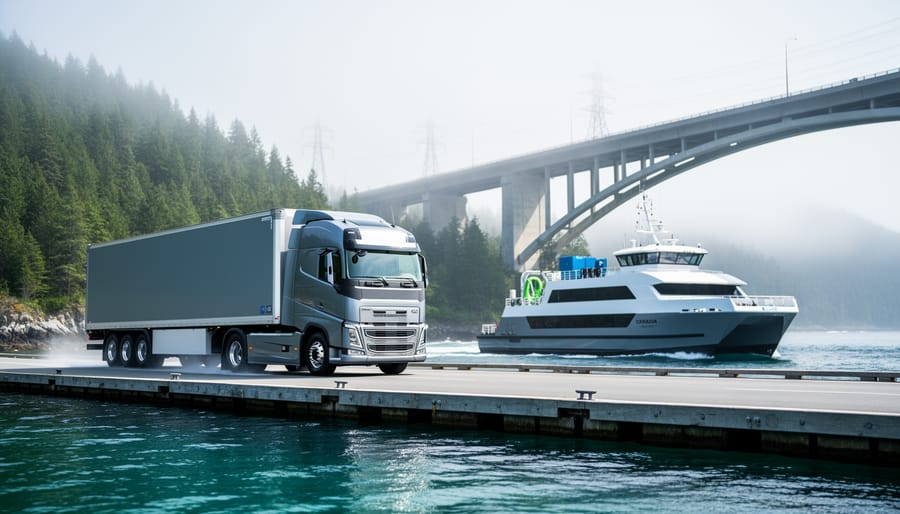
Canada’s transportation sector stands at a legal and environmental crossroads. After decades of contributing roughly 25% of the nation’s greenhouse gas emissions, new federal regulations, provincial zero-emission vehicle mandates, and Indigenous-led transportation initiatives are fundamentally reshaping how Canadians move people and goods. The question is no longer whether sustainable transportation will arrive, but whether current policies carry enough enforcement teeth to meet Canada’s 2030 and 2050 climate commitments.
Recent regulatory shifts have moved sustainability in transportation from voluntary corporate pledges to legally binding requirements. The federal government’s strengthened Clean Fuel Regulations, alongside British Columbia’s zero-emission truck standards and Quebec’s expanded electric vehicle rebate framework, create a patchwork of accountability mechanisms that environmental lawyers are watching closely. These aren’t abstract policy goals. They’re enforceable standards with penalties for non-compliance, opening new avenues for legal challenges when governments or corporations fall short.
Yet regulatory frameworks mean little without meaningful collaboration with First Nations, Métis, and Inuit communities who have stewarded sustainable land-use practices for millennia. Transportation corridors cross traditional territories, and Indigenous nations are increasingly asserting jurisdiction over infrastructure projects that affect their lands. From the Wet’suwet’en opposition to pipeline-related transportation networks to innovative partnerships like the Tsartlip First Nation’s electric ferry initiative on Vancouver Island, Indigenous perspectives are reshaping what sustainable transportation actually looks like.
For Canadians ready to take climate action understanding the legal landscape of transportation sustainability means knowing where accountability gaps exist, which policies create real change, and how communities can push for stronger enforcement when progress stalls.
What Changed: Major Sustainable Transportation Shifts in Canada
Canada’s sustainable transportation landscape underwent substantial transformation in 2026, driven by strengthened regulatory frameworks, increased legal accountability, and meaningful collaboration with Indigenous communities. The federal government expanded zero-emission vehicle mandates with enforceable compliance mechanisms, while provinces introduced policy reforms prioritizing public transit and active transportation over fossil fuel-dependent infrastructure. Environmental law organizations launched strategic legal challenges against highway expansion projects that threaten ecosystems and climate commitments.
These shifts represent more than incremental policy adjustments. They signal a fundamental reorientation of how Canada approaches mobility, with legal frameworks now functioning as tools for accountability rather than mere guidelines. Indigenous nations are asserting jurisdiction over transportation planning in their territories, developing solutions that reflect cultural values and environmental stewardship rather than imposed southern models.
The changes also reflect growing recognition that transportation decisions carry profound environmental justice implications. Communities long subjected to air pollution from highways and freight corridors are securing legal victories that prioritize health equity. Wildlife corridors fragmented by decades of unchecked road expansion are gaining protection through litigation and policy reform. This convergence of regulatory action, legal accountability, and Indigenous leadership creates unprecedented momentum toward genuinely sustainable transportation systems that serve both people and ecosystems.
Key Developments Reshaping Canadian Transportation
1. Federal Zero-Emission Vehicle Mandate Expansion and Legal Enforcement
Canada’s federal zero-emission vehicle (ZEV) mandate has entered a new phase in 2026, with significantly tougher sales targets and enforcement mechanisms designed to accelerate the country’s shift away from internal combustion engines. The updated regulations now require manufacturers to ensure that 60% of their new light-duty vehicle sales are zero-emission by 2030, a substantial increase from earlier targets, with interim benchmarks that escalate annually. For medium and heavy-duty vehicles, new mandatory ZEV sales percentages came into effect this year, marking the first time Canada has regulated this segment at the federal level.
The compliance framework operates through a credit system that manufacturers must navigate carefully. Companies earn credits for each ZEV sold, with additional credits awarded for vehicles with longer electric ranges. Manufacturers falling short of their annual targets face two options: purchase credits from competitors who’ve exceeded their requirements, or pay substantial financial penalties that increase progressively with each vehicle shortfall. These penalties aren’t merely symbolic, they’re calculated to make non-compliance more expensive than investing in ZEV production and infrastructure.
What makes the 2026 expansion particularly significant from a legal standpoint is the introduction of mandatory public reporting requirements. Manufacturers must now disclose their compliance status quarterly, creating transparency that environmental organizations can use to identify laggards and press for accountability. When companies miss targets or attempt to exploit loopholes, such as inflating range claims or misclassifying vehicle types, they face both regulatory sanctions and potential legal action from environmental law groups.
Several environmental organizations have already used this transparency framework to challenge manufacturers’ compliance strategies. These legal interventions focus on holding corporations to the spirit, not just the letter, of the regulations. For instance, when manufacturers lobbied for extended timelines or exemptions based on market readiness arguments, legal advocacy groups presented evidence that such delays would undermine Canada’s 2035 commitment to end new combustion engine vehicle sales entirely.
The enforcement regime also includes provisions for citizen complaints, allowing members of the public to flag potential violations. This democratizes accountability and ensures that government regulators aren’t the only watchdogs monitoring corporate behaviour in the transition to zero-emission transportation.
2. Indigenous-Led Transit and Active Transportation Initiatives
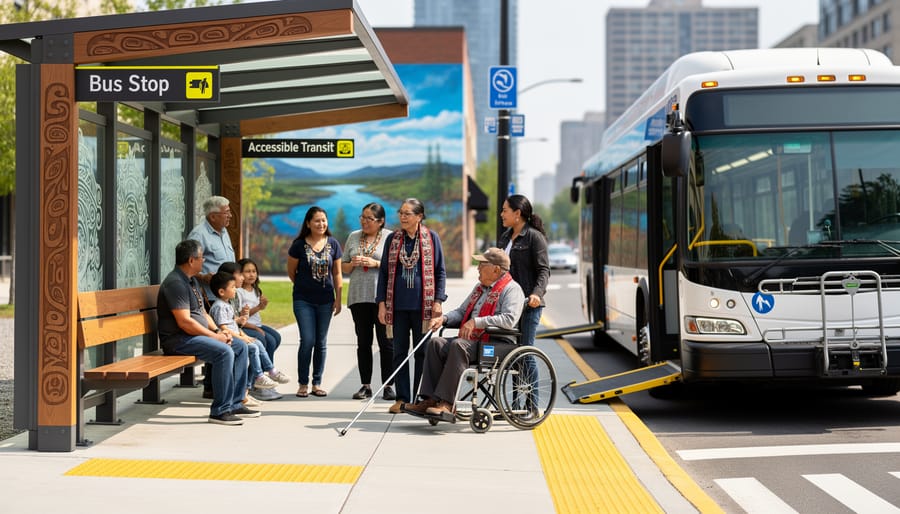
Indigenous communities across Canada are increasingly leading the development of sustainable transportation systems that reflect their values, needs, and land stewardship traditions. These initiatives mark a significant shift from decades of top-down infrastructure planning that often ignored Indigenous rights and knowledge, moving toward genuine partnerships where First Nations, Métis, and Inuit communities hold decision-making authority over transportation projects affecting their territories.
Recent legal frameworks have strengthened this self-determination. The 2024 amendments to the Impact Assessment Act now require meaningful consultation with Indigenous communities before any major transportation infrastructure project proceeds on or near traditional lands. This legislative change has opened space for communities to propose their own transportation solutions rather than simply reacting to government or corporate plans. In northern Manitoba, the Sayisi Dene First Nation negotiated a funding agreement in early 2026 that allocates $12 million over five years for community-designed active transportation pathways connecting residential areas to cultural sites, schools, and the health centre. The agreement explicitly recognizes the community’s authority to set design standards, construction timelines, and employment priorities.
Urban centres are also seeing Indigenous-led innovation. In Winnipeg, the North End Community Transit Collective, formed by urban Indigenous organizations, secured provincial support to pilot a culturally safe transit service connecting Indigenous community centres, service providers, and ceremonial spaces. The pilot addresses a documented gap: conventional transit routes often bypass areas where Indigenous residents live and gather, forcing longer travel times and limiting access to essential services. The collective controls route planning, hiring practices that prioritize Indigenous drivers familiar with the communities they serve, and service schedules that accommodate cultural events and ceremonies.
Funding mechanisms are evolving beyond one-time grants. The federal Indigenous Community Infrastructure Fund now includes a dedicated sustainable transportation stream, offering multi-year commitments that allow communities to plan long-term projects. Legal advocates have successfully argued that reliable, sustained funding is necessary to honour treaty obligations and advance reconciliation. In British Columbia, the Tŝilhqot’in National Government used this funding stream to develop an e-bike sharing program and repair traditional trail networks for non-motorized travel, reducing diesel dependence in remote areas while preserving ancestral routes.
These projects demonstrate that sustainable transportation is not just about reducing emissions. It’s about who gets to decide how people move through their territories, ensuring transportation systems support cultural continuity, community health, and environmental protection in ways that reflect Indigenous worldviews and legal traditions.
3. Provincial Policy Reforms and Legal Challenges to Fossil Fuel Transportation Infrastructure
Across Canada’s provinces, 2026 has witnessed a wave of policy reforms designed to shift transportation away from fossil fuel dependence, while environmental law groups mount strategic legal challenges to infrastructure projects that lock in carbon emissions for decades. These parallel tracks, regulatory advancement and courtroom accountability, illustrate how sustainable transportation progress depends on both government action and legal pressure to enforce climate commitments.
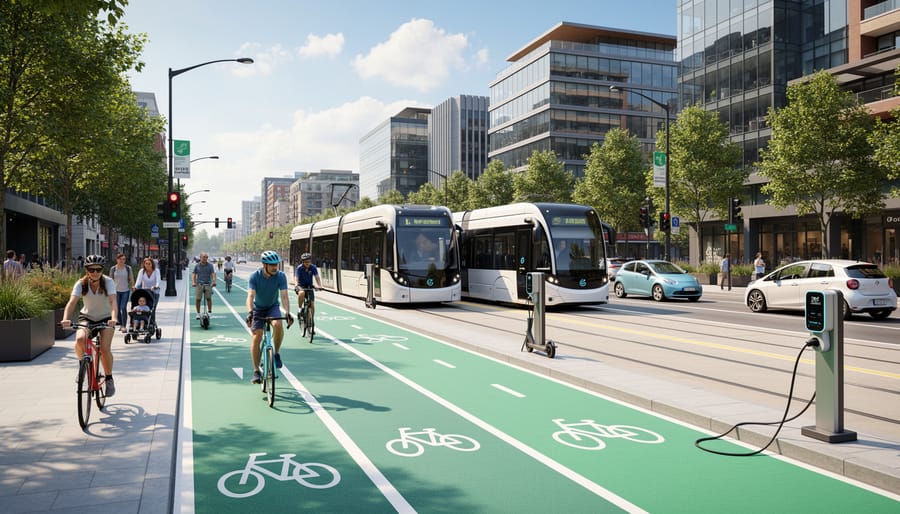
British Columbia introduced revised Active Transportation Act regulations in early 2026, requiring municipalities to allocate at least 15 percent of transportation budgets to cycling infrastructure and pedestrian safety improvements. Ontario followed with stronger public transit funding guarantees tied to ridership growth targets, and Quebec accelerated its electric vehicle charging network expansion through partnerships with Hydro-Québec. These provincial measures complement federal ZEV mandates by creating the infrastructure needed to make fossil fuel alternatives practical for daily commutes and freight movement.
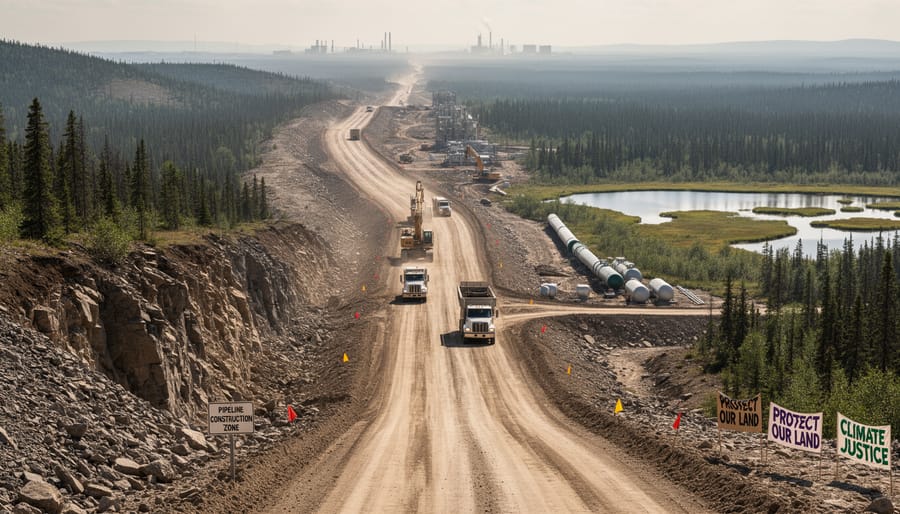
However, policy advancement runs parallel to courtroom battles over projects that contradict provincial climate plans. Nature’s Resilience Canada, in collaboration with Indigenous nations and municipal coalitions, filed a joint legal challenge in Alberta courts against the proposed Highway 63 expansion project, arguing that increasing capacity for oil sands transport directly undermines the province’s 2030 emissions reduction targets. The case centres on whether provincial governments can approve major fossil fuel infrastructure while simultaneously claiming adherence to Paris Agreement obligations. Court documents cite expert testimony on the effects of fossil fuels on air quality, water systems, and climate stability, demonstrating that highway expansion perpetuates harm to ecosystems and vulnerable communities along transport corridors.
A recent legal victory in British Columbia provides a template for accountability. In March 2026, environmental law organizations successfully halted a proposed liquefied natural gas pipeline route through critical caribou habitat, with the court ruling that the province failed to demonstrate how the project aligned with its legislated climate targets. The decision established precedent requiring governments to justify fossil fuel transportation infrastructure against binding emissions commitments, not merely assess isolated environmental impacts.
These legal challenges function as enforcement mechanisms when regulatory frameworks alone prove insufficient. They compel governments to reconcile transportation decisions with climate law, holding officials accountable for contradictions between stated environmental goals and approved projects that expand fossil fuel dependence.
Why These Developments Matter for Environmental Justice
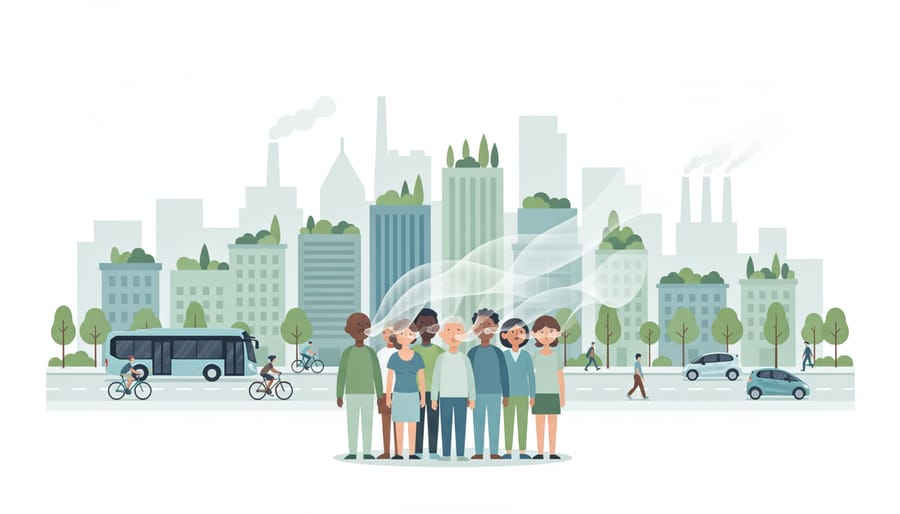
These transportation shifts represent more than policy tweaks or infrastructure upgrades, they’re central to Canada’s ability to meet its climate commitments and address longstanding environmental injustices. The sector accounts for roughly a quarter of the country’s greenhouse gas emissions, making it impossible to reach net-zero targets without fundamentally changing how people and goods move. Legal accountability mechanisms embedded in the federal ZEV mandate and provincial regulations create enforceable pathways to cut emissions, while Indigenous-led initiatives and challenges to fossil fuel infrastructure tackle the unequal distribution of environmental harm.
The benefits ripple outward from carbon reduction into everyday health and equity:
- Emissions reductions from zero-emission vehicles and transit expansion directly support Canada’s 2030 and 2050 climate targets
- Improved air quality in urban areas lowers rates of asthma, cardiovascular disease, and respiratory illness, especially in neighbourhoods near highways and industrial corridors
- Protection of wildlife corridors through strategic legal challenges to highway expansion prevents habitat fragmentation and safeguards migration routes
- Reduced health disparities as cleaner air and safer active transportation infrastructure reach communities historically exposed to pollution from diesel trucks and traffic congestion
- Economic opportunities in clean transportation sectors, from electric bus manufacturing to Indigenous-owned transit services, create jobs while advancing sustainability
Communities that have borne the brunt of pollution from transportation, Indigenous territories crossed by freight routes, low-income urban neighbourhoods beside expressways, rural areas facing pipeline proposals, stand to gain the most from these changes. Legal action forces transparency around environmental assessments and gives these communities standing to challenge projects that threaten air, water, and land. When governments and corporations face enforceable mandates and litigation risk, they can’t sidestep the health costs their decisions impose on vulnerable populations.
The connection to broader ecological health runs deeper still. Transportation infrastructure fragments ecosystems, and shifting to electric vehicles alone won’t solve that. This is where legal frameworks intersect with nature-based solutions protecting wetlands, forests, and corridors that absorb carbon, filter pollutants, and sustain biodiversity. Indigenous-led projects often integrate these approaches, recognizing that sustainable transportation isn’t just about cleaner engines but about honouring the relationships between land, water, and movement. Legal victories that halt destructive highway expansions or reroute freight away from sensitive habitats protect these systems. The developments outlined here matter because they embed environmental justice into the legal and regulatory fabric, turning aspirational climate goals into binding obligations that courts and communities can enforce.
What to Watch: The Road Ahead for Sustainable Transportation
The path toward truly sustainable transportation in Canada will be shaped by decisions made in the next few years, and staying engaged with these developments is essential for anyone committed to environmental accountability.
Several critical policy milestones are approaching. The federal government’s comprehensive review of transportation emissions regulations, scheduled for completion in early 2027, will determine whether Canada strengthens or weakens its climate commitments in this sector. Provincial governments across the country face decisions about allocating infrastructure funding, whether to prioritize highway expansion or invest in public transit, cycling networks, and pedestrian infrastructure. These budget choices have decades-long consequences for emissions, community health, and habitat connectivity.
Legal challenges to fossil fuel transportation projects will continue to test the strength of environmental protection frameworks. Watch for court decisions on pipeline approvals, port expansion proposals, and highway projects that threaten sensitive ecosystems. These cases establish precedents that either uphold or undermine environmental assessments, Indigenous consent requirements, and climate accountability. Organizations like Nature’s Resilience Canada are preparing strategic litigation to ensure governments and corporations cannot sidestep their legal obligations.
The integration of transportation planning with renewable energy infrastructure presents both opportunity and complexity. How provinces coordinate electric vehicle charging networks with clean electricity generation, and whether they prioritize equitable access in rural and Indigenous communities, will determine how inclusive this transition becomes.
You can actively shape these outcomes. Sign up for updates from environmental law organizations to receive alerts about public comment periods on transportation regulations. Attend municipal council meetings when transit funding and active transportation infrastructure are discussed, local decisions accumulate into regional patterns. Support legal funds that enable strategic environmental litigation, recognizing that courtroom victories often achieve what years of advocacy alone cannot.
Reach out to Indigenous-led transportation initiatives in your region to understand their priorities and how you can support self-determined planning processes. Challenge elected officials to explain how their transportation decisions align with climate targets and environmental justice principles.
The sustainable transportation landscape will be built through persistent legal accountability, collaborative action, and informed public engagement. Your participation matters.
Common Questions About Sustainable Transportation in Canada
What makes transportation ‘sustainable’?
Sustainable transportation minimizes environmental harm through reduced emissions, energy efficiency, and lower resource consumption. This includes public transit, active transportation like cycling and walking, electric vehicles, and systems designed to reduce overall vehicle use while improving accessibility and equity.
How do legal mechanisms enforce transportation policy in Canada?
Environmental law organizations use litigation, regulatory compliance monitoring, and advocacy to hold governments and corporations accountable. Legal tools include challenging permits for harmful projects, enforcing emission standards, and ensuring consultation requirements with affected communities are met.
What role do Indigenous communities play in sustainable transportation?
Indigenous nations lead collaborative transportation planning that reflects traditional knowledge, community needs, and self-determination. Their involvement ensures projects respect treaty rights, protect sacred sites and ecosystems, and create culturally appropriate solutions for remote and urban areas.
How can I support sustainable transportation advocacy?
You can participate in public consultations on transportation projects, support environmental law organizations working on accountability campaigns, choose low-emission travel options, and advocate for stronger policies through elected representatives. Staying informed about upcoming decisions helps you engage at critical moments.
What are the biggest barriers to sustainable transportation progress?
Key obstacles include insufficient funding for public transit and active transportation infrastructure, resistance from fossil fuel industries, lack of coordination between government levels, and inadequate consultation with Indigenous communities. Legal challenges and public pressure help overcome these barriers by demanding accountability and policy reform.
These questions reflect the concerns many Canadians have as they navigate the shift toward more sustainable transportation systems. Understanding the legal frameworks and your role in shaping policy empowers you to contribute to meaningful environmental progress.