 By kevin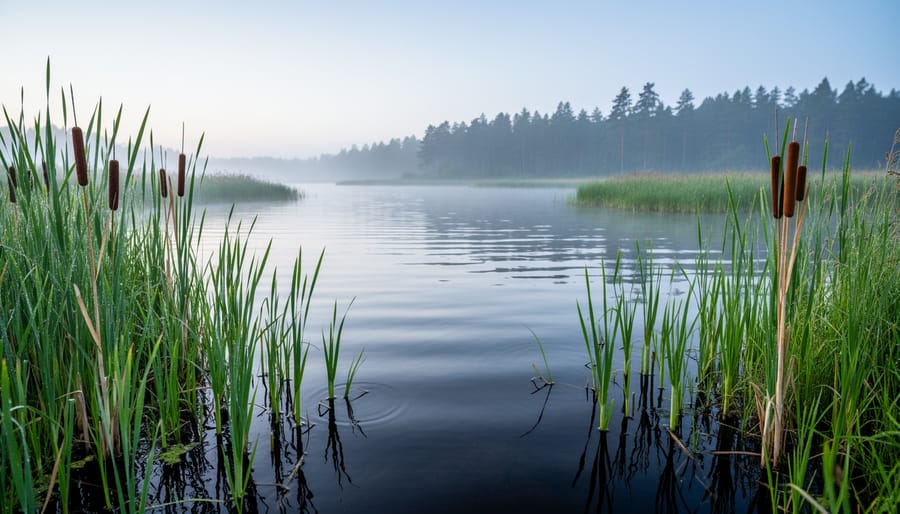
Nature-based solutions to climate change are actions that protect, restore, or sustainably manage ecosystems to reduce greenhouse gas emissions and help communities adapt to climate impacts. These solutions harness the power of forests, wetlands, grasslands, and coastal ecosystems to capture carbon from the atmosphere, cool urban areas, prevent flooding, and support biodiversity while addressing what causes climate change.
The science is straightforward. Healthy ecosystems act as natural carbon sinks, absorbing and storing carbon dioxide that would otherwise trap heat in our atmosphere. A single hectare of coastal wetland can sequester five times more carbon than the same area of tropical rainforest. Yet across Canada, we’ve lost nearly 70 percent of our wetlands in settled areas, and continue to clear forests at rates that undermine our climate commitments.
This article explains how nature-based solutions actually work, what types exist in the Canadian context, and where they’re being implemented successfully. You’ll discover why Indigenous-led conservation delivers measurably better outcomes, explore the legal frameworks that support these initiatives, and understand the limitations that prevent nature-based solutions from being a silver bullet. From the Great Bear Rainforest agreement in British Columbia to the restoration of prairie grasslands in Manitoba, these approaches represent some of our most cost-effective climate tools. The challenge isn’t whether they work. The challenge is scaling them fast enough to make a difference.
What Nature-Based Solutions to Climate Change Mean
Nature-based solutions to climate change are actions that protect, sustainably manage, or restore natural ecosystems to address the climate crisis while benefiting people and biodiversity. Instead of relying solely on concrete barriers, air conditioning, or industrial carbon capture technology, NBS work with forests, wetlands, grasslands, and other living systems to reduce greenhouse gas emissions and help communities adapt to climate impacts already underway.
The core idea is simple: healthy ecosystems naturally regulate carbon, water, and temperature in ways that centuries of engineering have tried to replicate. A coastal salt marsh absorbs storm surge and stores carbon in its soils. An urban forest cools neighbourhoods during heat waves while pulling CO₂ from the atmosphere. Prairie grasslands sequester carbon underground and hold water during floods. These systems evolved over millennia to perform functions we now desperately need for climate stability.
- Nature-based solutions
- Actions that protect, restore, or sustainably manage ecosystems to address climate change and other societal challenges while supporting biodiversity and human well-being.
- Carbon sequestration
- The process by which plants and soils capture carbon dioxide from the atmosphere and store it long-term, reducing concentrations of greenhouse gases that drive warming.
- Ecosystem services
- Benefits that humans receive from functioning natural systems, including clean water, flood control, pollination, climate regulation, and air purification.
- Climate resilience
- The capacity of communities and ecosystems to withstand, adapt to, and recover from climate impacts such as extreme heat, flooding, drought, and storms.
- Blue and green infrastructure
- Blue infrastructure refers to water-based ecosystems like wetlands and marshes; green infrastructure includes forests, parks, and vegetated systems that provide environmental services in built environments.
What distinguishes NBS from conventional approaches is that they deliver multiple benefits at once. A reforested watershed does not just sequester carbon, it filters drinking water, provides wildlife habitat, supports Indigenous food systems, and creates recreational spaces. This contrasts with single-purpose engineered solutions like seawalls or mechanical carbon scrubbers, which address one problem but may create others or require constant energy input.
NBS also advance the meaning of mitigation beyond emissions reduction alone, recognizing that protecting and restoring ecosystems simultaneously tackles climate causes and consequences. This dual function makes them essential tools in Canada’s climate response, particularly as warming accelerates and adaptation becomes as urgent as cutting emissions.
How Nature-Based Solutions Work
Carbon Sequestration Through Natural Systems
Natural systems pull carbon dioxide from the atmosphere through photosynthesis and lock it away for decades, centuries, or even millennia. Trees absorb CO2 as they grow, storing carbon in their wood, branches, and roots. When leaves and plant matter fall to the forest floor, that carbon continues its journey into the soil, where microorganisms slowly break it down and incorporate it into stable soil organic matter.
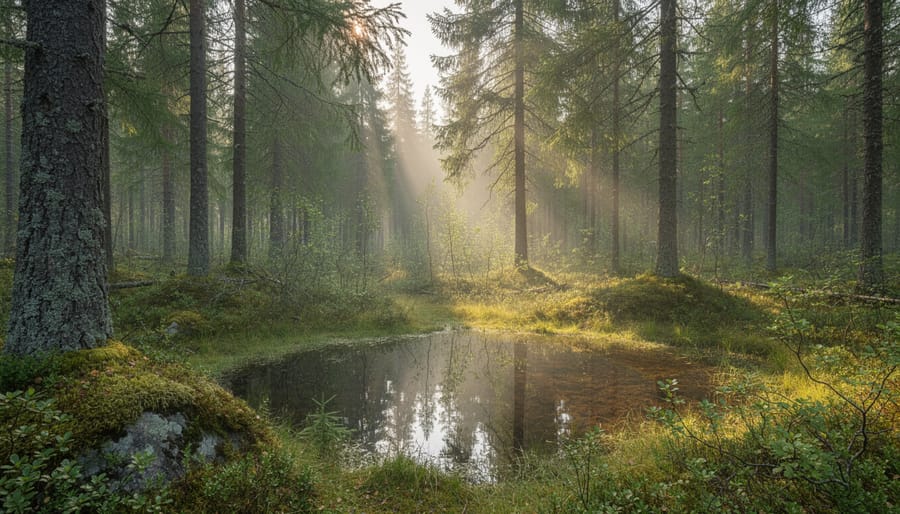
Canada’s boreal forest alone holds about 208 billion tonnes of carbon, roughly equivalent to 26 years of global fossil fuel emissions. These forests store carbon both above ground in living trees and below ground in their vast root systems and thick organic soils. Old-growth forests are especially valuable because they’ve accumulated carbon over hundreds of years and continue storing it at surprisingly high rates.
Peatlands function differently. These waterlogged ecosystems slow decomposition to a crawl, allowing dead plant material to accumulate as peat over thousands of years. Canadian peatlands store vast carbon reserves, an estimated 150 billion tonnes, despite covering just 12% of the country’s land area. When drained or disturbed, they flip from carbon sinks to sources, releasing centuries of stored carbon back into the atmosphere.
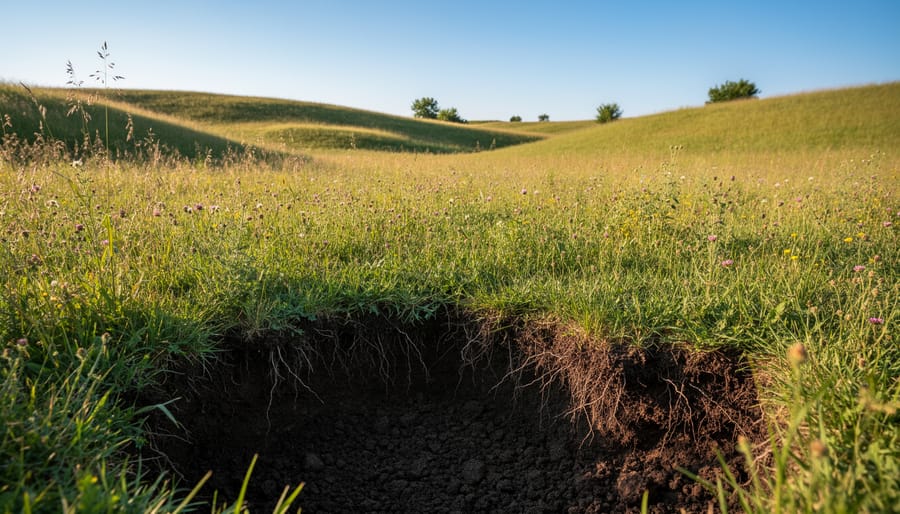
Prairie grasslands store most of their carbon underground in deep, dense root systems that can extend several metres into the soil. Coastal salt marshes and seagrass beds also sequester carbon at remarkably high rates per hectare, trapping it in waterlogged sediments where it can remain for millennia.
Climate Risk Reduction and Adaptation
Natural systems act as living shields against climate hazards, reducing the severity and frequency of extreme events that threaten communities. Forests and wetlands slow floodwaters and absorb runoff, protecting downstream areas during heavy rainfall. Urban tree canopy cools neighbourhoods during heat waves, a single mature tree can lower surrounding air temperatures by several degrees and reduce energy demand for cooling. Coastal marshes and dunes dampen storm surge and wave energy, safeguarding shoreline communities from erosion and flooding during hurricanes and winter storms.
Green roofs, bioswales, and constructed wetlands in cities manage stormwater at its source, preventing overwhelmed sewers and reducing flood risk in areas where urban sprawl has replaced absorbent landscapes with pavement. In rural regions, intact riparian buffers along streams filter pollutants, stabilize banks, and moderate water flow during droughts and floods. Grasslands and forest belts act as windbreaks, reducing soil erosion and protecting crops from drying winds. These adaptive functions aren’t one-time fixes, they grow stronger as ecosystems mature and regenerate, offering long-term resilience that hardens infrastructure alone can’t match.
Types of Nature-Based Climate Solutions
Forest Conservation and Restoration
Canada’s forests store approximately 300 billion tonnes of carbon, making their protection and restoration essential climate solutions. Old-growth forests hold the most carbon per hectare and support irreplaceable biodiversity, yet less than 3% of Canada’s original old-growth remains unlogged. Legal battles and advocacy efforts continue to secure protection for ancient forest stands, particularly in British Columbia where decades of Indigenous-led resistance have resulted in logging deferrals in some critical areas.
Reforestation projects focus on restoring degraded landscapes with native species suited to future climate conditions. Unlike tree plantations, ecologically-sound restoration creates diverse, resilient forests that provide habitat and multiple ecosystem benefits alongside carbon sequestration. Sustainable forest management practices reduce harvest intensity, extend rotation periods, and maintain forest structure to keep more carbon stored on the landscape.
Urban tree canopy expansion offers climate benefits in cities where residents experience the most severe heat impacts. Municipalities across Canada are setting canopy targets and planting street trees, though success requires adequate soil volume, maintenance funding, and protection of existing mature trees.
Indigenous forest guardians play a vital role in monitoring forest health, preventing illegal logging, and applying traditional stewardship practices that enhance carbon storage while supporting biodiversity and cultural values.
Wetland and Peatland Protection
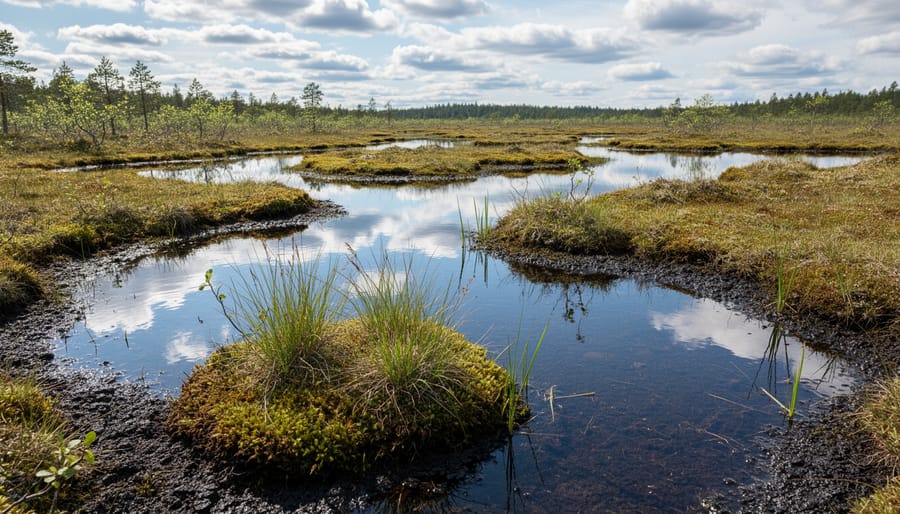
Wetlands and peatlands are among the most powerful carbon sinks on the planet, storing twice as much carbon as all the world’s forests combined despite covering just 3% of Earth’s land surface. When drained or degraded, they release massive amounts of greenhouse gases, but restoring them reverses this process. Peatland rewetting projects in northern Canada involve raising water tables in bogs and fens that were previously drained for forestry or agriculture, which stops carbon release and restores their storage function. These saturated ecosystems also regulate water flow, and peatlands help prevent floods by acting like giant sponges during heavy rain.
Wetland restoration in southern Canada focuses on prairie potholes, river floodplains, and urban wetlands that filter pollutants, recharge groundwater, and provide habitat for migratory birds. Coastal marsh conservation protects salt marshes along Atlantic and Pacific shores, which capture carbon in their soils at rates up to 40 times faster than tropical rainforests while buffering shorelines from storm surge. The challenge lies in reversing decades of drainage and development, nearly 70% of Canada’s original wetlands in settled areas have been lost.
Coastal and Marine Solutions
Canada’s coastal ecosystems, salt marshes, eelgrass beds, kelp forests, and dune systems, are powerful allies against the impacts of global warming. These “blue carbon” habitats sequester carbon dioxide at rates far exceeding terrestrial forests, locking it away in waterlogged soils and sediments for centuries. Salt marshes along the Atlantic and Pacific coasts trap carbon while absorbing wave energy that would otherwise erode shorelines. Eelgrass meadows and kelp forests do the same underwater, supporting fish populations and filtering coastal waters. Restoring degraded marshes, replanting seagrass, protecting kelp from destructive harvesting, and stabilizing dunes with native vegetation all strengthen natural barriers against storm surges and sea-level rise while pulling carbon from the atmosphere.
Agricultural and Grassland Approaches
Canada’s vast agricultural lands and prairie ecosystems hold enormous potential for climate action when managed with nature in mind. Regenerative agriculture rebuilds soil health through practices like cover cropping, reduced tillage, and diverse crop rotations, turning farmland into a carbon sink rather than a source. Protecting and restoring native grasslands preserves deep-rooted prairie plants that store carbon underground for centuries while supporting pollinators and wildlife. Planting hedgerows and shelterbelts along field edges captures carbon, reduces wind erosion, and creates habitat corridors. Farmers and ranchers adopting rotational grazing allow grasslands to recover between grazing periods, increasing both soil carbon and forage quality. These approaches don’t just sequester carbon, they make farms more resilient to drought and flooding, improve water quality, and support the biodiversity that healthy ecosystems depend on.
Urban Green Infrastructure
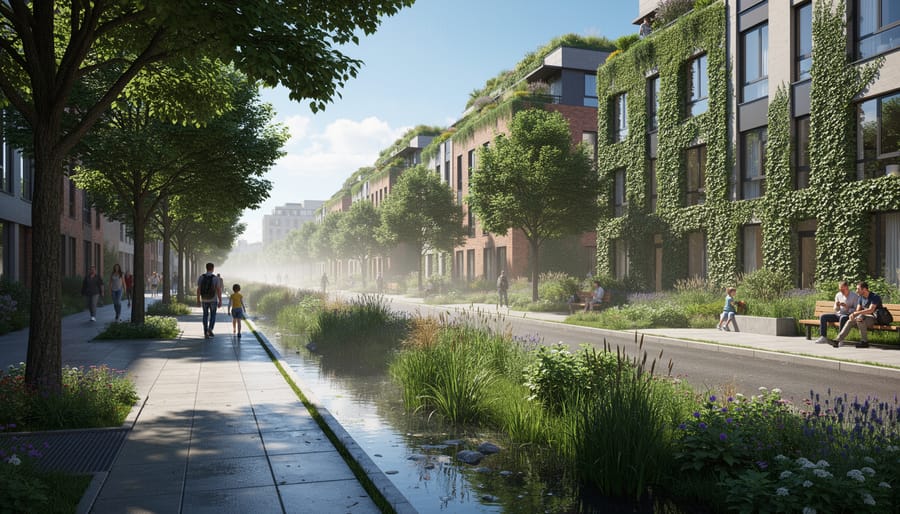
Cities are among the most vulnerable places to climate change, yet urban landscapes offer powerful opportunities for nature-based solutions. Green roofs absorb rainfall and insulate buildings, reducing both flooding risk and energy use for cooling. Urban forests and street trees provide shade that directly counters the heat island effect; studies confirm that green infrastructure cools cities by several degrees during heat waves. Bioswales and rain gardens capture stormwater runoff before it overwhelms aging sewer systems, filtering pollutants while recharging groundwater. Permeable pavements allow rainfall to soak into the ground rather than rushing into drains. Urban wetlands, even small constructed ponds in parks, store carbon and create refuges for biodiversity. Canadian cities like Toronto, Vancouver, and Edmonton are weaving these elements into neighbourhood design, transforming concrete landscapes into resilient, livable spaces that protect residents from extreme weather while improving air quality and mental health.
How Nature-Based Solutions Are Being Applied in Canada
Indigenous-Led Conservation and Stewardship
Indigenous communities across Canada are leading some of the most effective nature-based climate solutions through Indigenous Protected and Conserved Areas (IPCAs) and revitalized traditional stewardship practices. These initiatives recognize that Indigenous peoples have successfully managed lands and waters for thousands of years, maintaining healthy ecosystems that naturally sequester carbon and support biodiversity.
IPCAs now protect millions of hectares of Canadian territory. The Thaidene Nëné National Park Reserve in the Northwest Territories, co-managed by the Łutsël K’é Dene First Nation and Parks Canada, safeguards boreal forests and wetlands that store massive amounts of carbon while preserving traditional hunting and cultural practices. Similarly, the Qat’muk IPCA in British Columbia protects old-growth forests and alpine ecosystems under Ktunaxa Nation stewardship.
Traditional land management practices like cultural burning, rotational harvesting, and selective logging have proven highly effective at maintaining ecosystem health and carbon storage. These practices, often suppressed for generations, are now being recognized as sophisticated climate solutions. Cultural burning, for example, reduces catastrophic wildfire risk while promoting biodiversity and healthy forest regeneration.
Co-governance models that share decision-making authority between Indigenous nations and government agencies have shown better conservation outcomes than top-down approaches. These partnerships respect Indigenous rights and knowledge while providing resources for monitoring and enforcement. The evidence is clear: when Indigenous communities have authority over their territories, both nature and climate benefit.
Legal and Policy Frameworks Supporting NBS
Canada’s legal landscape for nature-based solutions remains a patchwork of federal, provincial, and territorial frameworks with uneven support. The federal Impact Assessment Act requires consideration of climate impacts in major projects, creating opportunities to mandate NBS in development approvals. Federal funding through programs like the Natural Climate Solutions Fund and the 2 Billion Trees commitment provides financial backing, though implementation has lagged targets.
Provincial environmental laws vary dramatically. British Columbia’s Land Act and protected areas legislation have enabled large-scale conservation, while Ontario’s weakened wetland protections illustrate how gaps undermine NBS potential. Municipal governments increasingly use official plans and zoning bylaws to mandate green infrastructure, particularly for stormwater management.
Legal victories protecting old-growth forests and critical wetlands have set precedents for ecosystem-based climate action. However, significant barriers persist: unclear legal definitions of NBS, inadequate long-term funding, weak enforcement of existing protections, and jurisdictional fragmentation. Indigenous land rights remain central, court decisions affirming Aboriginal title create pathways for Indigenous-led conservation but also expose Crown failures to protect treaty territories.
Stronger legal frameworks explicitly recognizing NBS as climate infrastructure, with binding targets and dedicated funding, would accelerate meaningful progress.
Municipal and Community-Scale Projects
Across Canada, cities and communities are embedding nature-based climate solutions into everyday infrastructure. Vancouver’s greenest-city initiatives plant thousands of street trees annually, cutting urban heat by several degrees while capturing stormwater runoff that would otherwise overwhelm sewers. Toronto’s ravine restoration program partners with residents to remove invasive species and replant native vegetation, stabilizing slopes and filtering pollutants before they reach Lake Ontario. In Halifax, neighbourhood groups have transformed vacant lots into rain gardens that absorb downpours, reducing basement flooding. Calgary’s wetland park network preserves natural ecosystems within city limits, providing both flood control and wildlife habitat. Even smaller communities are acting: Guelph’s pollinator pathway project connects green corridors through residential streets, supporting biodiversity while cooling pavement. These local-scale projects prove that climate action doesn’t require massive budgets or remote wilderness, it happens in backyards, parks, and city blocks where people live.
Challenges and Considerations
Nature-based solutions hold immense promise, but they are not a silver bullet. Several challenges complicate their implementation and effectiveness across Canada.
Funding remains a persistent barrier. Large-scale ecosystem restoration and long-term stewardship require sustained investment over decades, yet government budgets often prioritize short-term projects with immediate political returns. Private funding can fill gaps, but it frequently comes with strings attached or focuses only on carbon markets rather than holistic ecosystem health.
Land tenure issues create legal and practical obstacles. Many critical ecosystems sit on private land or remain subject to unresolved Indigenous title and rights. Implementing NBS without free, prior, and informed consent from Indigenous communities not only violates rights but also undermines the very foundation of effective, enduring solutions. Similarly, working with private landowners requires voluntary cooperation or incentive programs that do not always align landowner interests with conservation goals.
Greenwashing poses a serious threat. Some corporations and governments trumpet small-scale tree planting or wetland creation while continuing high-emission activities unchanged. Nature-based solutions must complement aggressive emissions reductions, not substitute for them. Relying on ecosystems to absorb carbon while ignoring tipping points driven by fossil fuel use is a dangerous delusion.
Biodiversity safeguards are essential. Poorly designed NBS can harm ecosystems. Monoculture tree plantations may sequester carbon but destroy biodiversity and increase wildfire risk. Introduced species can become invasive. Every project must prioritize ecological integrity, not just carbon tonnage.
Permanence is uncertain. Forests burn, wetlands drain, and climate change itself threatens the ecosystems we depend upon. Legal protections, adaptive management, and Indigenous stewardship increase resilience, but no natural system offers guaranteed permanence.
These challenges are real, but they are not insurmountable. Acknowledging limitations allows us to design better solutions, demand stronger legal frameworks, and build coalitions capable of sustaining nature-based climate action for the long term.
Common Questions About Nature-Based Climate Solutions
People considering nature-based solutions often have practical questions about how these approaches really work, what they can accomplish, and how to get involved. Here are answers to the most common questions about using nature to fight climate change.
How much carbon can nature-based solutions actually capture?
Natural ecosystems can capture substantial amounts of carbon, Canada’s forests alone store approximately 208 billion tonnes of carbon. A single mature tree absorbs roughly 22 kilograms of CO2 per year, while restored peatlands can sequester 1-2 tonnes of CO2 per hectare annually, though rates vary widely by ecosystem type and condition.
Are nature-based solutions permanent?
Carbon stored in natural systems faces risks from wildfires, disease, land conversion, and climate change itself. Permanence depends on long-term protection, adaptive management, and legal safeguards, which is why conservation laws and Indigenous land stewardship are so critical to making NBS work over decades.
How long do nature-based solutions take to work?
Some benefits appear immediately (a restored wetland filters water and reduces flooding right away), while maximum carbon storage takes decades as forests mature. Urban green infrastructure starts cooling neighbourhoods within a few years, but old-growth ecosystems represent centuries of carbon accumulation that cannot be quickly replicated.
Can nature-based solutions replace cutting emissions?
No. NBS are essential tools for removing some CO2 and building resilience, but they cannot substitute for rapid, deep emissions reductions across all sectors. Think of them as a critical complement to decarbonization, not an alternative.
How can I support nature-based solutions?
Advocate for policies that protect ecosystems and Indigenous land rights, support organizations working on conservation and restoration, participate in local tree planting or wetland stewardship, and push your municipality to invest in green infrastructure. Legal and political support for NBS matters as much as hands-on involvement.
What’s the difference between nature-based solutions and carbon offsets?
NBS are ecosystem-based climate actions with multiple co-benefits (biodiversity, water quality, community resilience), while carbon offsets are financial instruments that claim to compensate for emissions. Some offsets fund genuine NBS projects, but many lack permanence, additionality, or proper safeguards, making strong verification and Indigenous consent essential.
Understanding these realities helps set appropriate expectations. Nature-based solutions are powerful, scientifically-grounded tools with measurable benefits, but they work best when protected by law, guided by Indigenous knowledge, funded adequately, and paired with aggressive emissions cuts. They are not a silver bullet, but they are an indispensable part of comprehensive climate action that delivers for both people and nature.
Nature-based solutions represent one of our most powerful tools for addressing the climate crisis, not as a single fix, but as a comprehensive approach that simultaneously reduces emissions, protects communities from climate impacts, and safeguards the biodiversity that underpins all life. From coastal salt marshes that buffer storm surges while storing carbon, to urban forests that cool our cities and clean our air, these solutions work with natural systems rather than against them.
The evidence is clear: protecting and restoring ecosystems can deliver roughly one-third of the climate mitigation needed by 2030, while making our communities more resilient to floods, droughts, heat waves, and other climate extremes. But realizing this potential requires more than good intentions. It demands strong legal protections for critical ecosystems, adequate funding for restoration projects, and recognition that Indigenous peoples, who have stewarded these lands for millennia, must lead conservation efforts on their territories.
You have a role to play. Support Indigenous-led conservation initiatives. Advocate for municipal bylaws that protect urban green spaces and mandate green infrastructure. Join or start community restoration projects. Hold governments and corporations accountable through legal channels when they threaten vital ecosystems. Push for policies that treat nature as infrastructure, deserving the same investment and protection we afford to roads and buildings.
The path forward requires all of us, working together, anchored in science and Indigenous knowledge, guided by environmental law, and driven by our collective commitment to a livable future.