
 By kevin
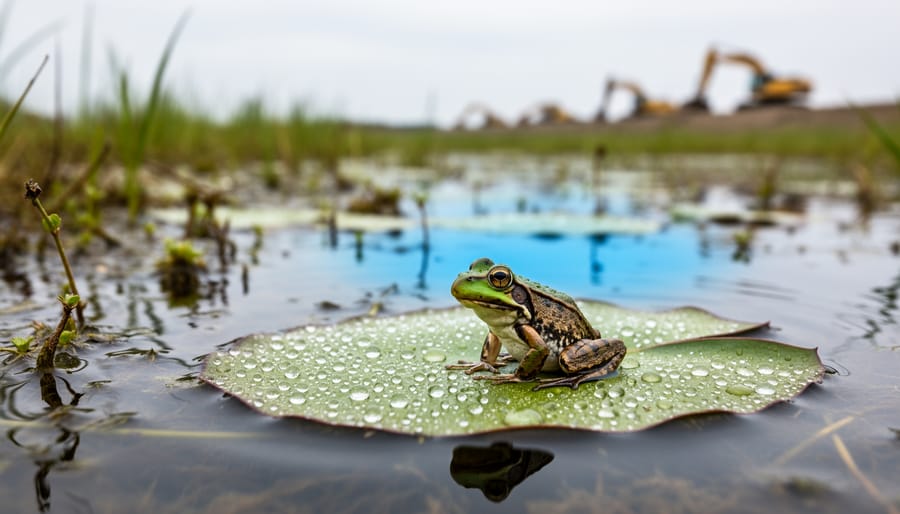
In Canada, wildlife and habitat protection works when someone puts the law to use. Statutes like the Species at Risk Act (SARA), the legislation that lets the federal government protect threatened species and the places they need to survive, only matter if they are enforced, and that often means a courtroom. Habitat is the land, water and shelter a species depends on for feeding, breeding and raising young. Lose it, and protecting the animal on paper means very little.
The tools are real, and so are the results. In 2020, the Federal Court of Appeal upheld an emergency order stopping a development proposal near Montréal to protect the western chorus frog, confirming that federal orders under section 80 of SARA affecting private land are constitutional. That power has only been used twice. Elsewhere, the federal government has been taken to court over an 11-year delay in protecting caribou habitat. And in 2026, a shipping company was fined $40,000 in the Nunavut Court of Justice for violating the Wildlife Area Regulations under the Canada Wildlife Act.
Behind cases like these are environmental advocates, lawyers, communities and Indigenous partners who hold governments to their own laws. This article explains how that legal toolbox works, which cases matter, and how you can take part.
Why Habitat, Not Just Species, Is the Heart of the Matter
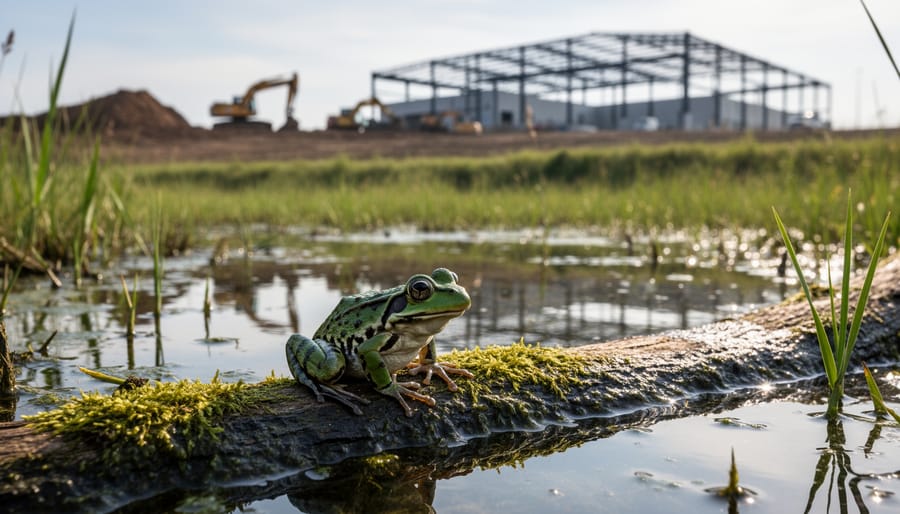
A species rarely vanishes because of one dramatic event. More often, the places it depends on shrink, fragment or disappear first. Animals need somewhere to feed, breed, shelter and, for many, migrate. Take those places away and protecting individual animals does little good.
That is why habitat sits at the heart of the matter. A wetland drained for a development, a forest carved up by roads, a stretch of coast made unusable: each can erode a population long before anyone formally recognizes the species as being in trouble. By the time a species earns official status, much of its home may already be gone.
A few terms help make sense of how the law responds:
- Critical habitat
- The specific areas a species at risk needs to survive and recover, such as the places it breeds, feeds or shelters.
- Species at risk
- A wild plant or animal that has been assessed as facing a real chance of disappearing from Canada or from the wild.
- Recovery strategy
- A plan that sets out what a species needs in order to recover and identifies its critical habitat where possible.
- Emergency order
- A rarely used power that allows the federal government to act quickly when a species faces imminent threats, even on private land.
- Judicial review
- A court process that asks whether a government decision, or a failure to act, was lawful.
These protections only matter if they are applied. Laws can promise to safeguard critical habitat while the mapping stalls or the orders never come. When that happens, courts become the place where those promises are tested, and where people can ask governments to do what their own legislation already requires.
The Legal Toolbox: How Canadian Law Protects Wildlife Habitat
Federal Protections and Their Reach
Two federal laws do most of the heavy lifting here. The Species at Risk Act (SARA) aims to prevent listed species from disappearing, and it directs the federal environment minister to identify critical habitat, meaning the places a species needs to survive and recover, and to see that it is protected. The Canada Wildlife Act works differently, allowing the creation of wildlife areas and regulations that govern what people can and cannot do inside them.
SARA’s reach extends further than many people expect. Its emergency provision, section 80, applies to private land for non-federal species, and the Federal Court of Appeal confirmed that orders under it affecting private land are constitutional. That power has only been used twice, which tells you how carefully it is held in reserve. You can read more about SARA protection through emergency orders for the legal detail behind it.
Why Enforcement and Deadlines Matter
A law is only as strong as the way it’s carried out. Canada has statutes that name species, require critical habitat to be identified, and set penalties for harm. But words on paper don’t shelter a wetland or a caribou range. Someone has to apply them, and on time.
That’s where most advocacy ends up. Groups seldom argue that a law is missing. More often they argue that a duty went unfulfilled or took far too long. A lawsuit over an 11-year delay in protecting caribou habitat is one example, and Ecojustice has said it will keep going to court to hold governments to their own laws because species cannot advocate for themselves.
Deadlines matter because habitat can disappear while a decision waits. Enforcement matters because a rule without consequences is easy to ignore. Together, timely action and real accountability turn a written promise into protection on the ground.
A Frog, a Development, and a Landmark Ruling

Picture a small wetland near Montréal, and a development proposal that would have changed it for good. The western chorus frog, a creature small enough to sit on a thumbnail, was at the centre of a legal story that reached all the way to the Federal Court of Appeal.
The federal government stepped in with an emergency order under section 80 of the Species at Risk Act (SARA). In plain terms, section 80 lets the federal environment minister recommend an emergency order when a species faces imminent threats to its survival or recovery. Here, the order stopped the development proposal from moving ahead.
Then came the challenge. On May 15, 2020, the Federal Court of Appeal upheld the validity of that emergency order, and the frog’s habitat stayed protected.
The ruling matters for more than one reason. The court confirmed that federal orders under section 80 affecting private land are constitutional, which settles a question many people had asked: can Ottawa really act where land is privately owned? The answer, at least for this power, is yes. The emergency provision also applies to private land for species that are not federal ones, so a frog living outside federal jurisdiction can still receive federal protection when its survival is at stake.
There’s one more detail worth sitting with. The section 80 emergency order power has only been used twice. That rarity tells us two things. It is a tool built for genuine emergencies, not everyday disputes. It also shows how much weight a decision like this carries, since a precedent set by a frog near Montréal now shapes how this power can be understood across the country.
For anyone who cares about wildlife and habitat protection, the lesson is encouraging. Strong laws can exist quietly on the books for years, and it takes a real case, and the people willing to defend it, to show how far they can reach.
Holding Governments to Their Own Laws: The Caribou Habitat Delay
A map can sound like a dull thing to go to court over. In the case of caribou, it is anything but. Critical habitat mapping is the step where the federal government identifies, on the ground, the specific areas a species needs to survive and recover: the places where animals feed, calve and shelter. Until those areas are formally identified, the law’s strongest habitat protections have little to attach to.
That is what makes the delay at the centre of this case so significant. The federal government has been taken to court over an 11-year delay in protecting caribou habitat. For a species already under pressure, more than a decade without completed mapping means the places caribou depend on can be altered or lost while the paperwork waits.
The lawsuit asks the Federal Court to declare that the federal environment minister’s delay in completing critical habitat mapping is unlawful. Notably, it does not ask the court to rewrite the law or to invent new duties. It asks the court to look at obligations that already exist and decide whether they have been met on time. We cannot say how the court will rule, and it would be wrong to guess.
Ecojustice, the environmental law charity behind the action, has been clear about its reasoning. It says it will keep going to court to hold governments to their own laws because species cannot advocate for themselves. That framing is worth sitting with. It is less an attack on any one government than a description of a gap: wildlife has no voice in a hearing room, so someone else must raise the question.
Cases like this one help explain why many advocates argue that legal protections not enough on their own when implementation falls behind. A strong statute still depends on timely action to give it meaning.
Enforcement in Action: Accountability for Harm in Protected Areas
Laws only protect habitat if someone answers for breaking them. On May 8, 2026, at the Nunavut Court of Justice, Transport Desgagnés Inc. was fined $40,000 after pleading guilty to two violations of the Wildlife Area Regulations under the Canada Wildlife Act.
So what is a wildlife area regulation? It is a rule made under the Canada Wildlife Act that sets out what people may and may not do inside a designated national wildlife area. Think of it as the house rules for a protected place: they spell out which activities are allowed, which need permission, and which are off limits so the habitat can do its job for the animals that depend on it.
Penalties and prosecutions matter because a rule without consequences is easy to ignore. When a court imposes a fine, it signals that protected areas are not optional guidelines. It also gives others a reason to take those rules seriously before harm happens, not after.
Enforcement and advocacy work as partners. Advocacy groups push governments to apply the law, as the caribou habitat lawsuit shows. Prosecutions, in turn, show the law being applied in practice. One asks for action; the other delivers it. Each province also has its own tools, and readers curious about how this plays out elsewhere can explore Quebec legal safeguards for a regional comparison.
Working Alongside Indigenous Communities
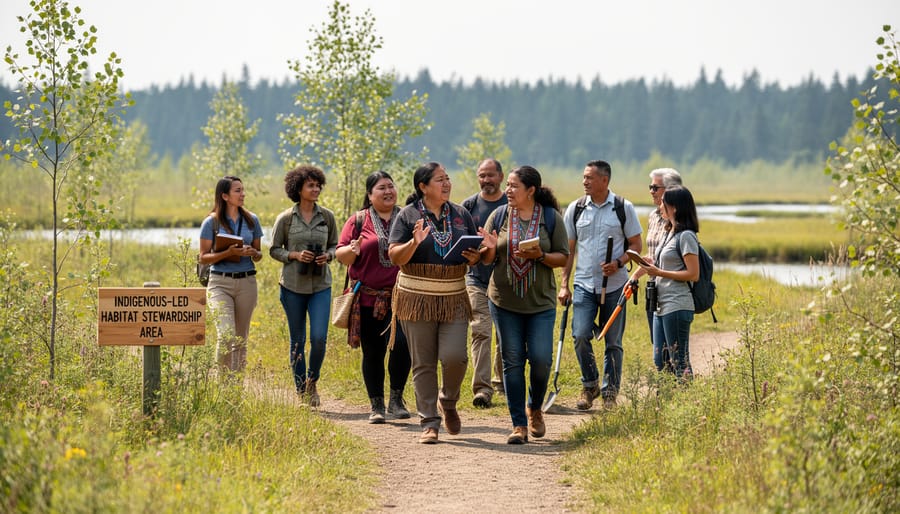
Indigenous Peoples have cared for lands and waters across what is now Canada since long before any statute was written. That long relationship carries knowledge about how ecosystems change over seasons and generations, and it carries rights and responsibilities that law is increasingly asked to respect. Protecting habitat without that perspective means working with an incomplete picture.
Stewardship and rights are closely linked. For many Indigenous communities, protecting the places where animals live, feed and migrate is part of an ongoing duty, not a policy preference. When habitat is lost, it can affect cultural practices, food security and community wellbeing as well as the species themselves. This is why Indigenous leadership matters in decisions about land and wildlife, not only as a courtesy but as a matter of justice. No single approach speaks for every Nation, and each community has its own governance, priorities and relationship to its territory.
Nature’s Resilience Canada approaches this work through partnership. We aim to build a united front for environmental justice by bringing together Indigenous communities and environmental groups around shared goals, such as keeping habitat intact for the species that depend on it. In practice, that begins with listening. It means asking what a community wants to see protected and why, then supporting those priorities rather than setting the agenda for others.
We do not speak on behalf of Indigenous peoples, and we do not treat collaboration as a box to tick. Good partnerships are built slowly, on respect, transparency and a willingness to follow Indigenous leadership. When legal action and community stewardship pull in the same direction, the protection that results is stronger and more likely to last.
What These Cases Teach Us About Effective Advocacy
Put side by side, these cases show a pattern. None of them relied on inventing new law. They worked because people knew what the existing law already promised and were willing to see it applied.
- Start with the law already on the books. The western chorus frog order rests on section 80 of SARA, and the Federal Court of Appeal’s May 15, 2020 ruling confirmed such federal orders can reach private land and are constitutional.
- Know the emergency tools, even rare ones. That same power has only been used twice, which shows a strong provision can sit unused until someone asks for it.
- Watch the calendar. An 11-year delay in protecting caribou habitat shows how long animals can stay exposed while critical habitat mapping remains unfinished.
- Ask courts to clarify duties. The caribou suit asks the Federal Court to declare the minister’s delay unlawful, which would turn a vague expectation into a clear obligation.
- Follow through on enforcement. The $40,000 fine against Transport Desgagnés Inc. under the Wildlife Area Regulations shows that rules carry consequences when they are broken.
These examples point to one habit worth copying: persistence. Ecojustice has said it will keep going to court to hold governments to their own laws, since species cannot advocate for themselves. Advocacy works best when it is patient, grounded in what the law actually says, and ready to act when timing is on the line.
How You Can Support Habitat Protection
Protecting habitat doesn’t require a law degree, though it helps to know where to start. Here are realistic ways to contribute.
Stay informed about your region. Learn which species and habitats live near you, and which are listed as at risk. Local knowledge is often the first line of defence, because habitat can be lost long before anyone formally notices.
Support environmental law charities. Cases like the caribou habitat suit and the western chorus frog order show that courts are sometimes needed to make written protections real. Groups such as Ecojustice have said they will keep going to court to hold governments to their own laws, since species cannot advocate for themselves. Donations, volunteer time and professional pro bono skills all help. If you want to understand who does this work, our guide to policy and law centers explains how they operate and how to engage with them.
Take part in public consultations. When governments invite comment on decisions that affect habitat, a thoughtful, informed submission can matter. Policymakers and legal professionals can also help by translating technical rules into plain language for neighbours and communities.
Respect Indigenous-led conservation. Listen first, follow Indigenous leadership, and support stewardship efforts on the terms that communities set for themselves.
Small, steady actions add up, especially when many people take them together.
Common Questions About Wildlife Habitat Litigation
Can the federal government protect habitat on private land?
Yes. In May 2020, the Federal Court of Appeal confirmed that federal orders under section 80 of the Species at Risk Act (SARA) that affect private land are constitutional. That provision applies to private land for non-federal species, and the power has only been used twice.
What does “critical habitat” mean?
It is the habitat a species needs to survive and recover: the places it lives, feeds, breeds and migrates. Mapping it is a key step, because animals stay exposed until the mapping is complete.
Why do environmental groups go to court?
Often to make governments follow laws already on the books. Ecojustice, for example, says it will keep going to court to hold governments to their own laws because species cannot advocate for themselves. The caribou lawsuit over an 11-year delay is one such challenge.
What happens when someone violates wildlife area rules?
They can face prosecution and penalties. On May 8, 2026, Transport Desgagnés Inc. was fined $40,000 at the Nunavut Court of Justice after pleading guilty to two violations of the Wildlife Area Regulations under the Canada Wildlife Act.
These answers share a common thread: the law only protects habitat when someone uses it, whether through emergency orders, court challenges or enforcement.
Picture that small western chorus frog again, still singing at the edge of a wetland. It never filed a claim or stood before a judge. Yet an emergency order, upheld by the Federal Court of Appeal, helped keep its home from being built over, because people were willing to act on its behalf.
That is how wildlife and habitat protection works in Canada. Litigation presses governments to follow the laws they’ve already written, as in the caribou habitat case. Enforcement, like the $40,000 fine in Nunavut, shows that harm in protected areas carries a cost. And collaboration with Indigenous communities, grounded in listening and Indigenous leadership, keeps the work rooted in knowledge that long predates any statute.
None of these tools works alone. Together they give the species who can’t speak a real legal voice. The same attention to protection extends beyond habitat, including to wildlife disease regulation.
You can be part of this. Stay curious about the species and places around you, follow Wildlife Habitat Litigation and Advocacy in Canada, and support the environmental law charities who keep showing up in court. Every wetland still standing is proof that it matters.